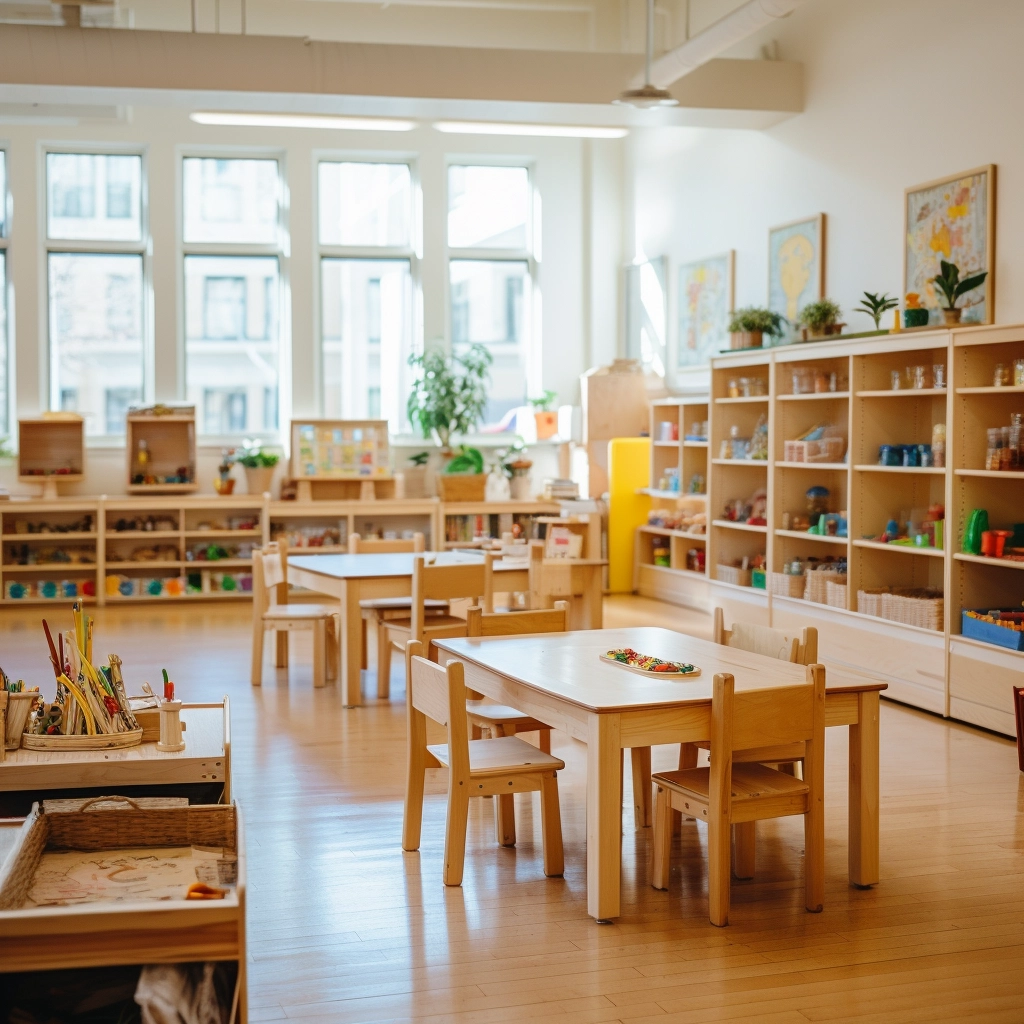
If you are building a budget, childcare startup cost Canada figures usually start with program type. Licensed home child care typically costs $15,000 to $60,000 CAD to launch. A centre-based childcare program usually costs $100,000 to $450,000 CAD or more, depending on facility size, province, renovation scope, enrollment capacity, and whether you participate in Canada-Wide Early Learning and Child Care (CWELCC) funding programs.
Startup cost guides by country: Stati Uniti · Canada (this guide) · Australia · Nuova Zelanda
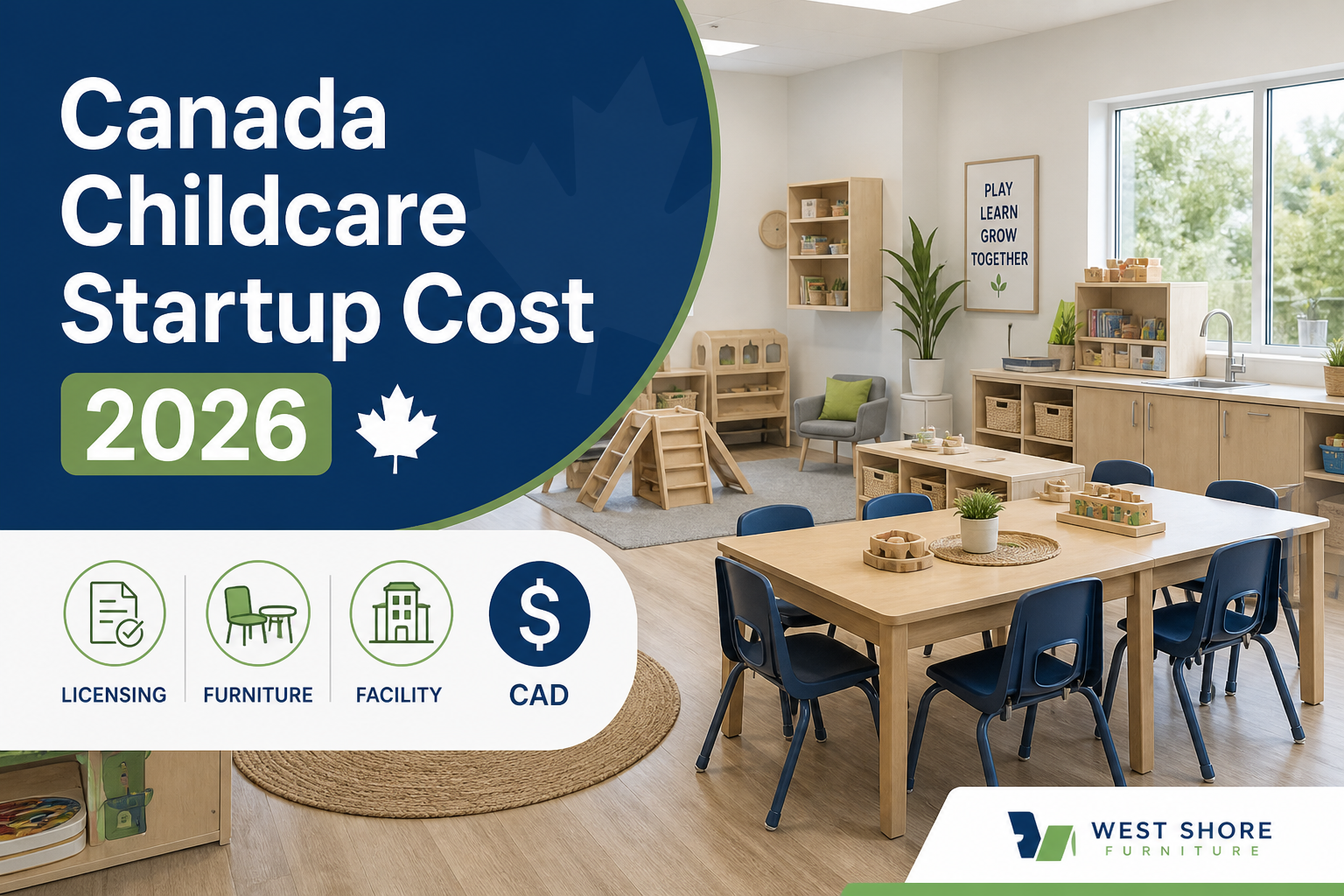
Startup costs depend on whether you open licensed home child care or a centre-based program. Home-based operators typically use existing residential space, while centre-based operators need a commercial facility, more staff, provincial licensing, and a larger equipment budget.
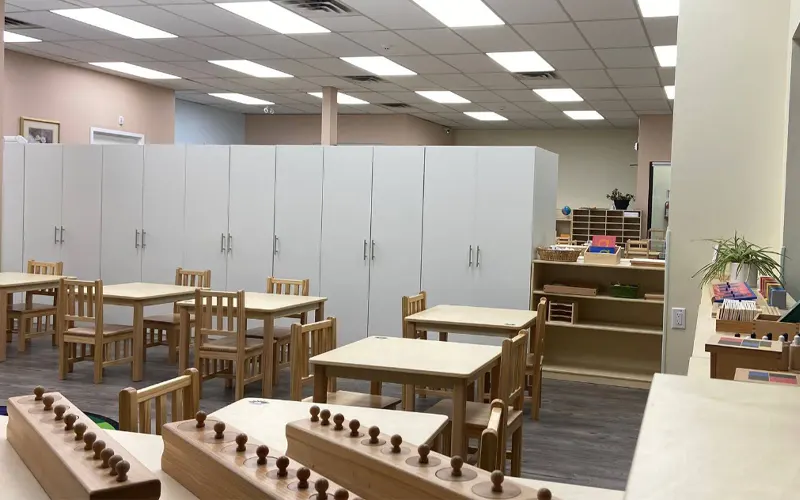
There is no single price tag for opening a childcare centre in Canada. A home child care provider setting up a dedicated play space may spend far less than an operator leasing a commercial building for four classrooms in Toronto or Vancouver. Yet both face the same core cost categories: provincial licensing, facility preparation, furniture and equipment, staffing, insurance, marketing, and working capital.
Is $150,000 enough to open a centre? Which costs are fixed, and which can be phased? What should you budget for furniture before requesting supplier quotes? This guide answers those questions with a practical 2026 cost breakdown you can use for business planning, grant applications, bank discussions, and supplier conversations.
Note: Childcare in Canada is regulated provincially, not federally. Ontario, British Columbia, Alberta, and Quebec each have different licensing bodies, ratio rules, and funding programs. The figures below reflect national planning ranges; always confirm requirements with your provincial ministry and local service manager before committing to a lease.
How Much Does It Cost to Start a Childcare Centre in Canada in 2026?
The biggest difference between the two models is facility cost. Home-based operators avoid commercial rent and major build-out work, though they still need safety upgrades, insurance, and program materials that meet provincial standards. Centre-based operators must budget for lease deposits, code-compliant renovations, classroom furniture, outdoor play areas, and several months of payroll before enrollment stabilizes.
For planning purposes, many first-time centre operators in Canada underestimate three areas:
- Facility build-out — fire safety, washroom ratios, accessibility (AODA), flooring, and kitchen upgrades often cost more than expected in leased commercial space.
- Furniture and equipment — tables, chairs, storage, cribs or cots, playground equipment, and learning materials add up quickly across multiple rooms.
- Working capital — payroll, rent, utilities, and food costs continue even when enrollment is still growing, especially in competitive urban markets.
The sections below break each category down so you can see where your budget may go and which items should be confirmed before signing a lease or approving a furniture quote.
What Is Included in Canadian Childcare Startup Costs?
A complete childcare startup budget in Canada usually covers ten core areas:
- Provincial licensing and registration — licence application, business registration, vulnerable sector checks, First Aid/CPR, and required early childhood training (such as ECE/RECE credentials where applicable)
- Facility costs — lease deposit, rent prepayment, renovation, AODA accessibility adjustments, washrooms, flooring, and fire/safety upgrades
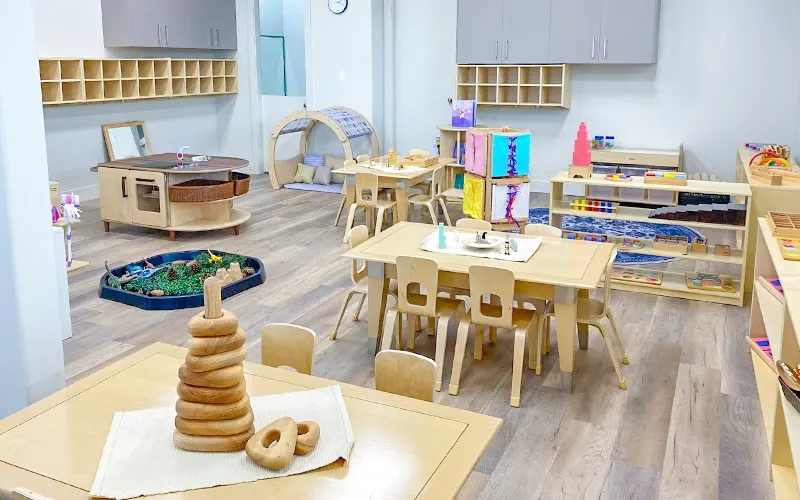
- Classroom furniture and storage — tables, chairs, shelving, cubbies, cots or cribs, nap mats, and educator storage
- Learning materials and toys — blocks, puzzles, dramatic play items, art supplies, books, and Montessori or curriculum-specific materials
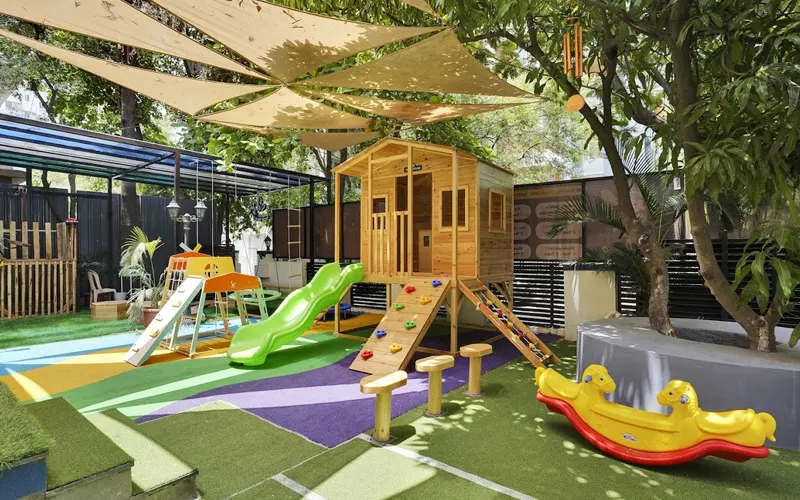
- Outdoor equipment — play structures, safety surfacing, fencing, shade, and outdoor learning tools
- Kitchen and daily operations — refrigerators, sinks, dish storage, food prep tools, laundry, and cleaning systems
- Technology and admin — enrollment software, security cameras, phone/internet, accounting, and payment systems
- Insurance — commercial general liability, property, workers’ compensation or provincial equivalent, and professional liability where required
- Marketing and enrollment — website, signage, local advertising, and open-house events
- Working capital — 3–6 months of operating reserve for payroll, rent, food, utilities, and supplies
Reviewing these categories separately makes it easier to compare quotes, identify missing line items, and decide what can be purchased in phases.
Childcare Startup Cost Canada: Breakdown by Category
The tables below show typical budget shares for a centre-based program opening a 4-classroom facility for approximately 80 children in a major Canadian city. Adjust the numbers up or down based on your province, facility condition, and enrollment target.
Overall Budget Example: $250,000 CAD Centre-Based Startup
| Cost Category | Typical Share | Example Budget (CAD) | What It May Include |
|---|---|---|---|
| Facility lease and build-out | 25%–40% | $75,000 | Deposit, first month’s rent, renovation, washrooms, flooring, fire safety |
| Furniture and classroom equipment | 12%–20% | $40,000 | Tables, chairs, storage, cubbies, cots, educator cabinets, room dividers |
| Outdoor play area | 8%–15% | $25,000 | Play structure, surfacing, fencing, shade, site prep |
| Licensing, legal, and insurance | 5%–10% | $15,000 | Licence fees, incorporation, legal review, first insurance premiums |
| Learning materials and toys | 5%–8% | $12,000 | Blocks, puzzles, dramatic play, art, books, STEM materials |
| Technology and admin setup | 3%–5% | $8,000 | Enrollment software, cameras, computers, phones |
| Marketing and pre-opening | 3%–5% | $8,000 | Website, signage, ads, open house |
| Staff hiring and training (pre-opening) | 5%–8% | $12,000 | Recruitment, onboarding, First Aid, orientation before opening day |
| Kitchen, cleaning, and daily ops | 3%–5% | $8,000 | Appliances, dish storage, laundry, janitorial setup |
| Working capital reserve | 15%–25% | $47,000 | 3–4 months payroll, rent, food, utilities, supplies |
| Total | — | $250,000 | A standard multi-classroom centre opening budget |
As the table shows, facility and working capital often consume more than half the total budget. Furniture and outdoor equipment are smaller shares individually, but they are critical for licensing inspections, parent tours, and daily classroom function.
The good news: furniture, toys, storage, and outdoor equipment are also the categories where planning quality has the biggest impact on overspending. A $250,000 startup budget feels overwhelming—but the $35,000–$65,000 furniture line is something you can control with the right layout plan, room-by-room list, and one-stop supplier. The real savings are not just on the invoice: working with one experienced partner can also cut weeks of coordination time and reduce the mental load of opening a centre.
Provincial Licensing and Funding: What Changes Your Budget
Unlike the United States, where licensing rules vary by state, Canadian childcare is governed by provincial legislation. Your startup budget should reflect both licensing costs and any capital or operating funding you may qualify for.
Ontario
- Regulated under the Child Care and Early Years Act (CCEYA) e O. Reg. 137/15
- Applications processed through the Child Care Licensing System (CCLS) via the Ministry of Education
- Local CMSM/DSSAB (Consolidated Municipal Service Managers / District Social Services Administration Boards) administer CWELCC funding in most communities
- CWELCC capital programs may support space creation—confirm current grant caps and eligibility with your local service manager before budgeting
- Space rules include minimum indoor and outdoor square metres per child; plan furniture around licensed capacity, not just floor area
British Columbia
- Licensed under the Community Care and Assisted Living Act through regional health authority community care licensing
- Strong emphasis on outdoor play space and safety plans
- Wage enhancement and fee reduction programs vary—confirm current provincial funding with your health authority and Child Care BC resources
Alberta
- Regulated under the Child Care Licensing Act and associated standards
- Licensing through provincial child care licensing staff; ratios and space requirements differ from Ontario and BC
- Confirm whether your municipality has additional zoning or business licence requirements
Quebec
- CPE, subsidized daycare, home daycare, and private centre models follow different funding and permit paths through the Ministère de la Famille
- Permit timelines are often longer; budget for extended pre-opening periods and French-language compliance where applicable
Planning tip: Contact your provincial ministry and local service manager before signing a lease. A space that looks affordable on paper can become expensive if it cannot meet licensed capacity, washroom, or outdoor area requirements.
How West Shore Furniture Helps Canadian Operators Save Money, Time, and Effort
Not every startup cost can be reduced. Lease deposits, provincial licensing, insurance, payroll, and build-out work are largely fixed by your location and regulations. But furniture and equipment are different—and for most new operators, they create hidden costs that never appear on a quote: time spent comparing vendors, effort spent fixing wrong sizes, and money lost to duplicate orders or rushed replacements before a licensing visit.
West Shore Furniture has supported early learning projects for more than 20 years, furnishing 5,000+ institutions worldwide, including projects in Canada, the United States, Australia, and more than 20 countries. For Canadian operators facing a six-figure startup budget, our one-stop approach is designed to deliver a triple save:
Save Money
- Layout-led purchasing — a room-by-room list prevents over-ordering tables, chairs, and storage you do not need
- One purchase order — classroom furniture, toys, storage, and outdoor equipment under one quote instead of 5–10 separate Canadian and international suppliers
- Consolidated shipping — flat-pack design and combined freight reduce delivery costs versus ordering piecemeal across borders
- Phased purchasing — open with licensing-ready essentials first, add specialty items after enrollment grows
- Factory-direct pricing — competitive rates without middleman markups on every category
Save Time
- Free layout consultation — send your floor plan and get a practical room list before you spend hours researching products
- Single quote, single timeline — no chasing multiple vendors for lead times, revisions, or missing items
- Opening-day alignment — delivery scheduled around your build-out and licensing inspection dates
- Proven room packages — infant, toddler, preschool, and pre-K layouts based on thousands of completed projects
Save Effort
- One point of contact — one team handles furniture, toys, storage, and outdoor planning instead of juggling incompatible vendors
- Quote-ready documentation — room lists you can use for licensing, grant applications, investor conversations, and budget approvals
- Consistent sizing across rooms — standardized tables, chairs, and shelving simplify future expansion and replacement
- Safety and compliance built in — plan smarter instead of cutting corners on products that fail inspection
That means a $250,000 startup plan becomes easier to manage when your furniture line is clear, quote-ready, and aligned with your opening timeline—without adding another full-time job to your pre-opening checklist.
Facility and Build-Out Costs
Facility costs are usually the largest startup expense for a centre-based program in Canada—especially in Toronto, Vancouver, Calgary, Montreal, and Ottawa, where commercial rent is high.
Lease and Deposit
Commercial childcare spaces often require:
- Security deposit: 1–2 months’ rent (common in Canadian commercial leases)
- First month’s rent: paid before move-in
- Tenant improvement allowance: sometimes offered by landlords, but often insufficient for childcare-specific work
If monthly rent is $12,000 CAD, expect $24,000–$36,000 in deposit and first payment alone before renovation begins.
Renovation and Code Compliance
Childcare build-out costs depend heavily on the existing condition of the space. A former retail or office unit may need additional washrooms or child-height fixtures, fire alarm and sprinkler upgrades, secure entry systems, non-toxic paint, durable flooring, commercial kitchen upgrades, handwashing stations near classrooms, and AODA-compliant routes, entrances, and fixtures.
Typical range: $40,000–$180,000+ CAD for a leased commercial unit, depending on size, province, and local building requirements.
Before signing a lease, ask a contractor or architect familiar with provincial childcare regulations to walk the space. A low rent deal can become expensive if the building needs major compliance work.
Furniture and Classroom Equipment Costs
Furniture is one of the most visible costs—and one of the easiest to underbudget if you price room by room instead of centre-wide.
What to Budget by Classroom Type
| Room Type | Typical Capacity | Furniture Budget Range (CAD) | Main Items |
|---|---|---|---|
| Infant room | 8–12 children | $10,000–$18,000 | Cots or cribs, rocking chairs, low shelves, changing storage, feeding chairs |
| Toddler room | 10–14 children | $8,000–$15,000 | Small tables and chairs, low open shelving, cubbies, soft seating |
| Preschool room | 16–20 children | $9,000–$17,000 | Activity tables, chairs, storage units, dramatic play furniture, art storage |
| Pre-K / JK room | 18–22 children | $9,000–$17,000 | Flexible tables, chairs, library shelving, STEM storage, educator cabinets |
| Shared spaces | — | $6,000–$18,000 | Reception seating, staff storage, laundry, hallway cubbies |
For a 4-classroom centre, a practical furniture budget is often $35,000–$65,000 CAD, depending on quality, customization, and whether furniture is sourced locally or from an international supplier.
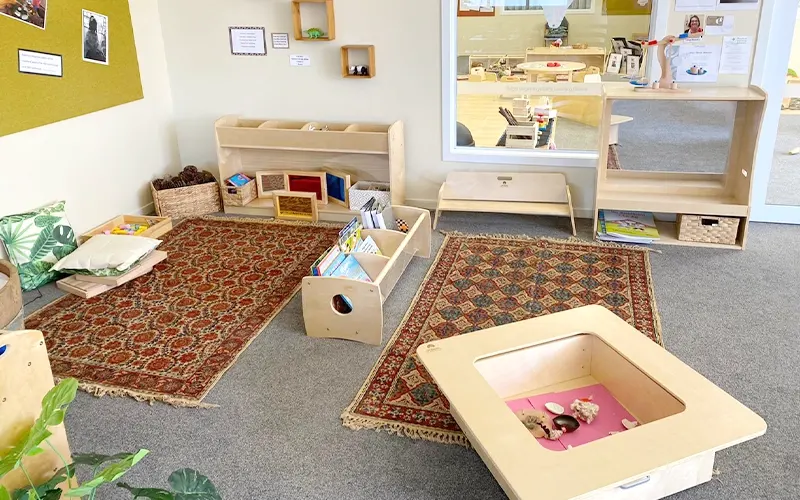
This is also where the right supplier protects your budget—and your calendar. Instead of guessing quantities or splitting orders across five or more vendors, Mobili West Shore provides a room-by-room list based on your floor plan, age groups, and licensed capacity.
Factors That Change the Furniture Budget
- Custom dimensions or branding — branded colours, logo panels, or non-standard table sizes increase cost but strengthen parent impressions during tours
- Educational philosophy — Montessori, Reggio, and Waldorf classrooms often need specific shelf heights, material displays, and movement-friendly layouts
- Storage strategy — open shelving, mobile units, and educator cabinets reduce daily clutter but add to upfront spending
- Import and shipping — international orders may save on product cost but require freight, customs (GST/HST on import), and local assembly planning
- Phased purchasing — some centres open with essential furniture first, then add specialty items after enrollment grows or CWELCC capital funding is confirmed
Related reading: Standard Daycare Locker & Cubby Dimensions: The 2026 Buying Guide
Outdoor Play Area Costs
Outdoor space is often required for licensing in Canada, and it strongly influences parent enrollment decisions—especially in provinces with strong outdoor play expectations.
- Climbing and sliding structure or freestanding play units
- Impact-absorbing safety surfacing (engineered wood fibre, rubber tile, or poured rubber)
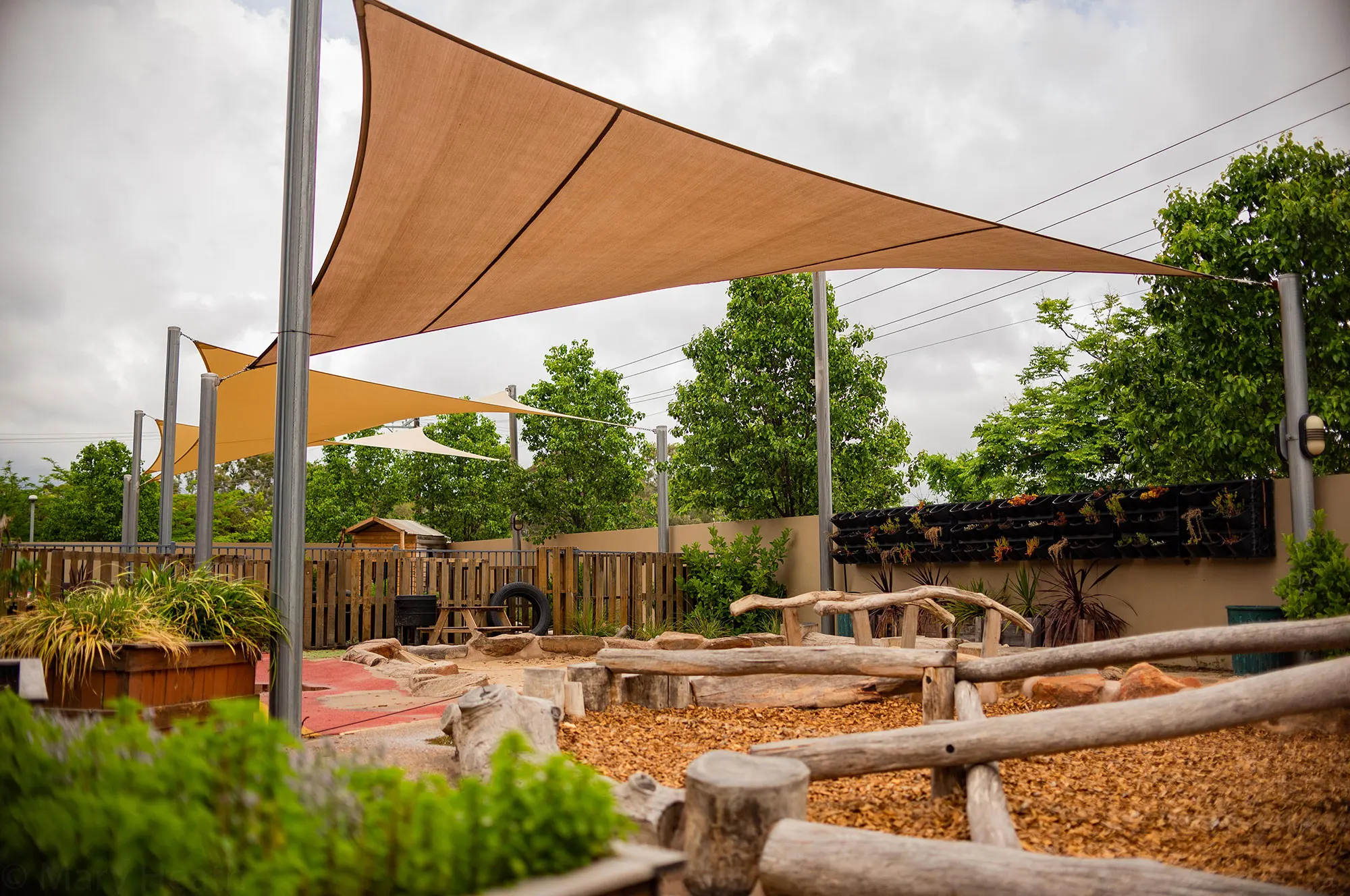
- Fencing and secure gates
- Shade structures or natural shade
- Storage for tricycles, sand toys, and maintenance tools
Typical range: $15,000–$75,000 CAD for a standard centre, and up to $120,000+ CAD for a larger custom playground with extensive site work.
Canadian winters affect outdoor planning. Budget for durable equipment, drainage, and surfacing maintenance—not just the initial structure price.
Related reading: How Much Does a Preschool Playground Cost?
Licensing, Legal, and Insurance Costs
These costs are smaller than facility or staffing expenses, but they are required before opening.
| Item | Typical Range (CAD) | Notes |
|---|---|---|
| Business registration (provincial incorporation or sole prop) | $100–$500 | Varies by province |
| Provincial childcare licence application | $200–$1,000+ | Depends on capacity and program type |
| Vulnerable sector / criminal record checks | $25–$100 per person | Required for owners and staff |
| First Aid / CPR certification | $75–$175 per person | Often required before licensing |
| Health, fire, and building inspections | $300–$3,000 | Varies by municipality |
| Legal or consulting support | $1,500–$7,000 | Useful for lease review and licensing paperwork |
| Commercial general liability insurance | $2,000–$6,000/year | Required by most landlords and provinces |
| Workers’ compensation (WSIB, WorkSafeBC, etc.) | Varies by payroll | Required once staff are hired |
Budget $8,000–$20,000 CAD for licensing, legal, and first-year insurance in most centre-based projects.
Staffing Costs Before and After Opening
Staffing is an operating expense, but pre-opening staffing still affects your startup budget. You may need to pay for recruitment and job advertising, orientation and training days before opening, First Aid and vulnerable sector checks, required ECE/RECE credentials, and payroll for 2–8 weeks before fee revenue begins.
After opening, staffing remains the largest monthly cost. Staff-to-child ratios are set provincially and vary by age group, so labour costs rise quickly as you add infant rooms or increase licensed capacity.
In Ontario, for example, ratios under O. Reg. 137/15 require more educators per infant and toddler than per preschooler—plan staffing costs around licensed capacity, not opening-day enrollment.
Planning tip: Calculate staffing needs based on the number of children you are licensed to serve. Your startup working capital should cover payroll even if rooms fill gradually over 3–6 months.
CWELCC, Fee Reduction, and What Operators Should Budget For
Most provinces and territories now participate in Canada-Wide Early Learning and Child Care (CWELCC) agreements, which aim to reduce parent fees and expand licensed spaces. When you model childcare startup cost Canada projections, factor in whether your centre will participate and how operating funding affects your fee schedule. For operators, this affects startup planning in several ways:
- Capital funding may offset furniture, renovation, or space-creation costs—confirm eligibility and timing with your CMSM/DSSAB or provincial administrator before assuming grants will cover specific line items
- Operating funding is tied to enrolled spaces and program type; it does not eliminate the need for working capital at opening
- Fee caps apply to participating programs; budget conservatively if your revenue model depends on CWELCC operating agreements
- Non-participating private centres may have different fee flexibility but typically receive less public funding
CWELCC can reduce net startup burden for eligible projects, but it does not remove the need for a detailed budget, realistic furniture quotes, and contingency reserves.
Technology, Marketing, and Working Capital
Technology and Admin
Most centres budget $4,000–$12,000 CAD for initial setup, including enrollment and billing software, security camera system, internet, phones, and computers, plus accounting setup and CRA business number registration.
Marketing and Enrollment
Expect $4,000–$18,000 CAD for pre-opening marketing, depending on competition in your market. Common items include website and Google Business Profile, signage and branding, local ads and community boards, and open-house events.
In many Canadian cities, waitlists exist in some neighbourhoods—but new centres still need strong tours. Clean classrooms, organized storage, and visible outdoor play areas often matter more than ad spend alone.
Working Capital
Working capital is the reserve that keeps the centre operating while enrollment ramps up. A practical reserve covers 3–6 months of rent or mortgage, payroll and benefits, food and consumables, utilities, insurance, cleaning and maintenance, and loan payments if applicable.
For many centre-based startups in Canada, this means $40,000–$100,000 CAD or more. Underbudgeting here is one of the most common reasons new centres struggle in the first year—especially when fee revenue is tied to actual enrollment rather than licensed capacity.
Home-Based vs. Centre-Based Startup Costs
| Cost Area | Licensed Home Child Care | Centre-Based Program |
|---|---|---|
| Facility | Low — existing home space | High — lease, deposit, renovation |
| Licensing | Lower fees, fewer rooms | Higher fees, stricter inspections |
| Mobilia | $3,000–$12,000 CAD | $35,000–$65,000+ CAD |
| Outdoor play | $1,500–$8,000 CAD | $15,000–$75,000+ CAD |
| Staff | Often owner-operated at start | Multiple educators from opening |
| Working capital | $8,000–$20,000 CAD | $40,000–$100,000+ CAD |
| Typical total | $15,000–$60,000 CAD | $100,000–$450,000+ CAD |
Licensed home child care is the lowest-cost entry point in most provinces. Centre-based programs offer higher capacity and revenue potential but require a more detailed budget, longer licensing timeline, and stronger working capital reserves.
Related reading: How to Start a Daycare: Foundational Steps · US Startup Cost Guide
How to Reduce Childcare Startup Costs Without Cutting Safety
A limited budget does not mean opening an unsafe or poorly equipped centre. It means making smarter sequencing decisions—especially in furniture, toys, and outdoor equipment, where West Shore can help you prioritize licensing-ready essentials and phase the rest.
- Choose the right facility first. A space that already meets many provincial childcare requirements will save more money than buying cheaper furniture.
- Plan the full layout before purchasing. Free classroom planning helps you buy the right quantities and avoid duplicate or unusable items.
- Buy essential furniture first. Open with core tables, chairs, storage, cots, and cubbies; add specialty pieces after enrollment grows.
- Use one supplier for multiple rooms. One-stop procurement can reduce coordination time, shipping costs, and specification mismatches across classrooms.
- Phase outdoor play if licensing allows. Complete fencing, surfacing, and one main play structure first; add smaller activity stations later.
- Confirm grant timing early. If CWELCC or provincial capital funding applies, align furniture purchases with approved expense categories and reimbursement rules.
- Keep safety and compliance non-negotiable. Do not reduce budget by skipping anchoring, safe surfacing, non-toxic finishes, or required staff ratios.
The largest savings usually come from early planning, phased purchasing, and accurate room lists—not from choosing lower-quality products that fail inspection or wear out quickly.
Opening a licensed childcare centre in Canada is a major investment—but overspending on furniture is optional. West Shore Furniture helps you plan each room, prepare a practical item list, and source classroom furniture, storage, toys, and outdoor equipment through one supplier. Send your floor plan and we will help you build a budget you can actually use.
Conclusione
Your final childcare startup cost Canada total in 2026 will depend on program type, province, facility condition, licensed capacity, and funding participation. Licensed home child care may launch with $15,000–$60,000 CAD, while centre-based projects often require $100,000–$450,000 CAD or more once facility work, furniture, outdoor play, staffing, and working capital are included.
The most reliable budget starts with a category breakdown—not a single estimate. Confirm provincial licensing costs, renovation scope, furniture lists, playground requirements, CWELCC eligibility, and at least three months of operating reserve before you commit to a lease or supplier contract.
If you are preparing to open a new centre, start with a room list and floor plan. Mobili West Shore can help you turn that into a practical furniture budget, room-by-room quote, and phased purchasing plan—so you spend less, move faster, and open with fewer vendor headaches than piecing everything together on your own.
See also: United States startup cost guide · Australia