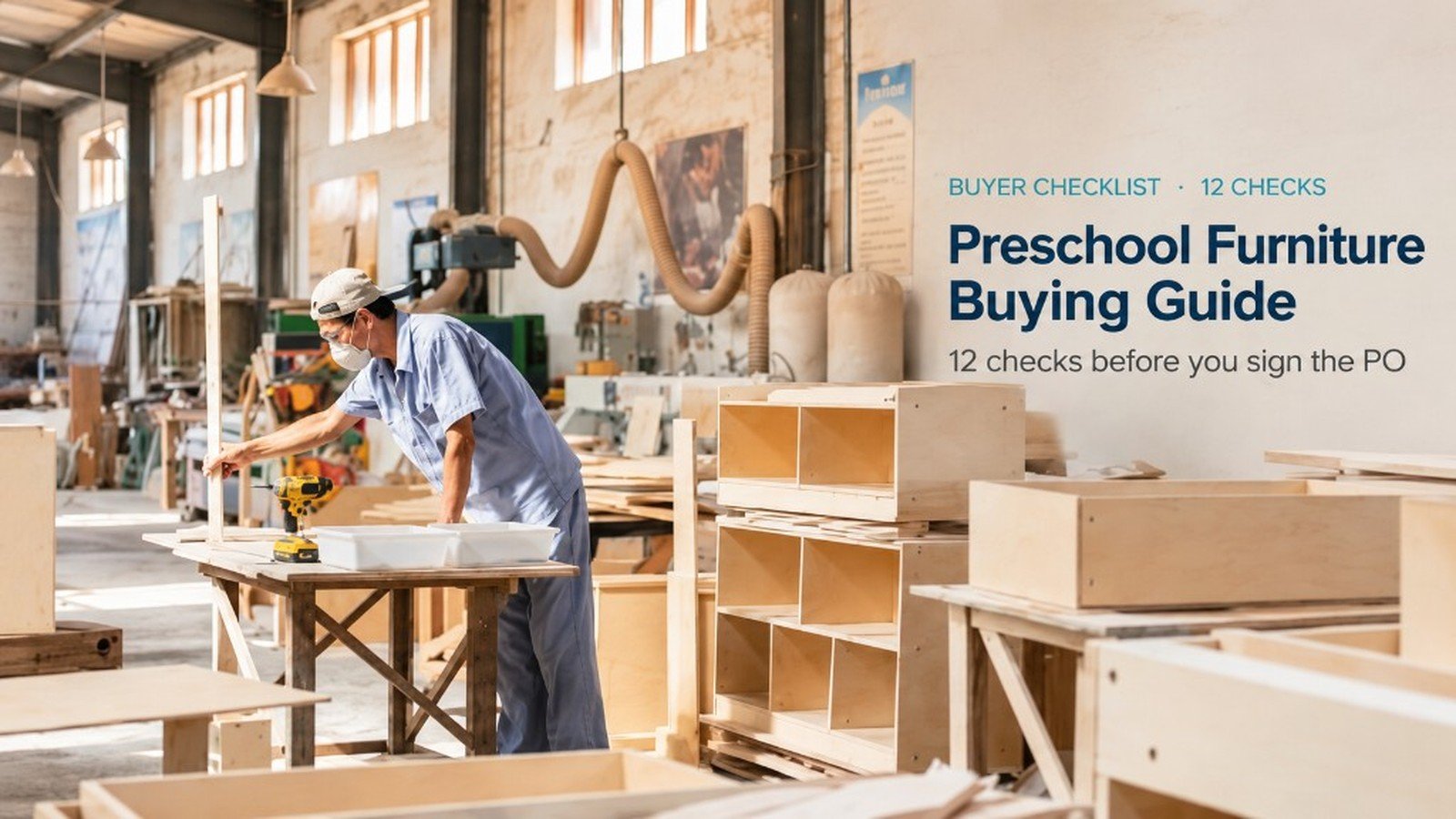
A preschool furniture buying guide is useful only if it stops a bad purchase order. The person who signs is not shopping a Pinterest board. They are freezing a room list: tavoli e sedie, bag storage, open shelves, and a date the truck has to hit. Miss one of the twelve checks below and you buy a revision cycle, not a classroom.
Mobili West Shore treats a preschool furniture buying guide as twelve frozen checks: drawing, age heights, arrival storage, stock versus custom, opening date, factory or local path, landed cost, Incoterm, payment, QC, classroom packing, and a named broker. Sign the PO only when every line is true.
Buyer page — sign the PO only when these twelve are true
A preschool furniture buying guide is not a catalogue walk. It is the gate between a mood board and a purchase order. If the drawing, heights, storage count or opening date is still moving, you do not have a factory order — you have an email thread.
The clock lives on order preschool furniture from China. Freight lives on the landed-cost calculator. Who quotes the job lives on the suppliers guide. This page is the twelve checks.
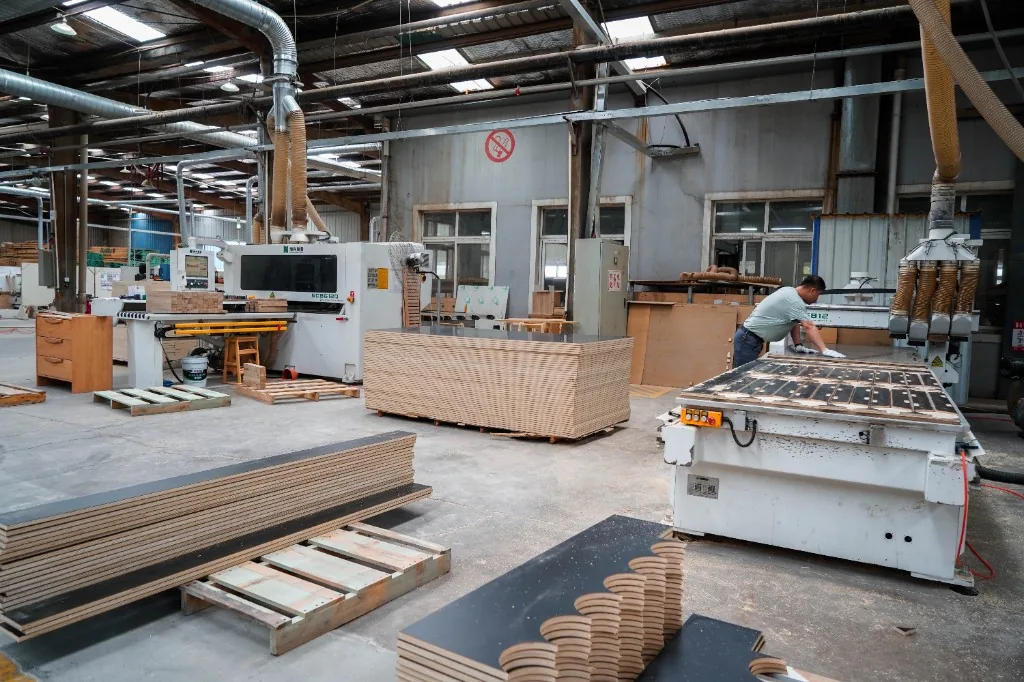
West Shore Furniture has manufactured in Dalian, China since 2003 and supplies centres in 50+ countries. That is not an argument for every PO. It is an argument for a classroom program with a drawing. Two replacement chairs still belong on a local catalog.
The 12 Checks on One Page
Print this. If a line is blank, the purchase order is not ready. Room dollar bands live on cost to furnish a daycare classroom e the Australia classroom cost page — this guide will not re-price a room.
| # | Check | Ready when |
|---|---|---|
| 1 | Drawing | Furniture footprints frozen, not a mood board |
| 2 | Age heights | Toddler and preschool as two lines, not an average |
| 3 | Arrival storage | One section per licensed place or capacity |
| 4 | Stock vs custom | Only the lines that break a catalog width or height |
| 5 | Opening date | Counted backward 10–14 weeks, or marked local |
| 6 | Factory / local / split | Named per room, not as a vibe |
| 7 | Landed cost | Freight, tax and delivery on the same list |
| 8 | Incoterm | FOB at the agreed Chinese port, unless you wrote something else |
| 9 | Payment | Deposit after freeze; balance before the boat |
| 10 | QC | Against the locked drawing, before the container is sealed |
| 11 | Packing | By classroom, carton marks that match the room list |
| 12 | Broker | A licensed customs broker named before the box exists |
1–4. Freeze the Room Before Anyone Cuts a Panel
1. The drawing
A catalogue photo is a suggestion. A factory purchase order is a layout with furniture footprints. If you are under Australian NQF space rules, use the same discipline as the Australia layout guide. Other markets: confirm usable-space rules locally. Do not order depth that eats the aisle once backpacks arrive.
How to verify. Ask for a floor plan with furniture footprints and aisle widths, not a collage of catalogue photos. A good answer is a scaled 2D layout plus a room list that matches those footprints — every table, cubby run and shelf drawn, not described. Fail case: a mood board submitted as “the drawing.” The factory cuts to the photo depth, backpacks arrive, and the aisle is gone. Skip the footprints and you buy a revision after panels are already cut.
2. Age heights
Toddler and preschool are two seat-height lines. Do not average 260 mm and 350 mm onto one chair SKU. Write the 150–200 mm seat-to-table gap, then pick the factory size. See tavoli e sedie per la scuola materna for the commercial bands — then fit-test children in that room.
How to verify. Ask for two seat-height lines and the 150–200 mm seat-to-table gap written on the PO. A good answer names toddler and preschool as separate SKUs, then a fit-test in that room. Fail case: averaging 260 mm and 350 mm into one “medium” chair so mixed-age rooms share a pile. Skip the two lines and toddlers sit at a preschool table, or preschoolers fold into toddler seats — both fail the room on day one.
3. Arrival storage
Count sections against licensed places or capacity, and put the run in the hallway when the building allows it. Some assessors treat an in-room bank as deducted floor area — confirm that locally before you lock the drawing. The inch chart lives on the locker and cubby dimensions guide. This buying guide only asks: did you count the children, or the wall you liked in a photo?
How to verify. Ask for a section count that equals licensed places or capacity, and whether the run sits in the hallway or inside the room — plus what your assessor deducts. A good answer is “18 sections for 18 preschool places, hallway,” not “a cubby like the photo.” Fail case: ordering the wall you liked in a showroom shot, then discovering six children have no bag hook. Skip the count and opening day is backpacks on the floor, or an in-room bank that ate usable space.
4. Stock versus the three custom millimetres
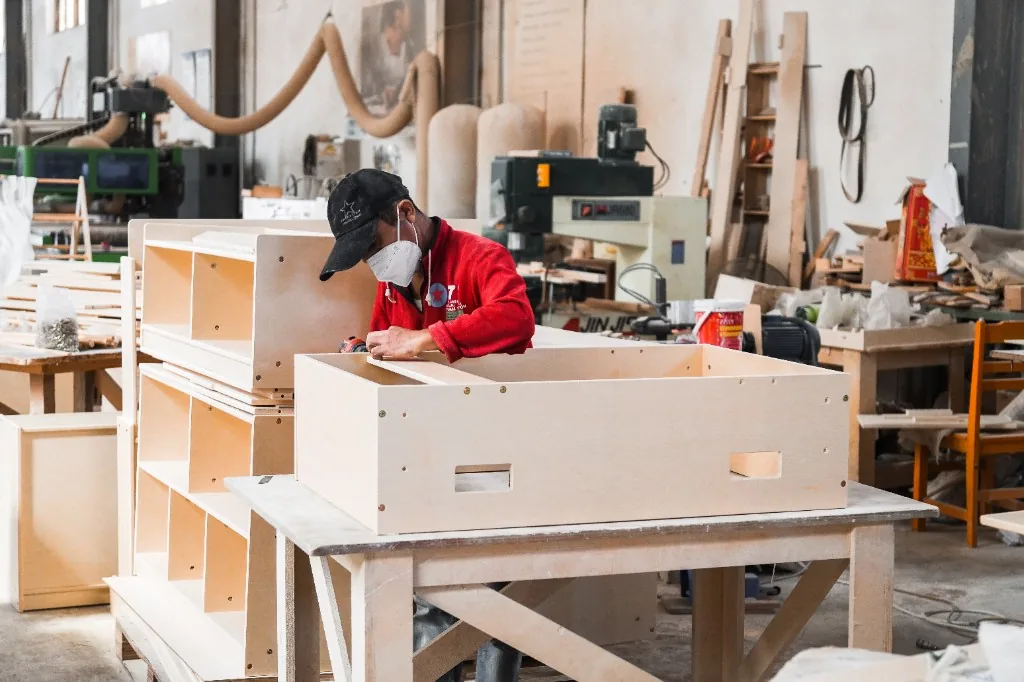
Custom is the leftover: a wall a standard bay will not fill, or two age groups that cannot share one seat. Everything else is stock. Mark stock first, then write only the millimetres a catalog width cannot hit. A PO that customizes every shelf spends production time on email. How the leftover millimetres get written — and what that does to the date — is on custom preschool furniture lead time. How that split runs on the factory clock is on order preschool furniture from China.
How to verify. Ask which lines actually break a catalog width or height. A good answer is a short custom list — cut the 4.5 m cubby run to 4.2 m — and everything else marked stock. Fail case: sending the mood board as the custom brief, so every shelf waits on a new millimetre. Skip the split and the 30–45 production days become a revision thread instead of a cut list.
Need the twelve checks turned into a room list?
Send the floor plan, age groups or licensed places, and the opening date. West Shore returns a 2D/3D layout with quantities, heights and a factory-versus-local split.
Get the furniture schedule5–8. Clock, Path and Money
5. Opening date
Standard production is about 30–45 days after the drawing and purchase order freeze. A classroom package commonly needs about 10–14 weeks door to door — ocean, a licensed broker, tax and inland delivery. If the opening is already inside 10–12 weeks, mark those rooms local. Do not start a factory clock you cannot finish.
How to verify. Ask the factory to count backward from the opening date on a calendar, including ocean, broker and inland — not a hopeful “about three months.” A good answer is a freeze-by date written on the schedule, or those rooms marked local. If opening is already inside 10–12 weeks, do not start the boat. Skip the backward count and the furniture is still on the water when the assessor walks in.
6. Factory, local, or split
- Factory. A classroom or centre list, mixed SKUs, packed by room, and time on the calendar.
- Local. A named SKU this month, two replacement chairs, a colour-match for a room that already exists.
- Split. The rooms that must open buy local. The next rooms take the boat if the date still holds.
Who should quote which path lives on the suppliers guide. This preschool furniture buying guide only requires that you name the path per room — not “we will see.”
How to verify. Ask for the path named per room on the same schedule as the drawing. A good answer looks like “Rooms 1–2 factory; Room 3 local — it opens in seven weeks.” “We will see” is not an answer, and neither is one Incoterm pasted across rooms with different opening dates. Skip the name and you put rooms that should never have shared a PO on one invoice.
7. Landed cost, not the factory invoice
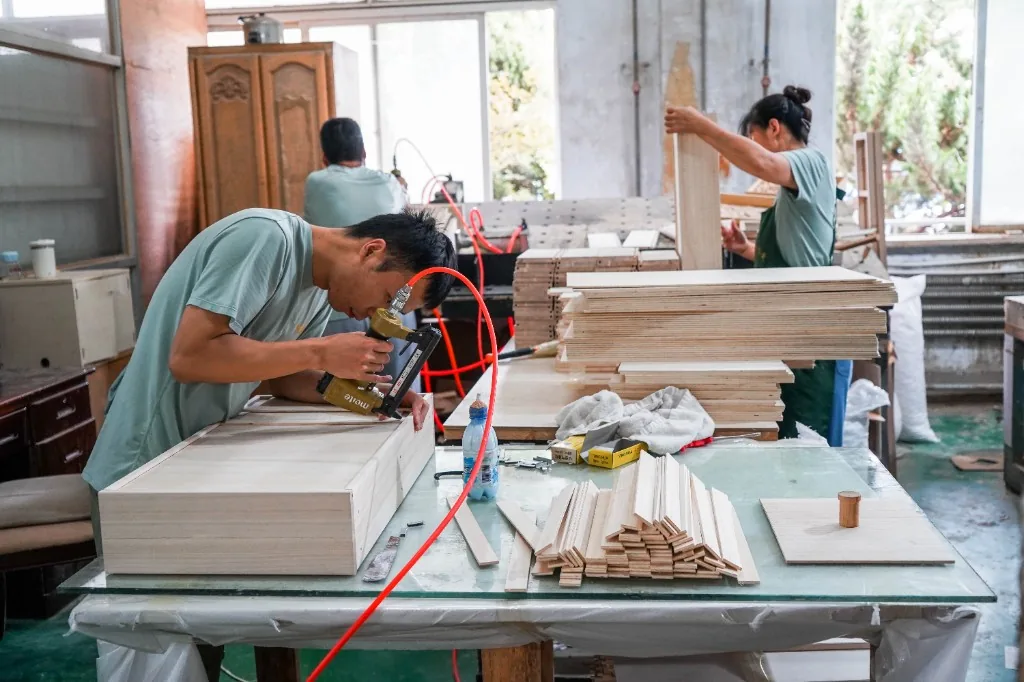
A factory invoice is one cell. A board number has to survive freight, tax and the last mile. Put the same room list through the import daycare furniture landed-cost calculator — this page will not invent a container rate, and it will not re-run that calculator.
How to verify. Ask for one classroom as a line list, not a single factory figure. A good answer has a number or a “TBD — broker to confirm” on every line below, on the same SKU list you will send to the factory. A blank line is a surprise invoice. Skip the extras and the board approves a number that is not the number — then compares it with a local delivered sticker.
A one-classroom landed-cost line list looks like this — labels, not rates. Fill them on your room list; the deep math stays on the calculator.
- FOB furniture — that room’s SKUs only, at the named Chinese port.
- Ocean freight + insurance — that room’s share of the container, not “included somehow.”
- Duty — on the dutiable base your broker names for that destination.
- GST / VAT — and whether the centre can recover it. Many childcare operators cannot.
- Broker, port and inland — clearance plus the truck to the door, including a tail-lift if the site has no dock.
8. Name the Incoterm
Print one Incoterm and one named port on the PO. West Shore quotes a centre program as FOB at the agreed Chinese port so the stack stays visible; the clock around that quote is on order preschool furniture from China. CIF only if you wrote CIF. Do not leave the term blank and argue about who booked the boat in week ten.
How to verify. Ask which Incoterm and which named port are printed on the PO, and who is importer of record. A good answer is one term, one port, and the centre or its appointed importer named in writing. “FOB China” with no port is not an answer. Skip the term and week ten is a fight over a booking you thought was included.
What FOB Shanghai commits each side to — swap Shanghai for Ningbo or Qingdao and the split does not change:
- Seller. Packed goods to the named Shanghai terminal, export formalities, commercial invoice at furniture value.
- Buyer. Ocean freight, cargo insurance, destination clearance, duty, GST/VAT, inland delivery, and the licensed broker.
CIF [destination port] moves ocean and insurance onto the seller; duty, tax and the truck stay with you. That is still not a door price — drop the FOB cell into the landed-cost calculator and compare that total with a local delivered quote.
9–12. Payment, QC, Packing, Broker
9. Payment follows the freeze
A factory PO is not “pay when the truck arrives.” Deposit follows a frozen drawing; balance follows packing and factory QC, before the box is released. If the millimetres are still moving, the deposit is early. Payment shapes and what each tranche is buying sit on order preschool furniture from China — this check only asks that the cash dates match the freeze.
How to verify. Ask when the deposit is due and which drawing it is attached to. A good answer is “deposit after freeze; balance after factory QC, before the bill of lading.” A bad answer is “pay when it lands” or a deposit on a mood board. Skip the dates and you fund a revision cycle, or you treat arrival at the centre as the balance date and the container never leaves.
10. QC against the locked drawing
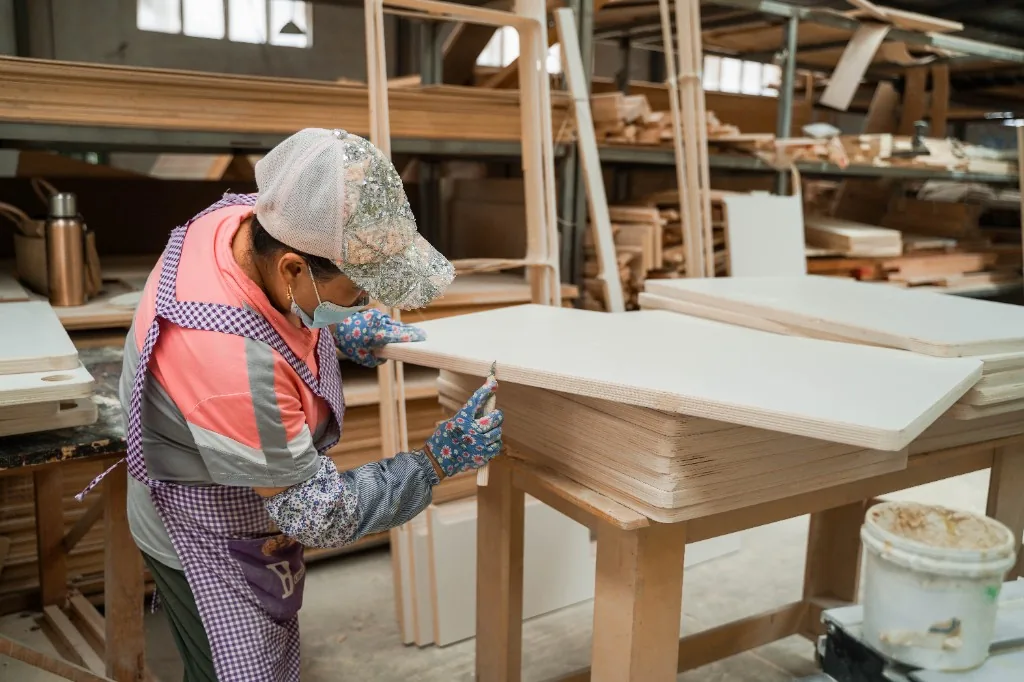
Inspection is a hold against your millimetres, not a brand name and not a certificate on the wall. Who stands at the plant, when the third-party slot is booked, and why QC after sailing is a claim file live on order preschool furniture from China. This page only asks: is there a sheet that matches the locked drawing?
How to verify. Ask for the inspection sheet that will be used against the locked drawing — not a generic sampling flyer. A good answer is a checklist with your heights, counts and carton marks on it, and a hold rule if a line fails. Book any third-party inspector against that same sheet. Skip it and the first time you measure a chair is after the vessel sails — a claim file, not a factory hold.
A QC checklist against the locked drawing contains at least these lines. If a line is blank, the seal waits.
- Heights. Seat and table heights vs the two age lines on the PO — a failed band is a hold, not “sort it on site.”
- Counts. Cubby and locker sections vs licensed places; chair qty vs the room list.
- Finish and edge. The frozen spec, not a catalogue photo from an older job.
- Carton marks. Classroom name and SKU vs the packing list, so install is not a treasure hunt.
- Hold rule. Fail any of the above and the container is not sealed.
11. Pack by classroom
A mixed container is not 200 of one chair. Carton marks should match the room list so install does not become a treasure hunt. See preschool classroom furniture for how a room package is specified. If two extra chairs are all you need, stop — that is not a factory program.
How to verify. Ask for carton marks that match the room list — Toddler Room A / chairs / 14 — not a mixed pallet labelled “chairs.” A good answer is a packing list the installer can read without opening every box, with the same room names as the drawing. Skip the marks and install becomes a treasure hunt on opening week, or two rooms swap height bands.
12. Name the broker
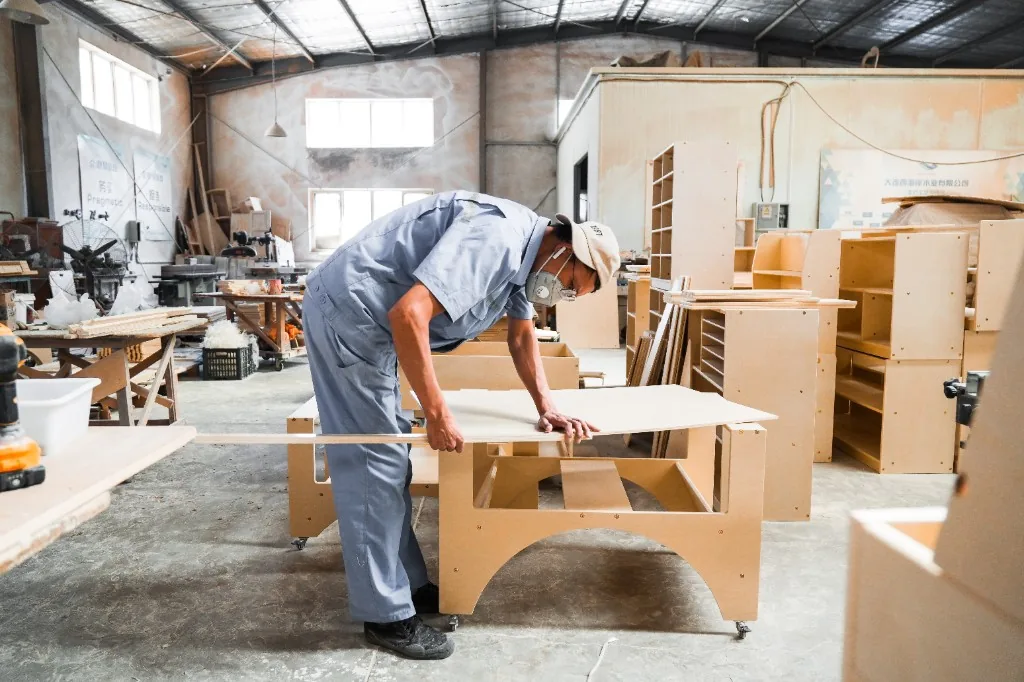
Pick the destination-country broker before anyone books a box, and put that firm on the PO. West Shore hands off a factory program — about West Shore — but clearance stays yours. Country landings: U.S.A. · Australia · Canada · UK.
How to verify. Ask for the broker’s name and licence in the destination country before anyone books the box. A good answer is a firm, not “we will find someone at the port.” The three items below are what that firm needs from you while the container still does not exist. Skip the name and the box sits while you invent an importer, or someone tries to self-clear a classroom package.
Before the container exists, the broker needs these from the buyer — not from the factory after the seal:
- Importer of record — legal name, address, and the tax / ABN / EIN that market files.
- The frozen commercial pack — invoice, packing list, and the Incoterm plus named port already on the PO.
- A delivery address that can take the box — or the tail-lift / unpack instruction if the site has no dock.
What This Guide Is Not
- Not the Australia LDC buy list. That is childcare furniture checklist Australia — infant / toddler / preschool rooms under NQF.
- Not the factory clock. MOQ, 30–45 days, custom versus stock and payment live on order preschool furniture from China.
- Not a price list. Room AUD / USD ranges stay on the furnish pages. Catalogues stay on cataloghi di prodotti.
- Not a safety certificate. Confirm current product-safety and licensing rules in your jurisdiction. Do not treat a brand name as a pass.
Domande frequenti
What should I check before I buy preschool furniture?
Freeze the drawing, age heights, arrival-storage count, opening date and whether the job is factory, local or a split. Then name the Incoterm, the broker and how QC will run against that drawing. A catalogue page is not a purchase order.
Is a preschool furniture checklist the same as a room list?
No. The checklist is the twelve decisions that must be true before anyone cuts a panel. The room list is the SKU schedule those decisions produce — quantities, heights and one finish, packed by classroom.
When should I use a factory instead of a local catalog?
Factory when you have a multi-room or whole-centre list and at least 10–14 weeks. Local when you need a named SKU this month or a two-unit restock. Split when one room must open and the rest can wait for the boat.
How is this different from the Australia furniture checklist?
The Australia page is an LDC room-by-room buy list under NQF space rules. This preschool furniture buying guide is the purchase-order gate for any market — what must be frozen before you sign.
How is this different from ordering preschool furniture from China?
That page is the factory clock: MOQ, 30–45 day production, custom versus stock, payment and QC. This page is the twelve checks that decide whether that clock should start.
Do I need a customs broker on a factory preschool furniture order?
Yes, if the goods cross a border. Name a licensed customs broker in the destination country before the container exists. Do not self-clear a classroom package.
Can I use this checklist for a top-up order, not a new centre?
Yes. Checks 1–4 shrink: you already have heights, a drawing and a storage count from the rooms that exist — only confirm the top-up does not change them. Checks 7, 10 and 12 still apply in full: landed cost on the extra lines, QC against the same locked drawing, and a named broker before any new box exists. A six-chair restock is usually local; a second classroom on the same finish is still a factory program.
Share the floor plan, room ages, capacity and opening date. West Shore returns a 2D/3D concept, quantities and a clear factory-versus-local split so you do not sign a moving drawing.
Not ready to send a floor plan? browse the product catalogues.
Planning guidance for operators and procurement teams. Confirm current customs, tax and furniture safety rules in your jurisdiction. West Shore manufactures in Dalian and has supplied 5,000+ institutions; it does not replace your broker, your assessor or your licensed consultant.