Australian long day care: this page is the inch chart for openings and section widths. NQF hallway versus room, 3.25 m² and one cubby per licensed place sit on childcare storage and cubby planning Australia.
Looking for the standard daycare locker dimensions? Most centers fail by choosing storage heights children can’t reach, creating unnecessary work for teachers. A standard preschool locker should be 42–50 inches high with a 9–12 inch section width to foster child independence.
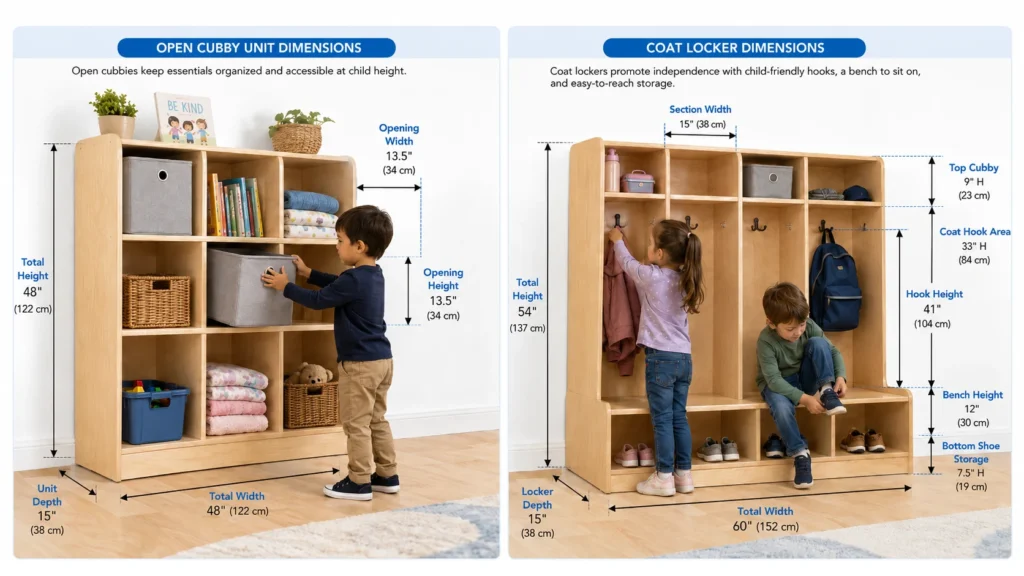
This 2026 guide breaks down the precise dimensions for open cubbies and coat lockers, helping you plan a compliant and functional entrance area that survives high-traffic commercial use.
Why Daycare Locker Dimensions Matter
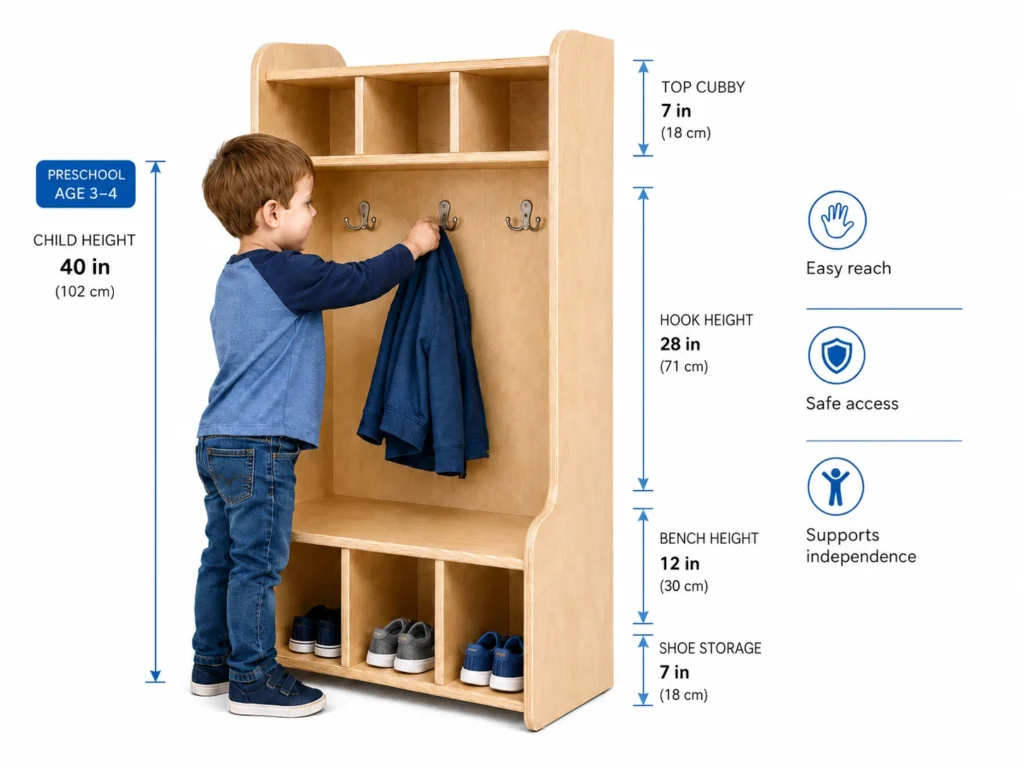
Daycare locker dimensions affect whether children can use the storage area independently. A locker may look practical from an adult’s point of view, but if the hook is too high, the bench is uncomfortable, or the lower storage is hard to reach, children will still need help during everyday routines.
The right size should match how children actually move. For example, a child around preschool age should be able to reach the coat hook without stretching, sit on the bench with comfort, and place shoes or personal items into the lower cubby by themselves. These details make the locker easier to use and safer for daily classroom transitions.
Standard Daycare Locker and Cubby Dimensions
When planning daycare storage, the size of each cubby or locker section matters, but the number of sections matters just as much. A classroom may need a small 6-cubby unit for shared materials, a 9-cubby unit for personal storage, or a 5-section coat locker near the entrance. The right choice depends on how many children will use the unit, what they need to store, and how much wall space is available.
Open Cubby Dimensions
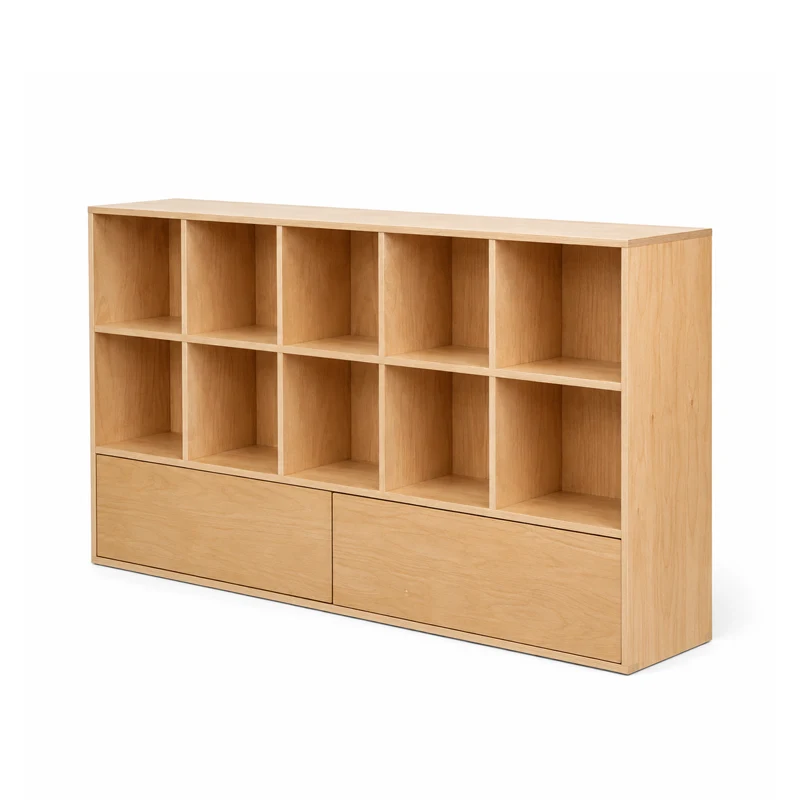
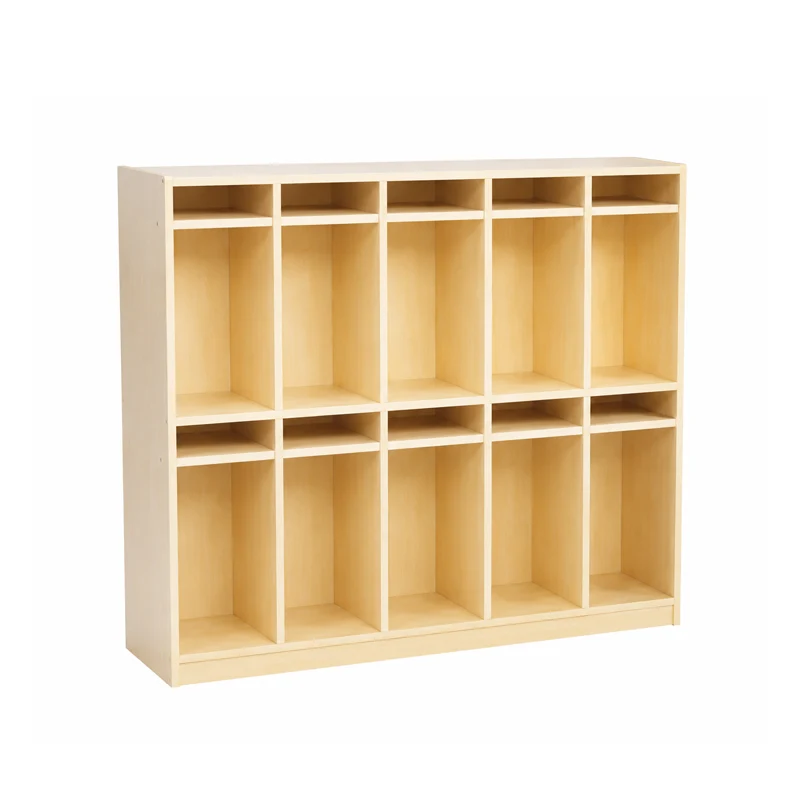
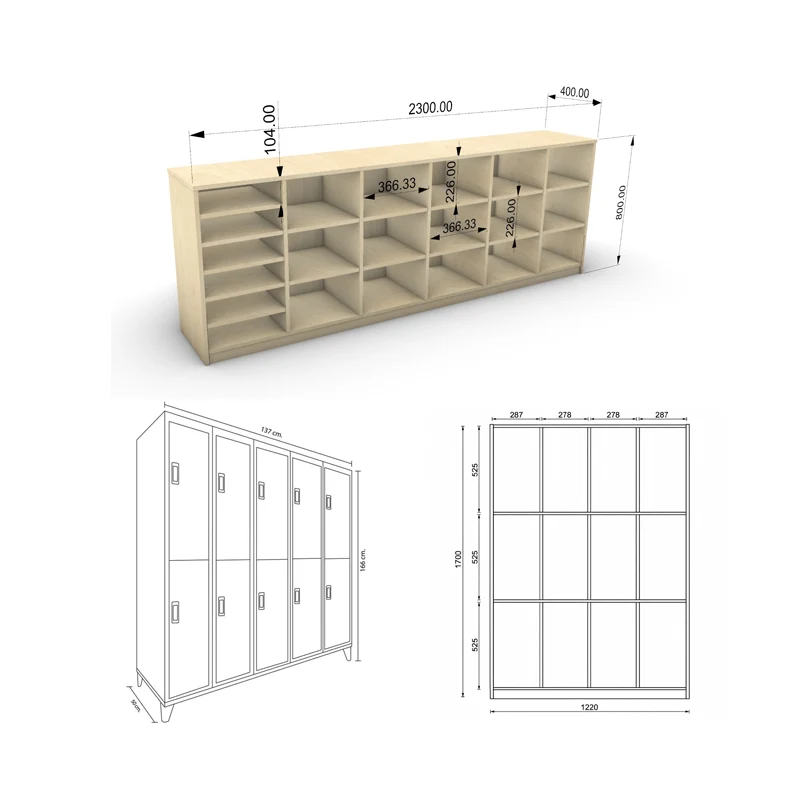
Open cubbies are usually chosen by the number of compartments. Common layouts include 6, 8, 9, 10, and 12 cubbies. Smaller units work well for compact classrooms, toddler rooms, reading areas, or shared classroom materials. Larger units are better when each child needs a personal space.
| Cubby Layout | Common Structure | Common Overall Size | Best Use |
|---|---|---|---|
| 6-Cubby Unit | 2 × 3 or 3 × 2 | 30–40 in W × 12–15 in D × 24–36 in H | Small rooms, toddler areas, shared classroom storage |
| 8-Cubby Unit | 4 × 2 | 40–48 in W × 12–15 in D × 24–36 in H | Small group personal storage |
| 9-Cubby Unit | 3 × 3 | 36–48 in W × 12–15 in D × 36–48 in H | Balanced classroom cubby storage |
| 10-Cubby Unit | 5 × 2 | 48–60 in W × 12–15 in D × 30–40 in H | Wider wall areas with easy child access |
| 12-Cubby Unit | 4 × 3 or 6 × 2 | 48–72 in W × 12–15 in D × 36–48 in H | Larger classrooms or multiple child groups |
For each individual cubby opening, a practical size is usually around 8 to 12 inches wide, 12 to 15 inches deep, and 7 to 10 inches high. The opening should be large enough for daily classroom use, but the full unit should still stay within a child-friendly height. For younger children, 2-row layouts are often easier to use than taller 3-row units.
Coat Locker Dimensions
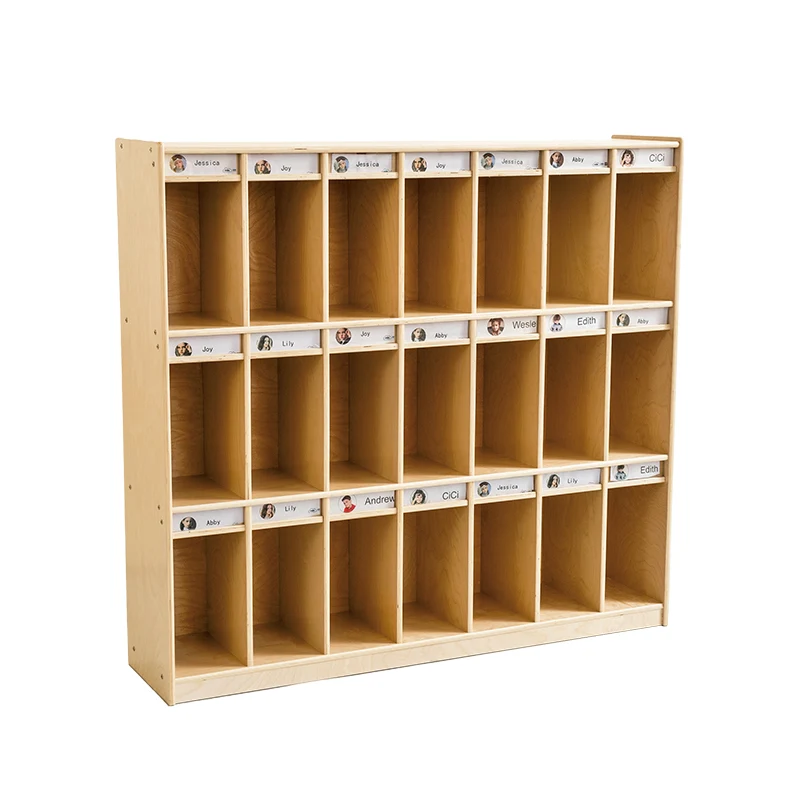
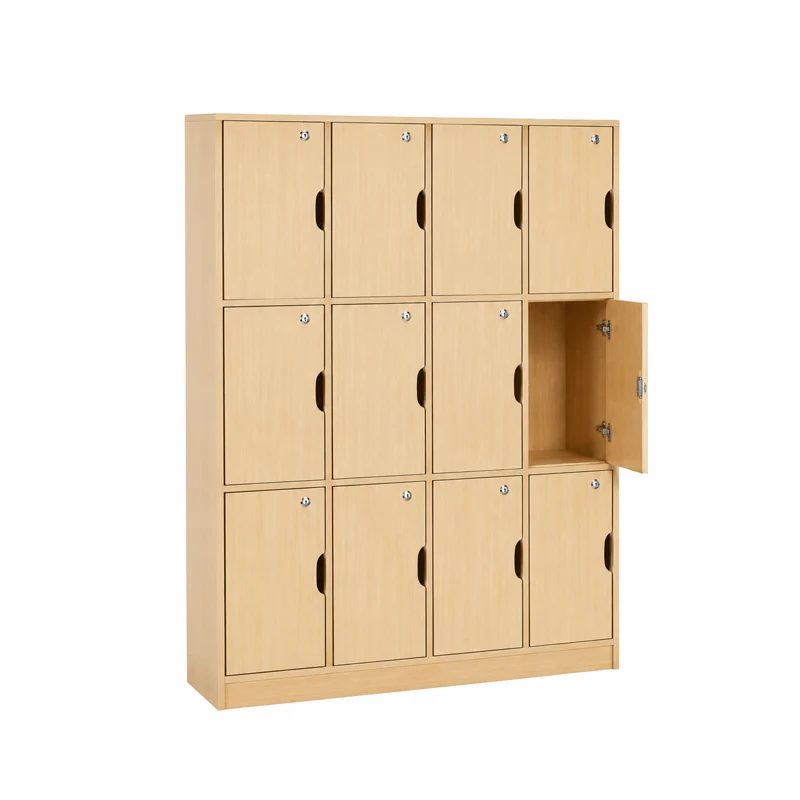
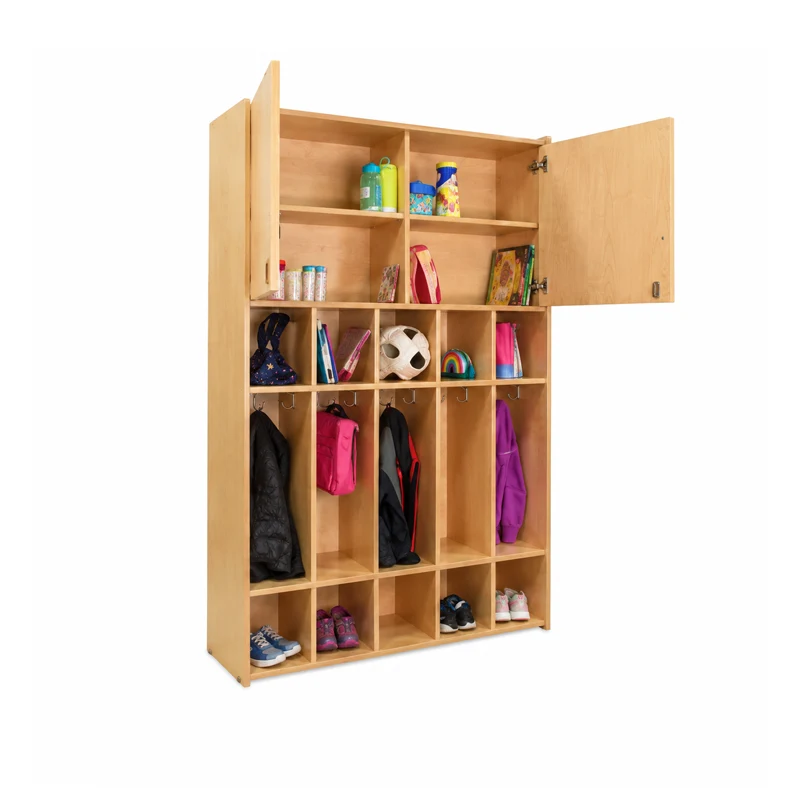
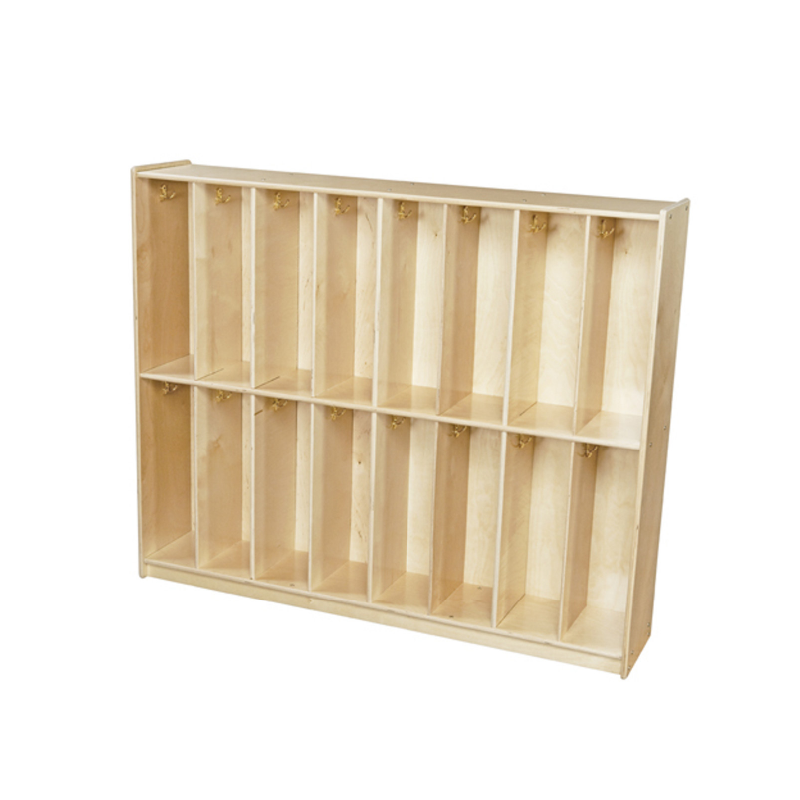
Coat lockers are usually planned by the number of child sections. Each section gives one child a personal space for hanging items, sitting during transitions, and using lower storage. Common daycare coat locker designs include 3-section, 4-section, 5-section, 6-section, and 8-section units.
| Coat Locker Type | Common Structure | Common Overall Size | Best Use |
|---|---|---|---|
| 3-Section Locker | 3 child spaces | 36–42 in W × 14–18 in D × 42–48 in H | Compact rooms, toddler areas, small entrances |
| 4-Section Locker | 4 child spaces | 42–48 in W × 14–18 in D × 42–50 in H | Small preschool groups or limited wall space |
| 5-Section Locker | 5 child spaces | 48–60 in W × 14–18 in D × 42–50 in H | Common daycare classroom choice |
| 6-Section Locker | 6 child spaces | 60–72 in W × 14–18 in D × 42–52 in H | Larger classroom entrance areas |
| 8-Section Locker | 8 child spaces | 72–96 in W × 14–18 in D × 48–60 in H | Hallways, cloakrooms, larger childcare projects |
For coat lockers, the width of each child section is one of the most important measurements. A practical section width is usually around 9 to 12 inches. If the section is too narrow, items become crowded. If it is too wide, the full unit may take up too much wall space.
The height also needs to match the children using it. For preschool classrooms, an overall height of around 42 to 50 inches is commonly used because it leaves room for top cubbies while keeping the hooks within reach. Bench height and lower storage height should also be planned carefully, so children can sit comfortably and use the bottom cubby without help.
A good daycare storage layout often combines both types. Open cubbies work well inside classrooms for personal items or shared materials, while coat lockers are better near entrances, hallways, and transition areas. When the cubby count, locker section width, hook height, bench height, and overall size are planned together, the storage area becomes easier for children to use and easier for teachers to manage.
Daycare Locker and Cubby Designs by West Shore Furniture
At West Shore Furniture, daycare lockers and cubbies are designed around children’s daily routines, not just storage capacity. Different classrooms need different storage solutions, so we usually recommend the structure based on children’s age, what they bring each day, and where the unit will be placed.
Open Cubby Units
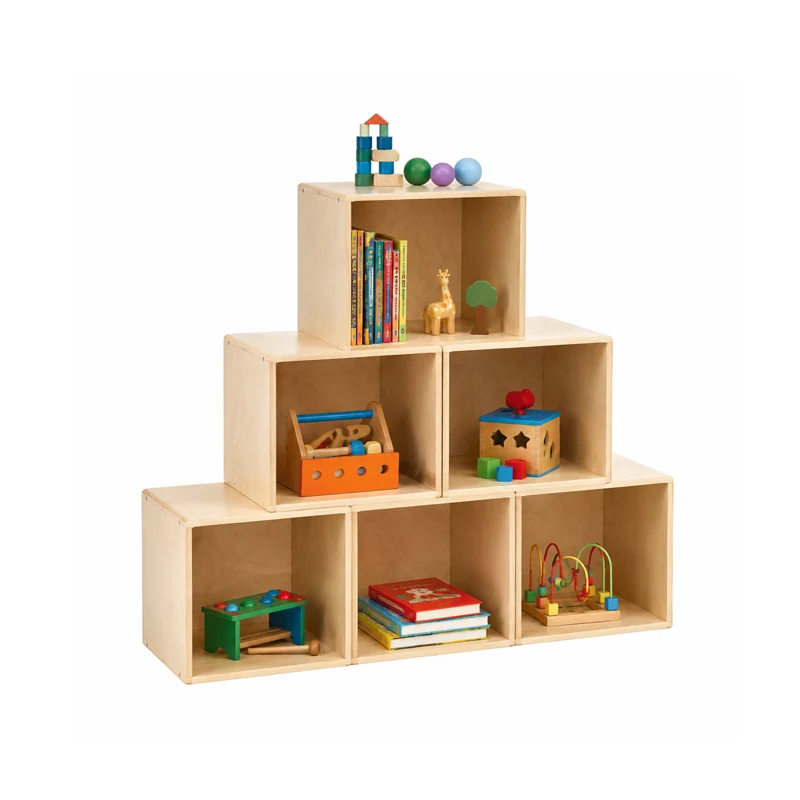
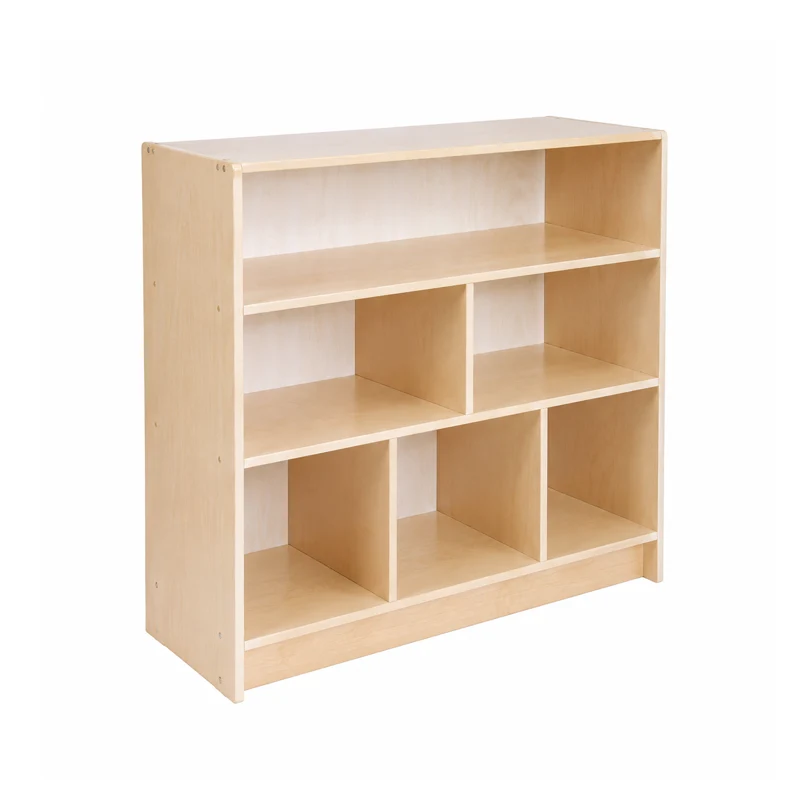
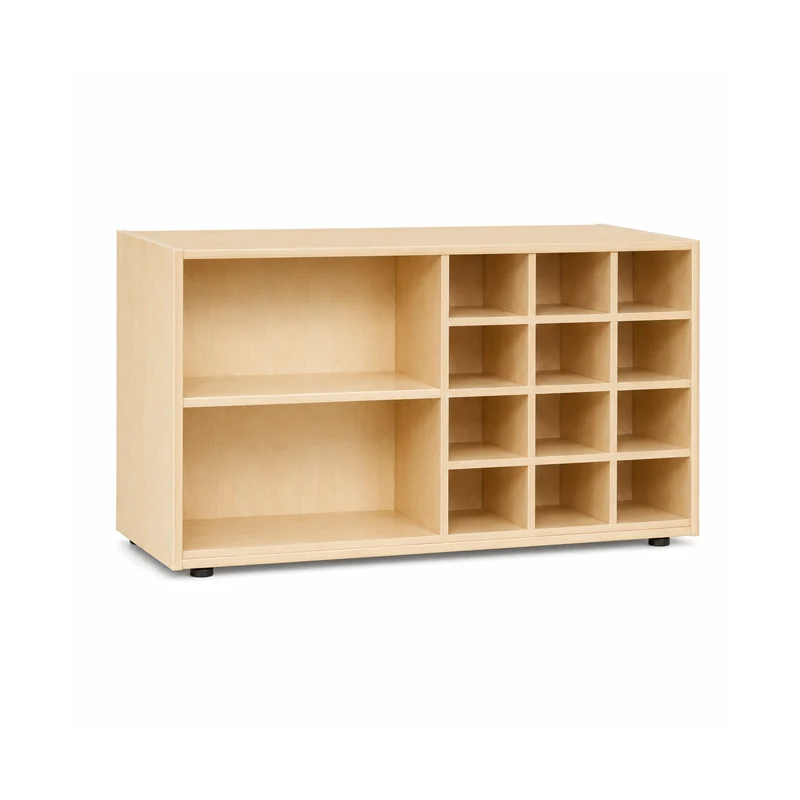
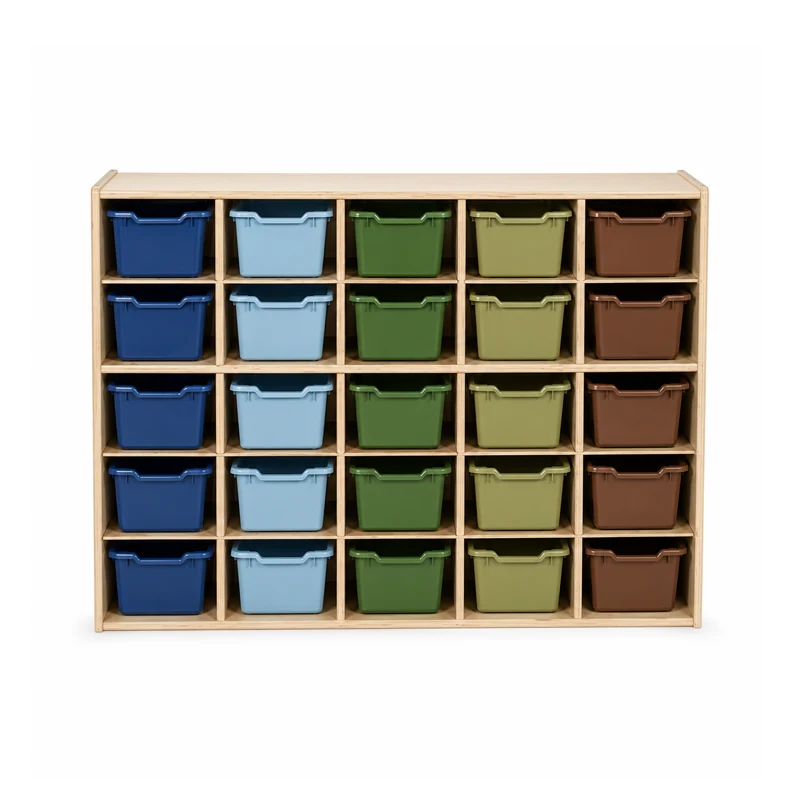
Open cubby units are one of the most flexible storage options for daycare classrooms. Each compartment gives children a clear place for their own items, while the open design helps them see, take, and return belongings independently.
In our designs, we pay close attention to the cubby opening size, overall height, and depth. The compartments need to be large enough for daily classroom use, but the unit should still stay within a child-friendly height. These units work well for classrooms, reading areas, nap storage, and general personal storage.
Coat Locker Units
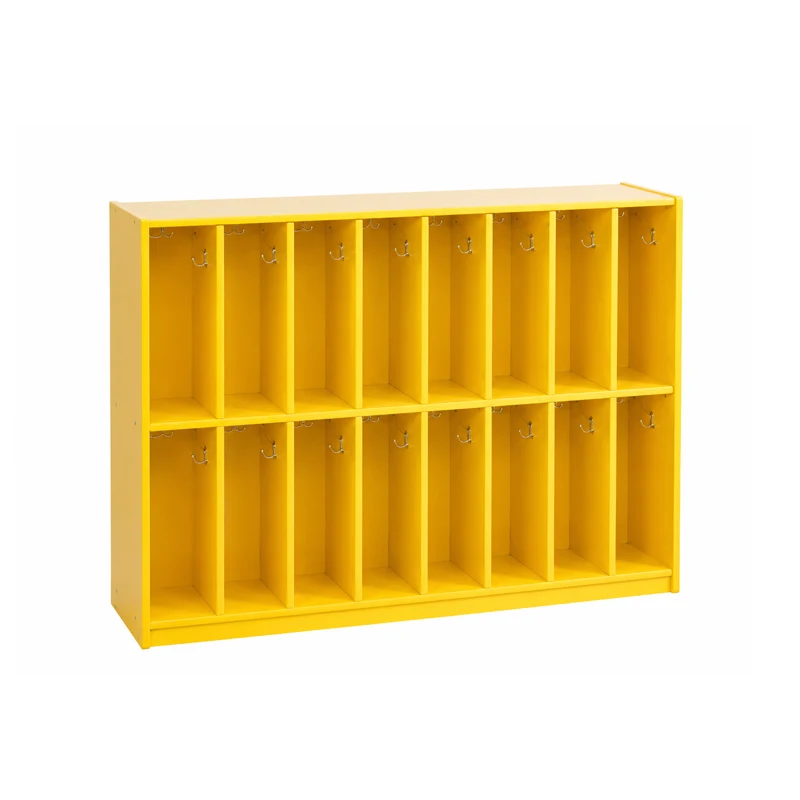
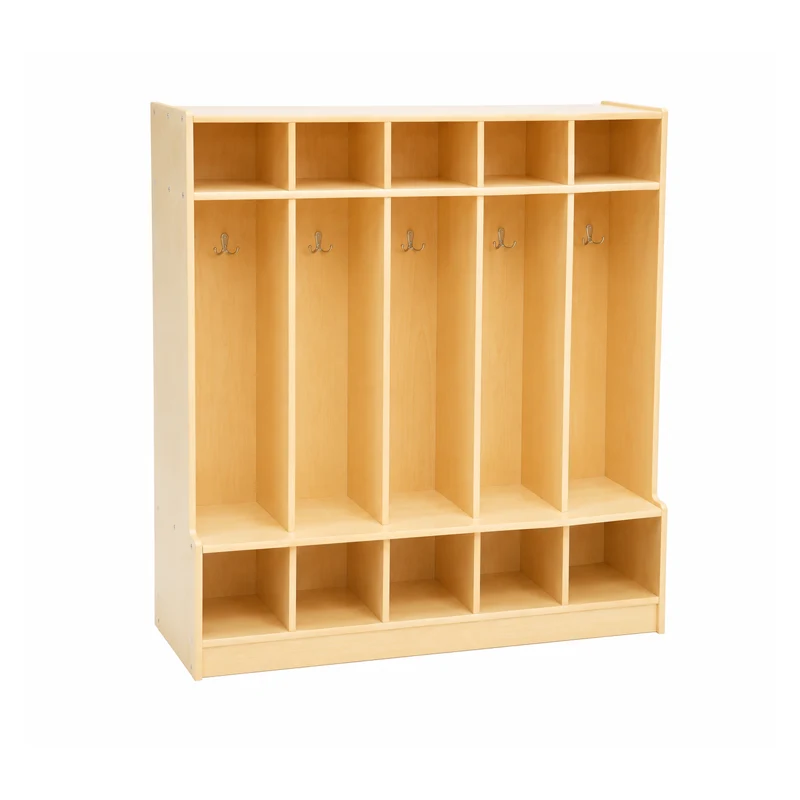
Coat lockers are usually used near entrances, hallways, cloakrooms, or transition areas. A practical daycare coat locker normally includes top cubbies, child-height hooks, a bench seat, and lower storage.
Our design focus is the relationship between the child and each functional area. The hook should be easy to reach, the bench should be comfortable for sitting, and the bottom cubby should be simple for children to use by themselves. This type of locker helps children manage arrival, outdoor transitions, and pickup routines with less teacher assistance.
Want more styles? We have many more innovative storage cabinets.
How to Choose the Right Locker Size for Your Classroom
Choosing the right daycare locker size is not only about fitting the furniture into the room. A good locker should fit the children, the classroom routine, and the safety requirements of the project. Before ordering, buyers should check the following points carefully.
Start with Children’s Height and Age Group
The first question is whether children can use the locker independently. Hooks should be within comfortable reach, the bench should be low enough for sitting, and the bottom storage should be easy to access. For younger children, lower lockers and simpler open cubbies are usually better. For older preschool children, coat lockers with top cubbies, hooks, bench seating, and shoe storage can offer better daily organization.
Match the Locker Sections to Class Size
For open cubbies, check how many compartments are needed. For coat lockers, check how many child sections are required. If each child needs a personal space, the number of cubbies or locker sections should match the group size. In larger classrooms, several smaller units are often easier to arrange than one oversized unit.
Check What Children Need to Store
Think about what children bring every day and during different seasons. Lightweight daily items may only need standard cubby space, while winter coats, larger backpacks, nap items, and shoe changes may require wider sections, deeper storage, or bottom cubbies. The locker should have enough space for real classroom use without becoming too bulky.
Measure Wall Space and Walking Paths
Lockers are often placed near entrances, hallways, cloakrooms, or classroom walls. Before choosing a size, measure the available wall length, door clearance, and walking space. The unit should not block classroom traffic, emergency exits, teacher supervision, or pickup and drop-off flow.
Keep the Main Storage Areas Within Reach
The most-used areas should be easy for children to reach. Top cubbies can be useful for lighter or less frequently used items, but hooks, bench seating, and lower storage should be designed around children’s daily movements. If children cannot reach or understand the storage area, the locker will create more work for teachers.
Consider Stability and Installation Safety
Freestanding lockers and taller cubby units should be stable enough for active classroom use. In many daycare settings, wall anchoring or anti-tip installation may be recommended, especially for taller units. Buyers should check the product structure, base stability, wall fixing options, and installation instructions before use.
Choose Child-Safe Materials and Finishes
Daycare lockers are touched and used many times each day, so materials should be durable, smooth, and easy to clean. Rounded corners, smooth edges, strong hooks, stable panels, and non-toxic finishes are important details. Easy-clean surfaces also help reduce daily maintenance work for teachers.
Check Safety Standards and Certification Documents
For daycare and preschool projects, buyers should ask whether the furniture can support the safety requirements of their market. Depending on the country or project, this may include children’s furniture safety standards, material safety reports, finish safety, formaldehyde emission control, or other compliance documents. West Shore Furniture can provide relevant product and material documentation based on the project requirements.
Consider Custom Sizing for Project Needs
Custom sizing is worth considering when the classroom layout does not match standard furniture. For example, the wall may be too short for a regular locker unit, the entrance area may need a narrower depth, or the children may need lower hooks and easier access than standard models provide.
Need Locker Sizes That Fit Your Classroom?
West Shore Furniture can customize daycare lockers and cubbies by section count, cubby size, hook height, bench height, material, color, and classroom layout.
- Custom sizes
- Child-friendly height
- Project layout support
คำถามที่พบบ่อย
How do I know if a daycare locker is the right size for children?
A good daycare locker should match how children actually use it. Children should be able to reach the hook without stretching too high, sit on the bench comfortably, and access the lower cubby by themselves. If children still need frequent adult help for simple storage tasks, the locker may be too tall, too deep, or poorly divided.
What should I check before choosing locker dimensions for a preschool classroom?
Start with the children’s age, number of users, available wall space, and daily storage needs. Then check the section width, hook height, bench height, cubby depth, and bottom storage size. The best locker is not always the largest one; it is the one children can use safely and independently in the available space.
How wide should each child’s locker section be?
For most daycare coat lockers, each child’s section is commonly around 9 to 12 inches wide. If the section is too narrow, coats and bags become crowded. If it is too wide, the whole unit may take up too much wall space. For bulkier winter clothing or larger backpacks, a wider section may be more practical.
Are higher lockers better because they provide more storage?
Not always. Higher lockers may offer more storage, but they can make daily use harder for younger children. In preschool classrooms, the hook position and reachable areas matter more than total height. Top cubbies can be useful, but the main areas children use every day should stay within a comfortable reach.
How can locker design help children become more independent?
Independence starts with access. Children need a clear personal space, reachable hooks, simple open storage, and a bench height that fits their body size. When the design is easy to understand and easy to use, children can hang items, place belongings, change shoes, and clean up with less teacher help.
What safety details should daycare lockers and cubbies include?
Look for stable structure, rounded corners, smooth edges, strong hooks, child-safe finishes, and proper anchoring when needed. Tall or freestanding units should be checked carefully for tipping risk. The furniture should also leave enough walking space so children do not crowd around the entrance area.
Should freestanding cubbies and lockers be anchored to the wall?
In many daycare settings, anchoring is recommended for taller or heavier freestanding storage units, especially in active classrooms. Wall fixing can reduce tipping risk and improve long-term stability. The installation method should match the wall type, product size, and local safety requirements.
How should daycare lockers be cleaned and maintained?
Choose smooth, easy-clean surfaces and avoid overly complicated corners where dust and dirt can build up. In daily use, teachers should wipe high-touch areas such as hooks, benches, cubby edges, and lower storage. Regular checks should also be made for loose hooks, damaged edges, and unstable sections.
Can locker dimensions be customized for different classrooms?
Yes. For daycare and preschool projects, West Shore Furniture can adjust the number of sections, cubby size, hook position, bench height, overall width, material, color, and layout. Custom sizing is especially useful when classrooms have limited wall space, mixed-age groups, or specific storage routines.