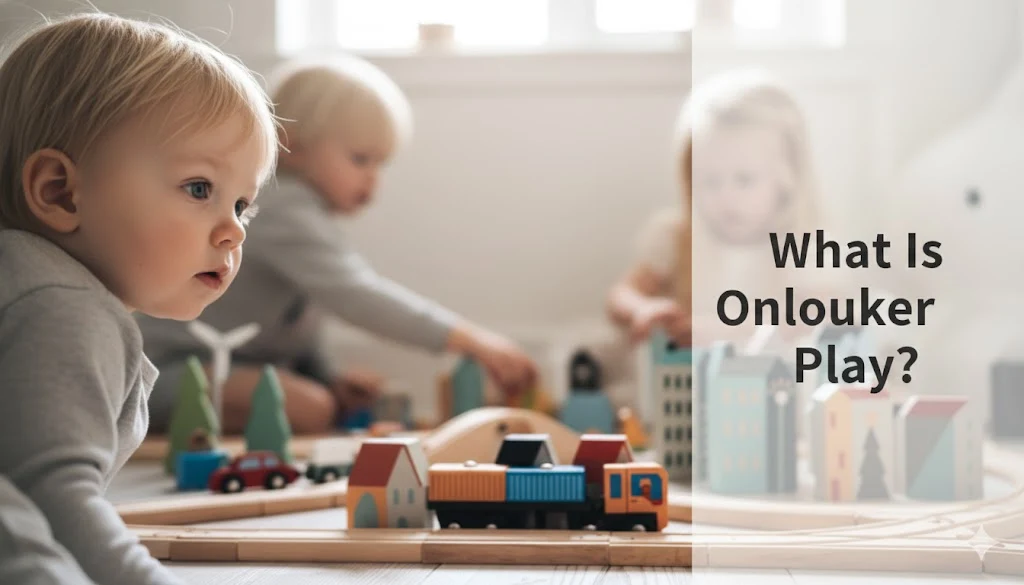
Onlooker play is a form of social learning that begins not with action, but with observation. It describes a stage in early childhood when a child closely watches others play without participating themselves. While this may appear inactive on the surface, it reflects a deep internal process. The child is gathering information, noticing group behavior, and mentally rehearsing how to join when the time feels right. In this quiet space, awareness begins to form, and through watching, the child prepares to engage.
Understanding this stage helps shift the focus from what children are doing to what they are learning. In the following sections, we will explore when onlooker play typically appears, what it reveals about a child’s development, and how caregivers can support it with empathy and intention. We will also look at practical examples and lasting benefits that extend far beyond early play environments.
What Is Onlooker Play?
Onlooker play is one of the six foundational stages of play identified by child development researcher Mildred Parten. Her framework describes how children gradually progress from playing alone to engaging with others in more complex social ways. Onlooker play stands out as a transitional stage in which a child watches others play without joining the activity.
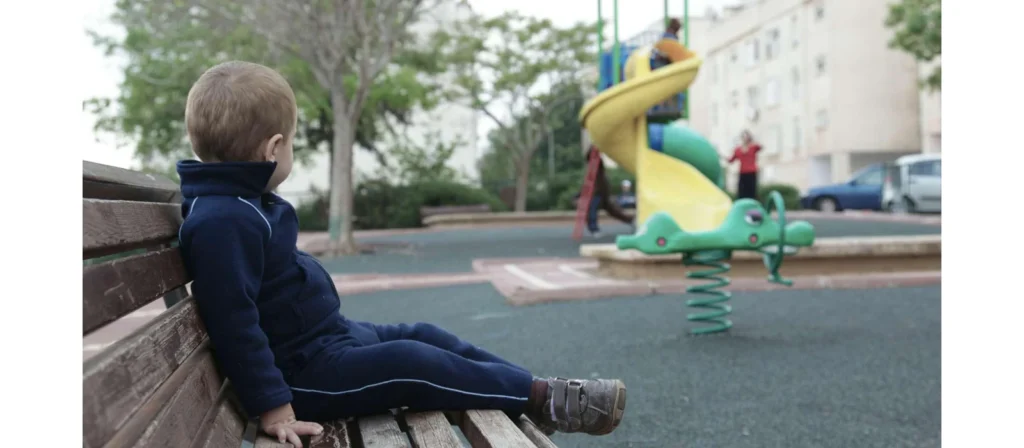
During this stage, a child may stay near a group of peers and carefully observe what they are doing. They might ask questions or make comments, but will not take part themselves. This behavior is often misunderstood as social hesitation or a lack of interest. In reality, it reflects active observation and early social learning. The child is studying how others interact, how rules are followed, and how roles within the group are formed.
In Parten’s theory, onlooker play comes after solitary play and before more interactive forms such as parallel play or associative play. It helps children begin to shift from independent behavior to social awareness. By watching others, children start to develop empathy, language skills, and an understanding of group dynamics.
This stage also serves as a kind of mental rehearsal. While the child is not physically engaged in play, they are processing how to participate in the future. They are practicing in their minds what roles they might take, how to approach the group, and how to respond to different social situations. These quiet moments of observation build confidence and prepare the child for more active social experiences later on.
When Does Onlooker Play Begin and End in Childhood?
Onlooker play generally begins during the early toddler years, most commonly between ages two and three. However, the exact timing can vary based on a child’s personality, environment, and developmental pace. Some children may show signs of onlooker behavior as early as 18 months, especially in settings where they are unfamiliar with the group or are still building confidence in social situations.
This stage is most visible during a period when children are beginning to shift from playing alone to becoming aware of others. They may appear to be standing on the edge of a group, watching attentively without taking part. For many children, this is a temporary phase that naturally fades as they become more comfortable engaging with peers.
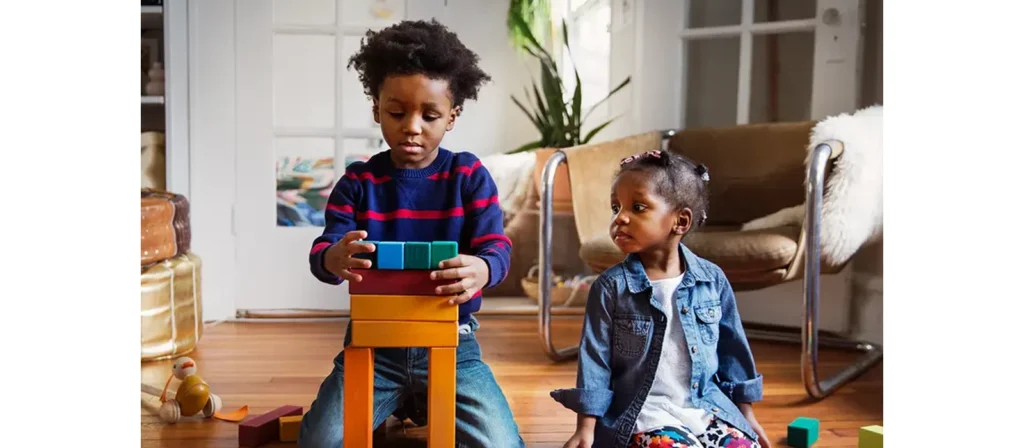
Onlooker play typically begins to decline around the age of four, as children transition into more interactive stages such as parallel, associative, or cooperative play. However, it is not unusual for children to return to this mode occasionally, especially in new environments or when observing unfamiliar activities. In such cases, onlooker behavior continues to serve as a useful tool for gathering information and adapting to changing social dynamics.
The end of the onlooker play stage does not follow a strict timeline. Rather than stopping completely, it tends to blend into more complex forms of play as the child grows. What matters most is not how long the stage lasts, but how it supports the child’s comfort, awareness, and readiness to take part in group experiences.
Support Every Stage of Play with Montessori Tools
Inspired by Mildred Parten’s stages of play, our Montessori materials help children explore, observe, and grow at their own pace. Onlooker play thrives in spaces designed for curiosity and independent discovery.
Westshore Furniture offers thoughtfully crafted furniture and Montessori tools that support each child’s unique learning journey through hands-on, open-ended environments.
Explore Our Preschool Furniture SolutionsLasting Benefits of Onlooker Play
Social Awareness
When children observe others during play, they begin to understand how people interact. They notice facial expressions, tone of voice, and body language. Over time, this helps them interpret social cues and develop awareness of how their behavior might influence others. Onlooker play gives them a quiet space to learn the unspoken rules of group behavior and prepares them for future peer relationships.
Language Development
Even without direct involvement, children are constantly absorbing the language used by others during play. They hear new words, follow sentence structures, and listen to how ideas are shared. Some children may ask questions or repeat phrases they hear. These small interactions help grow their vocabulary and strengthen their ability to communicate clearly in group settings later on.
Problem-Solving and Creativity
By watching others solve problems or overcome challenges in play, children begin to develop their own strategies. They observe how peers handle frustration, adjust their actions, or invent new ways to use toys and materials. This kind of learning encourages flexible thinking and inspires creative approaches when they begin to engage more directly.
Confidence Building
Since there is no pressure to perform, onlooker play gives children a low-stress environment to observe and learn at their own pace. They can watch how others act and mentally prepare for participation without fear of making mistakes. This quiet preparation helps build inner confidence and a sense of readiness for future interaction.
Lifelong Learning Skills
Onlooker play helps children practice patience, attention, and self-reflection. These are essential qualities for learning in school and beyond. By learning how to observe, absorb new information, and think before acting, children develop habits that support their growth long after the early years.
Examples of Onlooker Play
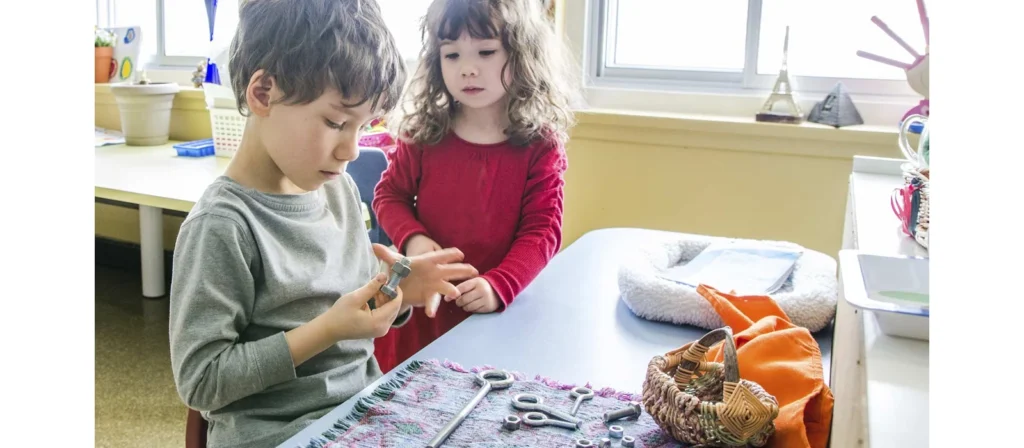
Onlooker play can show up in many real-life situations. Below are common examples that reflect how children observe rather than participate, while still learning and mentally engaging with the activity.
- Watching a game at the playground: A child stands near others playing tag, quietly watches how they take turns and follow rules, but does not run with them.
- Observing a classroom puzzle activity: A child sits near peers solving a puzzle, points out where pieces might go, but does not touch the pieces.
- Standing near a sandbox build: A child watches others build a sandcastle, comments on their work, but does not help dig or shape.
- Listening during pretend cooking play: A child observes peers pretending to cook with toy food and later copies the behavior in solo play.
- Sitting quietly during a music class: While others dance or play instruments, one child sits and watches closely, later mimicking the song at home.
- Hanging back at a playdate: A child watches others build train tracks at a friend’s house without joining in, silently tracking the activity.
- Standing near the art center: while others are painting, one child watches carefully, holding materials but not yet creating art themselves.
- Watching from the back during story time: A child sits apart from the group at a library event, listens attentively, and follows the story without interacting.
- Hovering during pretend kitchen play: A child stands near peers role-playing cooking, watches their dialogue, and may later recreate the scenario alone.
These examples show that onlooker play is not passive behavior. It is a meaningful and active part of social and cognitive development, helping children process what they see before engaging in group play.
How to Support and Encourage Onlooker Play in Toddlers
Supporting onlooker play does not mean pushing a child to participate before they are ready. Instead, it involves creating a safe environment where observation is respected as a valuable learning process. Parents, caregivers, and teachers can help children benefit more from this stage by offering gentle guidance and opportunities for future engagement.
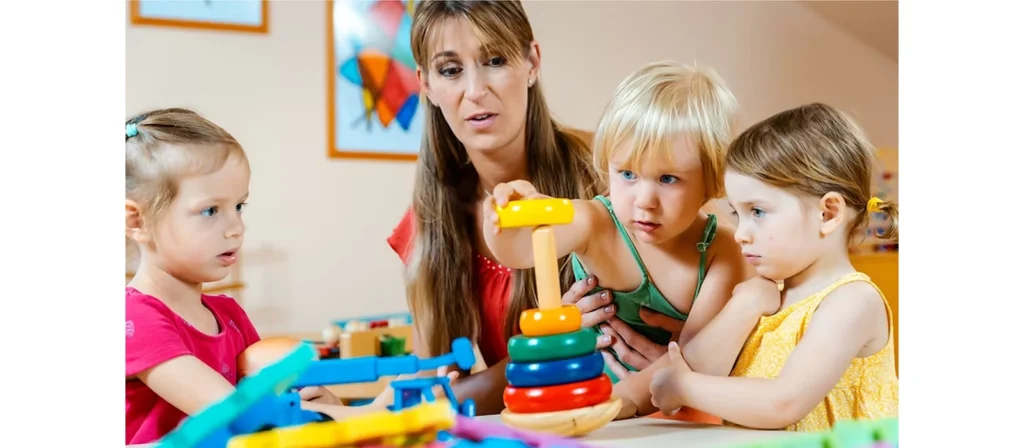
Respect the Child’s Pace
Not every child will jump into play right away, and that is completely normal. Avoid pressuring children to join a group before they feel comfortable. Let them watch from the sidelines without making them feel singled out or hesitant. This builds trust and gives them time to process what they are observing.
Create Opportunities to Observe
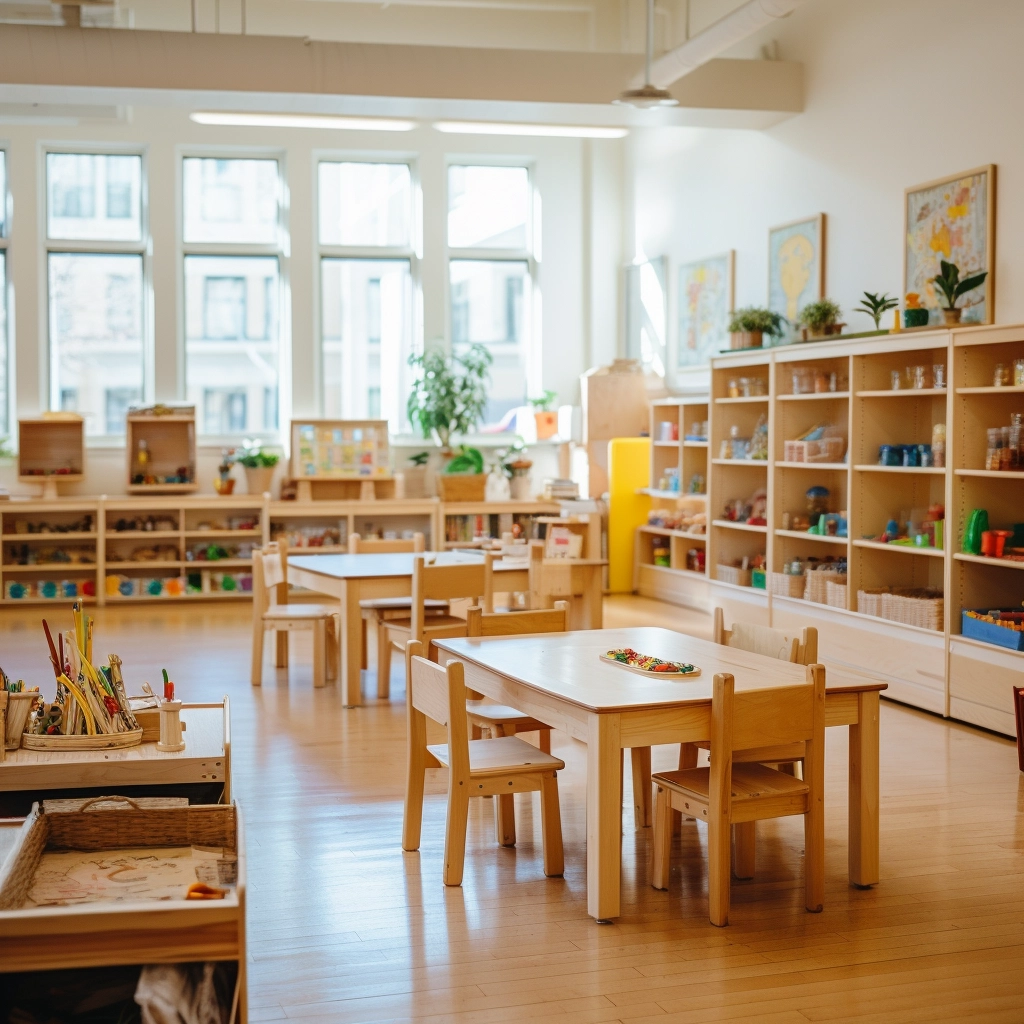
Design play spaces where children can see each other easily. Circle time, shared tables, or open floor activities allow onlooker children to have a clear view of what others are doing. Choose activities that are visually interesting, simple to follow, and open-ended, so children can watch and learn without needing to participate immediately.
Offer Gentle Invitations to Join
While some children will choose to stay in the onlooker role for a while, small gestures can help them feel welcome. You might say, “Would you like to watch closer?” or “You can jump in when you’re ready.” Avoid commands like “Go play with them,” which can create pressure and reduce motivation. Instead, keep invitations open and low-pressure.
Model Social Language
Adults can help bridge the gap between watching and interacting by modeling the language of play. For example, you might narrate what others are doing by saying, “Look, they’re building a tower together,” or “She just shared her truck.” This helps children learn the vocabulary and sentence patterns they will later use themselves.
Reinforce Confidence After Observation
If a child chooses to play independently after watching others, praise the effort rather than focusing only on joining the group. Say things like, “I saw how carefully you watched before you started building your own tower. That was smart.” This reinforces the value of observation and helps build confidence for future group participation.
Onlooker play is not something to rush through or skip. It is a key part of how children become socially aware, emotionally prepared, and confident in new environments. With the right support, children will naturally move from watching to participating when the time is right for them.
Conclusion
Onlooker play may appear quiet or passive on the surface, but it is far from inactive. It is a meaningful and important stage in early childhood development where children absorb information, observe group behavior, and prepare themselves for more active forms of social play. Through careful observation, they build empathy, learn how to communicate, and gain the confidence they need to participate when they are ready.
Understanding the value of this stage helps adults respond with support rather than concern. Instead of asking why a child is not joining in, it is more helpful to ask what they are learning by watching. This small shift in thinking highlights that observation is not a delay but a form of preparation and growth.
By offering a safe and supportive environment, parents, caregivers, and educators can allow children to move through this stage at their own pace. With time, patience, and encouragement, children will naturally take the next step from observation to participation, carrying with them the social and emotional skills they have been quietly building all along.
FAQs About Onlooker Play
Does an onlooker play mean a child is shy or has delays?
Not necessarily. While some shy children may linger in onlooker play, the behavior itself is not a sign of delay. It reflects curiosity and cognitive engagement, not avoidance.
Can an onlooker play happen in older children?
Yes, even older children may exhibit onlooker behavior when entering unfamiliar situations. It remains a useful way to process new social environments at any age.

 English
  Korean
  Japanese
  Italian
  German
  Arabic
  Spanish
  French
  Thai
Thai