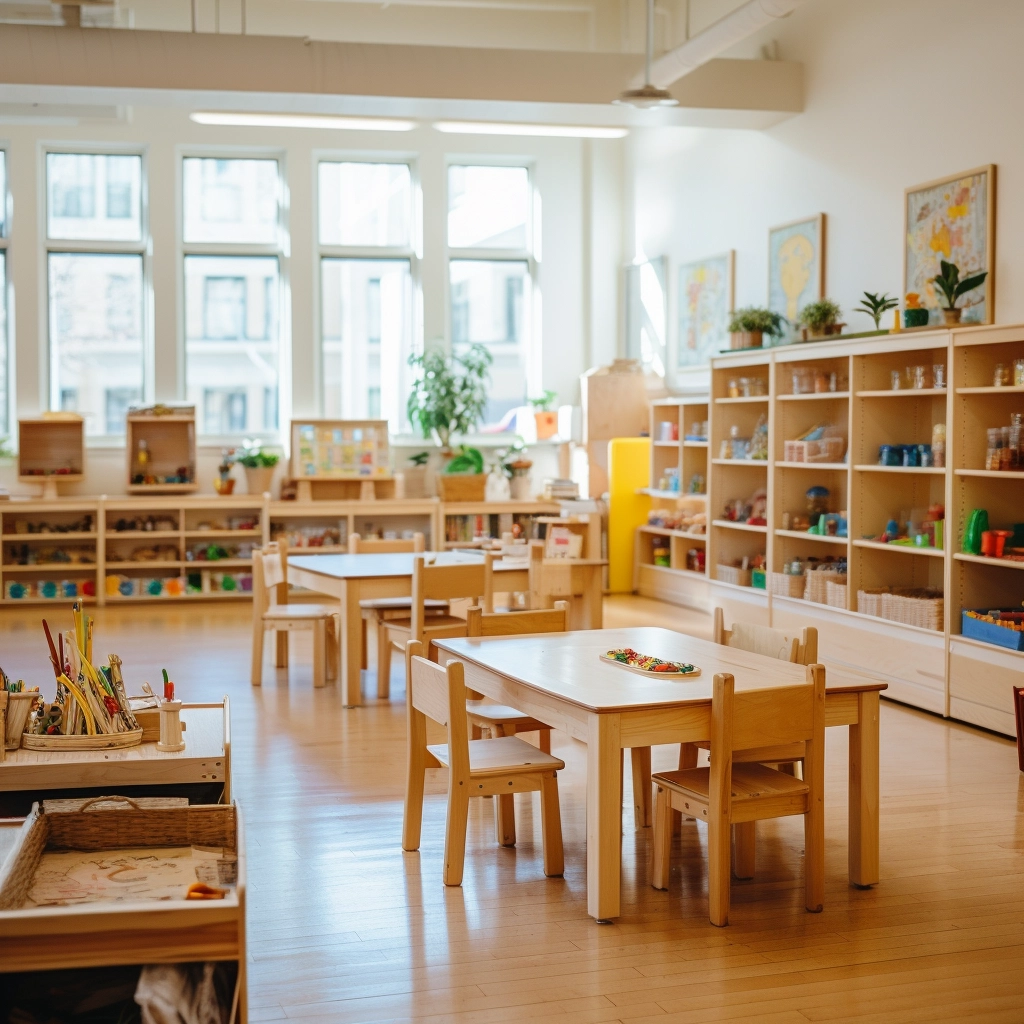
The art corner is often one of the busiest areas in a classroom. It is a place where children can use different tools and materials to create their own artwork throughout the day. To make this space work well, it needs thoughtful planning, safe layout choices, and durable furniture that can support daily use.
This guide will walk you through practical steps for setting up an effective art corner, including how to meet classroom needs, organize materials, and choose suitable art furniture. With the right setup, you can create an art center that supports children’s creativity while keeping the classroom easy to manage.
Why Is the Art Center Important in Preschool?
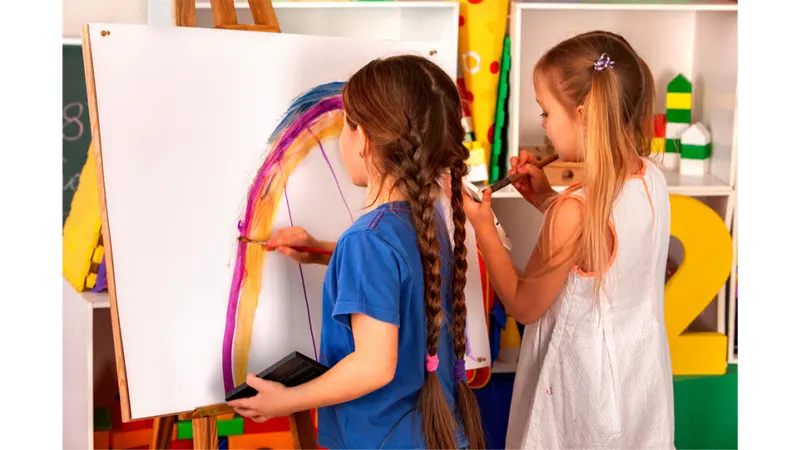
Preschool art education teaches children to find joy in painting, sparks their passion for artistic creation, and improves their artistic skills. Beyond this, children cultivate key skills that foster holistic physical and mental development. Through open-ended art experiences, children can explore, experiment, and express ideas that words alone cannot capture. The art center becomes a space where curiosity and imagination transform into meaningful learning.
1. Promotes Holistic Development
Art activities help children grow cognitively, physically, socially, and emotionally. While mixing colors and shaping clay, they learn about cause and effect, spatial awareness, and creative problem-solving. Each brushstroke strengthens fine motor coordination, while shared materials teach cooperation and empathy.
2. Encourages Self-Expression and Emotional Growth
In a preschool art center, children can express feelings they may not yet have the vocabulary to describe. Whether they paint with bold colors or create soft textures, their art becomes a safe emotional outlet. Teachers who observe these expressions gain insights into each child’s inner world, allowing them to support emotional well-being and confidence.
3. Builds Foundational Academic Skills
Art is closely linked to early literacy, mathematics, and science learning. Children gain an understanding of mathematics by drawing shapes and learn more about science through mixing colors; discussing their artwork enhances language skills, as they must describe what they have created and the reasons behind their creations. In this way, the art center in a kindergarten fosters children’s cognitive development across multiple domains.
4. Fosters Creativity and Innovation
The preschool art center gives children freedom to explore materials without fear of making mistakes. This encourages flexible thinking and persistence, traits that underlie creativity and innovation. When teachers value process over product, children learn that ideas matter more than perfection and that experimentation is a key part of discovery.
5. Strengthens Independence and Responsibility
Children thrive when given trust and clear expectations. In a well-organized preschool art center, they learn to select materials, use tools properly, and clean up after themselves. These routines cultivate independence, responsibility, and respect for the shared learning environment.
How to Create an Engaging Art Area for Preschoolers?
Designing a preschool art center from scratch can feel like a big task, but with a step-by-step approach, you can create a space that is both functional and inspiring. The goal is to encourage creativity while supporting independence, exploration, and learning. Here’s how to make it happen, even if you’re working with limited space or resources.
1. Choose a Dedicated Workspace
First, a clear and dedicated area should be selected for art activities. This space needs to be easily accessible to children while remaining at a distance from quiet zones, such as reading corners or nap areas. Ideally, if conditions permit, the area should be located near a sink or cleaning station to make it easier for teachers to handle materials like paint that are prone to causing messes.
2. Prepare Suitable Furniture
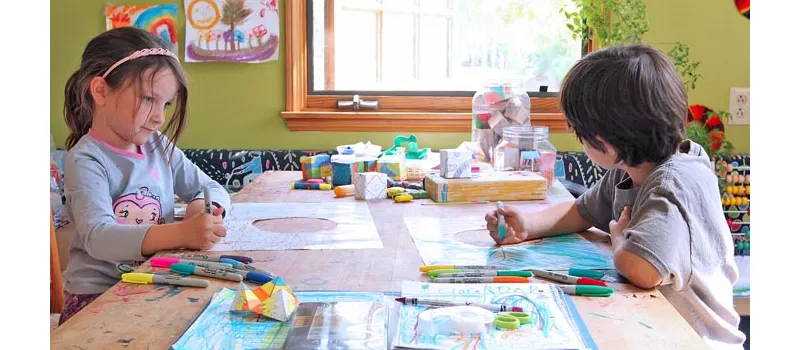
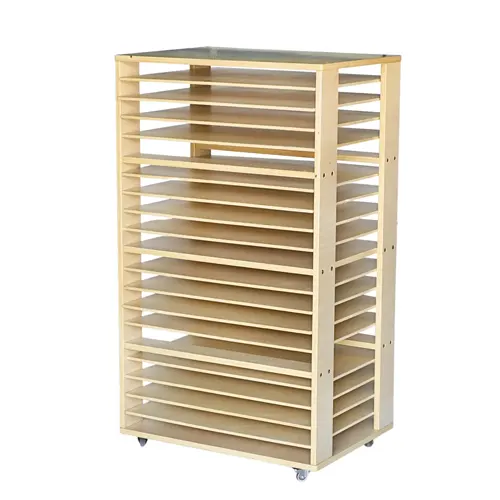
Equip the space with child-sized tables and chairs that are easy to wipe clean. Ensure chairs support proper posture and table height matches the age group. Include a nearby surface for drying artwork, such as a wall-mounted drying rack, open shelf, or labeled tray system.
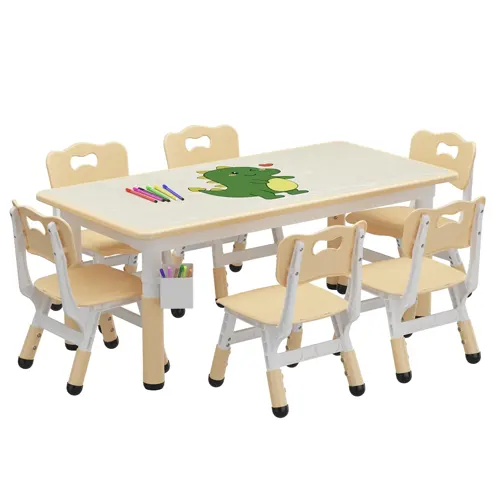
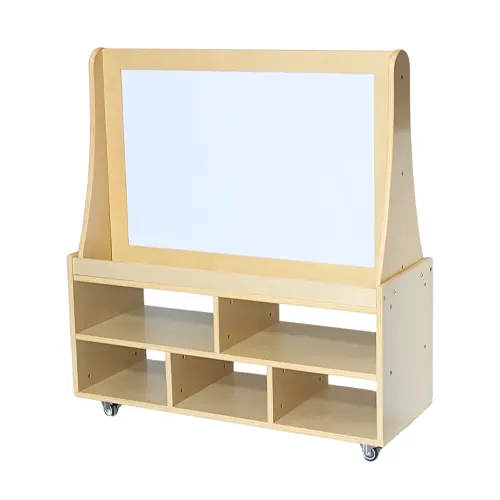
- Tables and Chairs: Choose child-sized tables and chairs that allow children to sit with their feet flat on the floor and elbows comfortably above the tabletop. Surfaces should be smooth, durable, and easy to clean after painting or gluing.
- Adjustable Easels: Provide vertical work surfaces for painting and drawing. Easels with trays for holding brushes and paint pots are ideal for minimizing spills and promoting gross motor use.
- Drying Racks: Multi-tier racks allow wet artwork to dry flat. Wall-mounted or mobile versions help save space while keeping pieces organized and smudge-free.
- Low Open Shelving: Accessible storage is crucial for independent use. Choose 2–3 tier open shelves around 60–70 cm tall with visible containers to store paper, tools, and craft materials.
- Rolling Carts or Mobile Units: These are perfect for rotating seasonal or specialty supplies. Select carts with locking wheels and compartmentalized trays.
3. Preparing Storage for Art Supplies
Effective storage keeps the art activity area organized and easy to manage. You can use low shelves, trays, storage bins, or cabinets to store craft supplies and materials in an organized manner. Materials used daily should be placed within the children’s reach, while items requiring teacher supervision should be stored out of reach or in locked cabinets.
4. Add Protective Mats and Aprons
Art activities inevitably lead to some mess, so preparing for cleanup from the start is essential. Protective mats safeguard the floor beneath easels and areas where water-based paints are used; additionally, they visually define the art activity zone, which is particularly effective in open-plan classroom layouts. Every child should have an apron. You can hang them on low hooks near the art area, making it easy for children to put them on before painting or using glue.
5. Provide Art Materials and Tools for Children
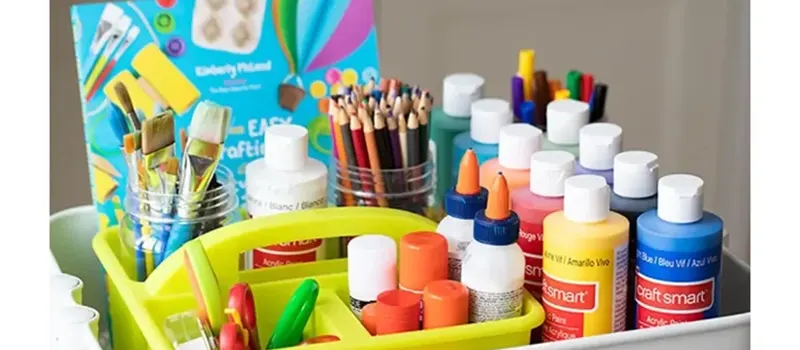
Begin with a small selection of versatile, age-appropriate art supplies that support open-ended exploration. Crayons, markers, paper, glue, and scissors are often enough for a strong start. As your preschool art center evolves, you can gradually introduce more diverse materials. The key is to offer tools that are easy to use, safe, and accessible to children.
Essential supplies:
- Crayons, markers, colored pencils
- Washable paints and brushes
- Child-safe scissors and glue sticks
- Recycled paper, cardstock, and construction paper
- Recycled materials (egg cartons, cardboard tubes, fabric scraps)
- Modeling clay or dough
Outdoor Art Center in Preschool
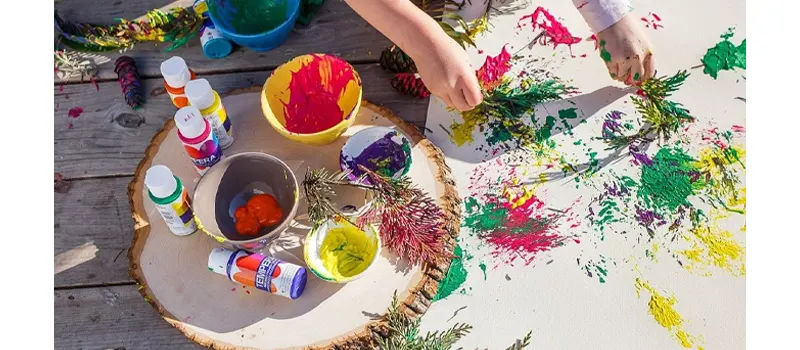
An outdoor art center offers preschoolers a unique opportunity to blend creativity with nature. Unlike indoor setups, an outdoor preschool art center allows children to explore different textures, colors, and movements inspired by their surroundings. It is an ideal space for messy, large-scale, and sensory-rich projects that may not be suitable indoors.
Benefits of Taking Art Outdoors
Outdoor art activities offer children greater freedom, allowing them to create, explore, and express themselves to the fullest. Elements such as natural light and fresh air can spark creative inspiration that is difficult to find indoors. As children engage in hands-on creation and utilize their senses, they are able to observe authentic colors, textures, light and shadow, and forms. For preschoolers, this type of artistic experience not only helps relieve stress and foster sensory development but also stimulates a more open-ended form of creativity.
Key Considerations When Setting Up an Outdoor Art Space
An outdoor art center offers preschoolers a unique environment to explore creativity in connection with nature. It allows for messier, larger, and more sensory-rich projects that may not be feasible indoors. However, setting up a successful preschool outdoor art center requires more than simply moving supplies outside. It calls for intentional design that accounts for weather, supervision, safety, and flexibility.
- Location and Supervision: Select a semi-shaded area that offers protection from direct sunlight and strong winds. The outdoor art center should be easy to supervise from multiple angles and, if possible, positioned near a water source to simplify cleanup and support messy play.
- Outdoor-Friendly Furniture: Use furniture that can withstand weather exposure and is easy to clean. Plastic tables, washable mats, or treated wood surfaces work well. A sturdy easel built for outdoor use adds variety and encourages vertical work like painting or drawing.
- Weather-Resistant Storage: To keep materials protected, use waterproof containers or mobile carts with lids that can be stored indoors when not in use. Supplies should be clearly labeled and grouped by function, with extra care given to keeping them dry, organized, and easily accessible to children.
- Adapted Routines for Outdoor Cleanup: Rather than duplicating indoor cleanup routines, tailor them to the outdoor setting. Provide a plastic bin of wet rags for wiping hands, a labeled bucket for dirty tools, and a shared hose or water station for rinsing messy materials before packing up.
- Creative Drying and Display Areas: Use the environment creatively to dry and showcase artwork. Set up clotheslines between trees or posts, hang art on fences with clips, or lay pieces out on crates in the sun. These flexible methods save space and give children a sense of ownership over the full creative cycle
- Flexibility for Changing Conditions: Outdoor environments are unpredictable, so always have a back-up plan in place. Be ready to move activities indoors if needed, or shift to weather-themed projects like rain painting, mud art, or leaf rubbings when conditions allow.
Materials Best Suited for Outdoor Art Area
Focus on large, washable, and weather-tolerant supplies. These might include:
- Chunky sidewalk chalk
- Tempera paint with large brushes and rollers
- Spray bottles with colored water
- Mud, sand, and clay for sculpting
- Recycled cardboard, fabric, and wood scraps
- Natural items like stones, leaves, or pinecones
These open-ended materials allow children to mix, build, and express ideas in ways that connect their creativity with nature.
The Teacher’s Role in the Preschool Art Center
In a high-quality preschool art center, the teacher acts as a facilitator rather than a director. Their role is to support creativity, independence, and classroom flow while ensuring materials and routines stay developmentally appropriate. Key responsibilities include:
- Preparing and organizing materials so children can access them independently
- Introducing new tools and techniques through short, simple demonstrations
- Observing children’s use of materials to understand their developmental progress
- Offering encouragement and gentle prompts without leading the creative process
- Asking reflective questions that help children describe or expand their ideas
- Ensuring safety by supervising the use of tools and managing the flow of the space
- Guiding children to care for the space, including cleaning and returning materials
- Helping label or display artwork in ways that honor children’s ownership
- Rotating materials based on children’s interests and seasonal themes
Management Strategies for the Preschool Art Center
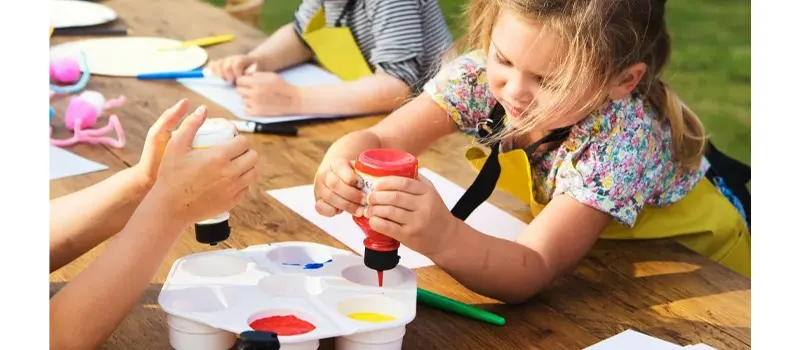
A preschool art center can easily become the most exciting and chaotic part of the classroom. Without thoughtful management, it may lead to clutter, confusion, and missed learning opportunities. Strong management strategies help maintain order, support independence, and allow creativity to flourish within a structured and predictable environment.
1. Set Clear and Consistent Rules
Establishing clear rules is the foundation of effective classroom management. Begin by setting simple expectations for how to use materials, how to treat others in the space, and how to move safely around the art center. Rules should be age-appropriate, positively phrased, and reinforced through modeling, repetition, and visuals. Children are more likely to follow expectations when they understand them and see them consistently applied.
Here are examples of rules commonly used in a preschool art center:
- Use one material at a time and return it before choosing another.
- Use walking feet in the art area. No running.
- Ask a teacher before using new or unfamiliar tools.
- Use kind words and gentle hands when working near others.
- Hang finished artwork in the drying area before starting something new.
- Clean your space when you are done. Leave it ready for a friend.
2. Prioritize Cleanliness Through Daily Routines
Cleanliness is not just about hygiene, but also about teaching children respect for shared spaces and materials. Build clean-up procedures into your daily rhythm and make them predictable. Provide labeled containers for scraps, water bins for dirty brushes, and smocks to protect clothing. Encourage children to wipe tables, return materials, and care for tools as part of their responsibility as artists.
3. Ensure Physical and Emotional Safety
Safety includes both the physical layout of the space and how children feel within it. Arrange furniture to allow for easy movement and minimize crowding. Store sharp tools out of reach and supervise the use of materials like scissors or paint. At the same time, foster a safe emotional climate where children feel free to express themselves creatively without judgment or pressure.
4. Use Visual Guides to Support Behavior
Visual charts, picture labels, and step-by-step cue cards reinforce expectations without constant verbal reminders. Post signs that show the correct way to use glue, wash brushes, or hang artwork. These tools help children navigate the space independently and reduce the need for teacher intervention.
5. Rotate Materials Intentionally
Limiting the number of materials available at once helps reduce mess and supports focus. Curate a small selection of tools each week, based on themes or developmental goals, and store the rest. This keeps the center tidy, supports safety, and helps children build deeper engagement with what is available.
6. Observe and Adjust Frequently
Effective management is responsive. If you notice that children struggle with a particular rule, consistently forget a step during cleanup, or misuse a tool, take time to revisit the routine or adjust the environment. Observation helps identify which systems are working and which need revision.

Conclusion
From layout to daily routines, every detail matters. A successful preschool art center balances open-ended exploration with clear structure, offering children a space they can both enjoy and manage independently.
West Shore Furniture offers complete support to help you bring that vision to life. From classroom design and furniture selection to art materials and storage solutions, we provide everything you need to establish a fully functional and inspiring art center.