Operators ask for solid wood as if it were a moral grade. A cubby is a panel product. Solid wood vs plywood preschool furniture is which core is on which part — carcass, top, edge — not a slogan on a catalogue cover.
Direct answer
West Shore Furniture cuts preschool furniture as plywood-first carcasses with specified edges and water-based finish. Solid wood belongs where it earns it: a beech chair seat, a pine table apron, a dowel, a bumper. MDF is named if it is on a door — never as unnamed “wood.” Particleboard on a child-climbed cubby is a walk-away, not a value line.
Buyer page — core, edge, finish
Plywood: the usual factory carcass and top for cubbies and tables.
Solid wood: seats, frames, and parts that want a species — not a 4.2 m side panel.
MDF / particleboard: only where the brief says so. Never as an unnamed “wood” cubby.
Why birch plywood behaves in a classroom is on birch plywood furniture benefits. The twelve checks live on the buying guide.
West Shore has manufactured in Dalian since 2003. That does not make every panel FSC, CARB or GREENGUARD. Claim those only where the SKU can be documented.
Solid Wood vs Plywood vs MDF on a Classroom PO
Write four cores as four answers, not as a mood. West Shore will mark each part on the room list so a photo of grain cannot replace a hinge.
| Core | Holds up when | Fails when | Write on the PO |
|---|---|---|---|
| Solid wood | Chair seats, small frames, bumpers, some table aprons | A 4.2 m cubby side asked to stay flat across seasons | Species + part (seat, not “the room is oak”) |
| Birch plywood | Carcass, shelves, table tops that must stay flat | Raw edges at a wet sink with no band | Ply grade / thickness by part + edge-band |
| MDF | A painted infill the brief allows | Hinges, wet tables, climbing | Named as MDF — never as wood |
| Particleboard | Almost never in a child-climbed cubby | Edge screw-out after one school year | Reject unnamed “engineered wood” |
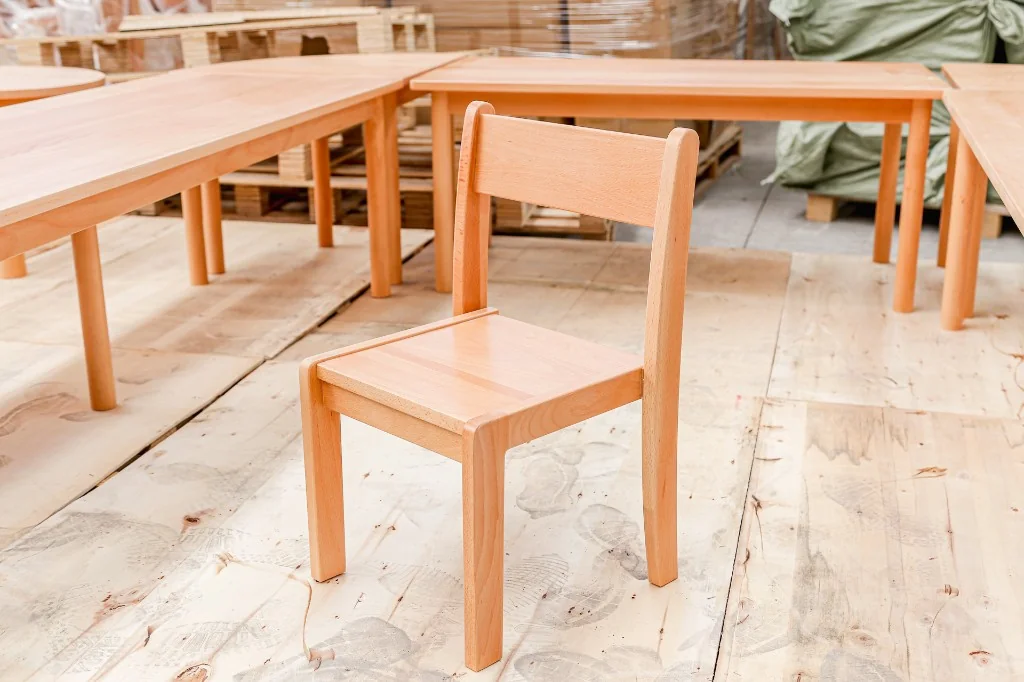
Solid wood: chairs, pine tables, bumpers
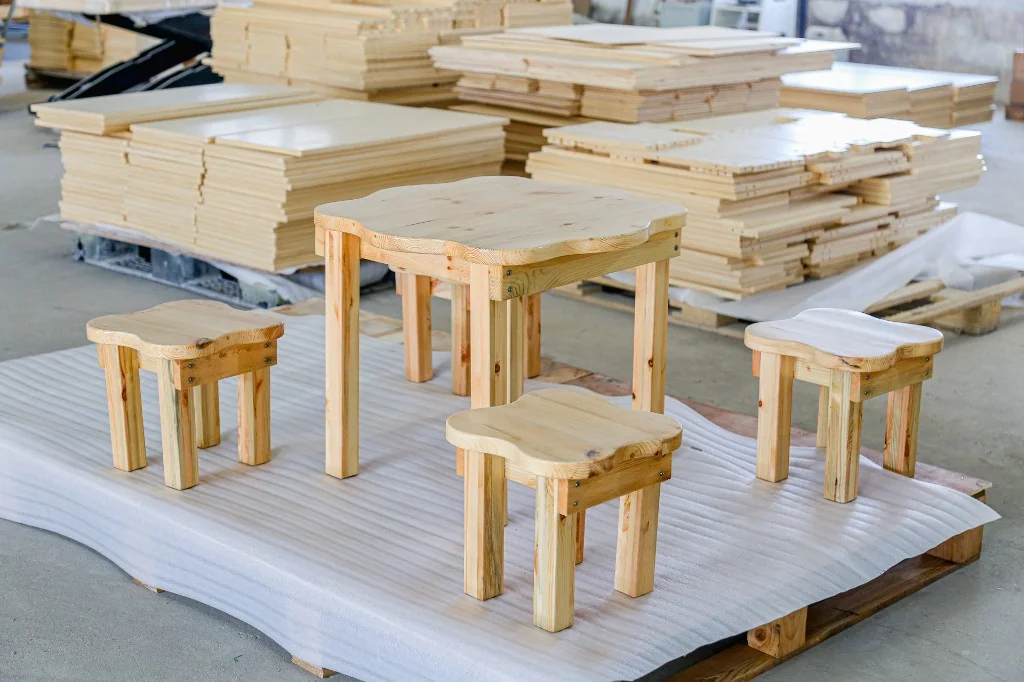
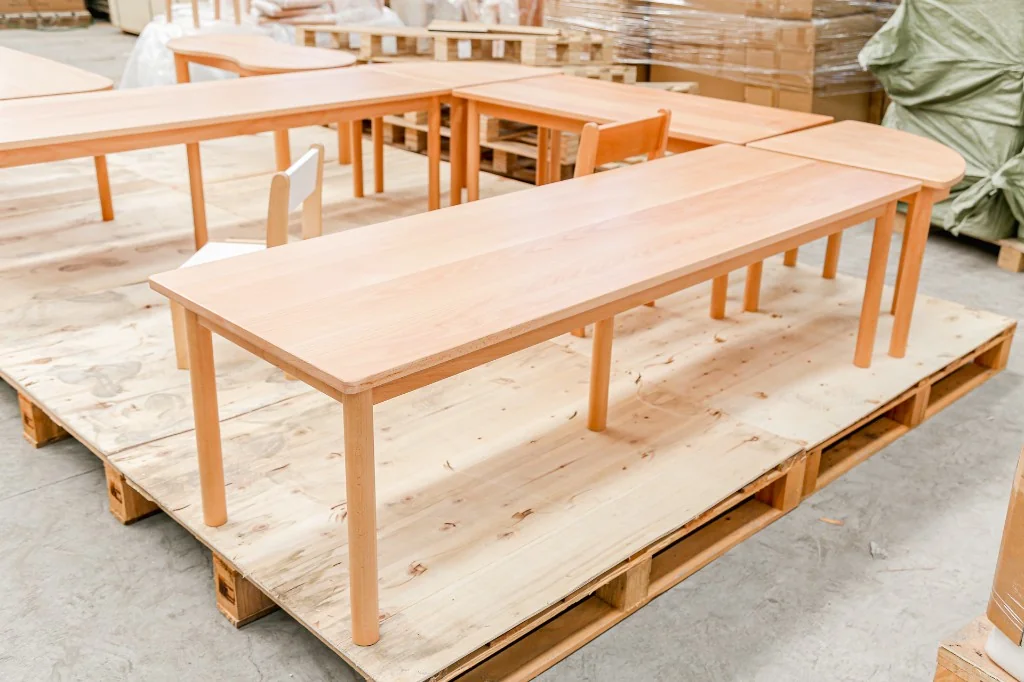
A solid-beech classroom chair is a species you can name. A solid-pine clover table is a species you can name. A “solid wood classroom” with unnamed cubby sides is a brochure. Seat height still has to match the age line on preschool tables and chairs — core does not replace millimetres.
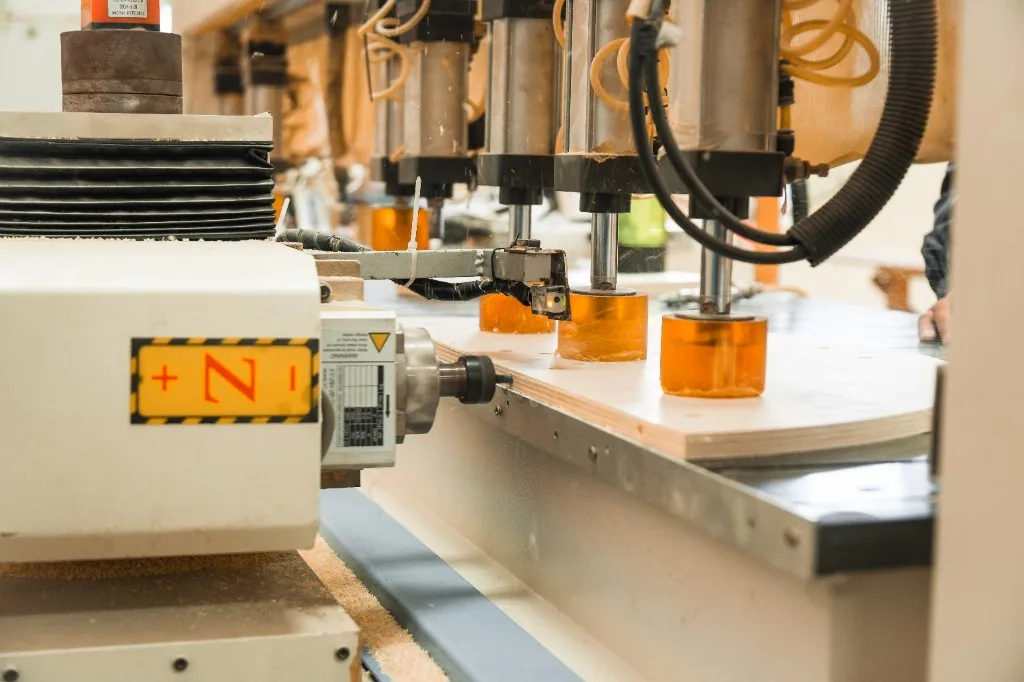
Plywood: carcasses, cubbies, laminate tops
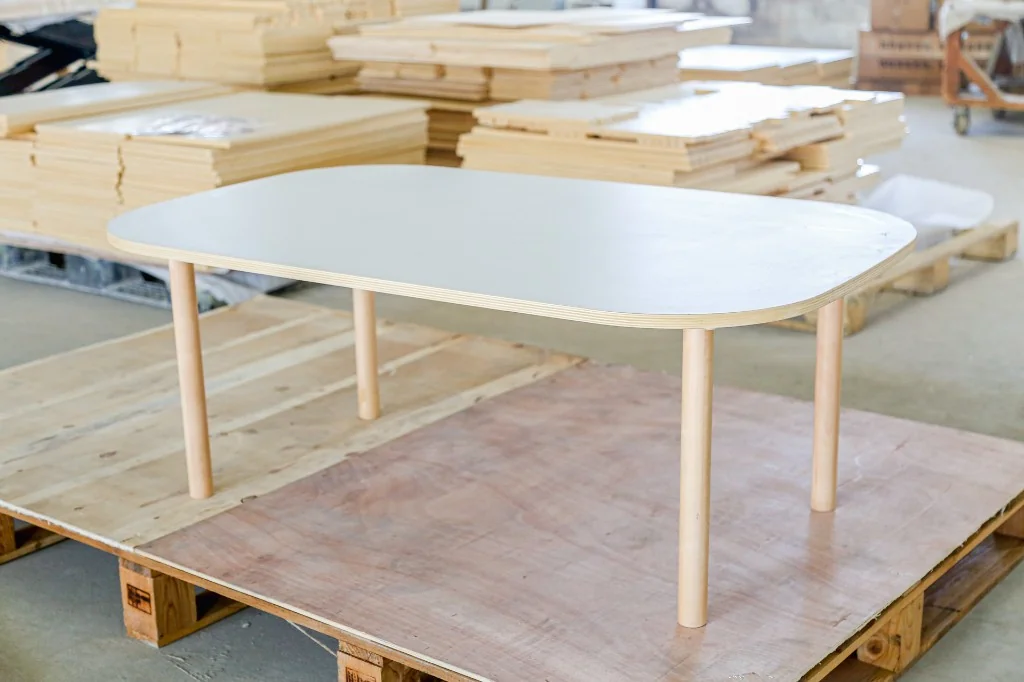
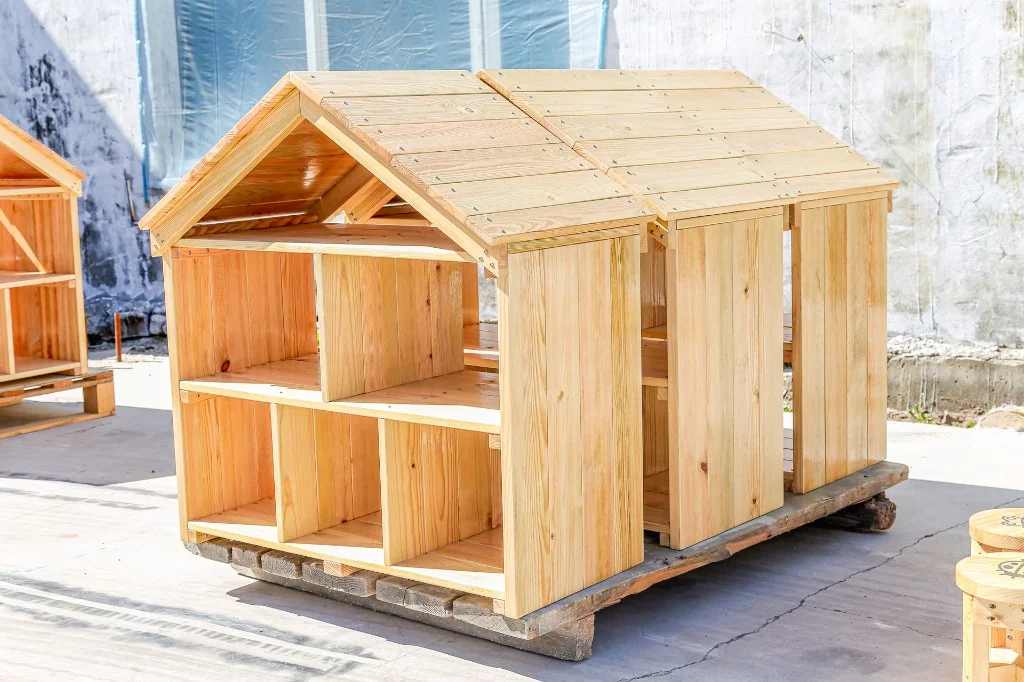
Wide sides, shelves and many table tops are plywood because the panel stays flatter than a solid board of the same width. A white laminate classroom table is still a plywood (or specified panel) core with an edge-band. Write both. A pine house cubby can mix a solid-pine face with a plywood interior — only if the PO says so.
Need the core written by part, not as “wood”?
Send the room list and which lines get wet. West Shore marks plywood carcasses, solid parts and any MDF so the PO can freeze.
Get the material scheduleWhat “Wood Furniture” Hides
- Veneer on particleboard. Looks like wood in a photo. Fails at the hinge.
- Painted MDF doors on a plywood promise. Write doors separately.
- Solid-wood stain on a plywood edge. Fine if written. A lie if not.
- No edge-band at the wet table. Swell is not a finish issue. It is a core issue.
- One species for the whole room. Chairs can be beech while cubbies are birch plywood. That is a schedule, not a compromise.
- Name the part: carcass, top, door, edge, seat, leg.
- Name the core on that part: solid species, birch plywood, MDF, or walk away.
- Name the edge-band and the finish code.
- Name which tables get wet.
- Freeze the sample against the production lot before CNC.
Safety Papers Are Not a Species
A plywood cubby still needs the U.S. rule map if it ships to a U.S. centre — coatings, children’s-product analysis, tracking. That map is daycare furniture safety standards USA, not a birch slogan. TSCA Title VI / CARB formaldehyde is a panel conversation. ASTM F963 is a toy conversation. Do not file them as one PDF.
What This Page Is Not
- Not a hymn to birch. The classroom case for birch plywood is birch plywood furniture benefits.
- Not the twelve checks. Those live on the buying guide.
- Not a price list. Catalogues stay on product catalogues.
- Not FSC, CARB or GREENGUARD for every SKU.
FAQs
Is solid wood better than plywood for preschool furniture?
Solid wood is a species and a moisture story. Birch plywood is a cross-banded panel that stays flatter on a 1.2 m table apron. West Shore Furniture does not call one “better.” The right word is which substrate matches the SKU: a solid-beech chair seat is not a solid-beech cubby carcass. Write the core by part, or you bought a photo of wood.
Why do factories use birch plywood for classroom furniture?
Wide cubby sides and table tops need a stable panel. Baltic-style birch plywood is the usual factory answer for those parts. West Shore edge-bands it, keeps water-based finish on the PO, and treats that as a classroom line — not a furniture-board slogan. The classroom case for birch is a separate page.
Is MDF OK for daycare furniture?
MDF dents, swells at a wet sink, and does not take a screw the way plywood does on a hinge line. It can appear in a painted door where the brief allows it. It is a poor carcass for a cubby children climb. West Shore will name MDF if it is on the door. It will not hide it as “wood.”
What about particleboard / chipboard?
Cheap, heavy, and unforgiving at edges. If a supplier quotes “wood furniture” and the core is particleboard, write the core on the PO or walk. Classroom cubbies fail at the hinge, not in a brochure photo.
Does plywood vs MDF change CPSC or CPSIA?
Substrate is not a substitute for the rule map. Coatings still hit 16 CFR 1303. Children’s-product analysis still applies. Formaldehyde rules (TSCA Title VI / CARB) are a different conversation from ASTM F963. West Shore will not file them as one PDF.
What should I write on the PO?
Core material by part (carcass, top, edge), finish code, edge-band, and that a sample matches the production lot. “Solid wood classroom” with no part list is how you receive a painted MDF door on a plywood promise. West Shore freezes the part list before CNC.
Share the room list and which tables get wet. West Shore returns a schedule with plywood, solid and any MDF named so you do not buy a photo of wood.
Not ready to send a floor plan? browse the product catalogues.
Planning guidance for operators and procurement teams. Confirm current customs, tax, licensing and furniture safety rules in your jurisdiction. West Shore manufactures in Dalian and has supplied 5,000+ institutions; it does not replace your broker, your assessor, your licensed consultant or a CPSC/Health Canada/MoE determination.