Birch plywood is widely used in modern furniture because it offers a dependable structure and a clean, natural look at a reasonable cost. Compared with many common sheet materials used in cabinets and interior fittings, Birch Plywood provides better dimensional stability and a more refined grain, which makes it suitable for wardrobes, kitchen cabinets, shelves, office furniture, and custom storage solutions.
Is birch plywood good for furniture? Short answer
- Yes, for carcasses, shelves, cubbies and table bases. Its cross-laminated birch veneers stay flat and hold screws at the face and the edge far better than MDF or particleboard.
- Choose the thickness by job. 15–18 mm suits sides, tops and shelves, and 6.5–12 mm suits backs and drawer bottoms. In all-birch panels from one major mill, 18 mm has 13 plies (see the table below).
- Choose the glue by room. Interior-bond panels are fine in dry rooms. Near sinks, at wet-play tables or outdoors, ask for an exterior-grade bond (EN 314-2 class 3) and sealed edges.
- Ask for the formaldehyde test for your market. The US and Canada both cap hardwood plywood at 0.05 ppm. In the EU, furniture must not exceed 0.062 mg/m³ from 6 August 2026. Details are in the table below.
- It isn’t the right choice everywhere. For heavy-wear tops, a laminate (HPL) face on a birch core resists scratches better than a lacquered veneer.
What Is a Birch Plywood Sheet?
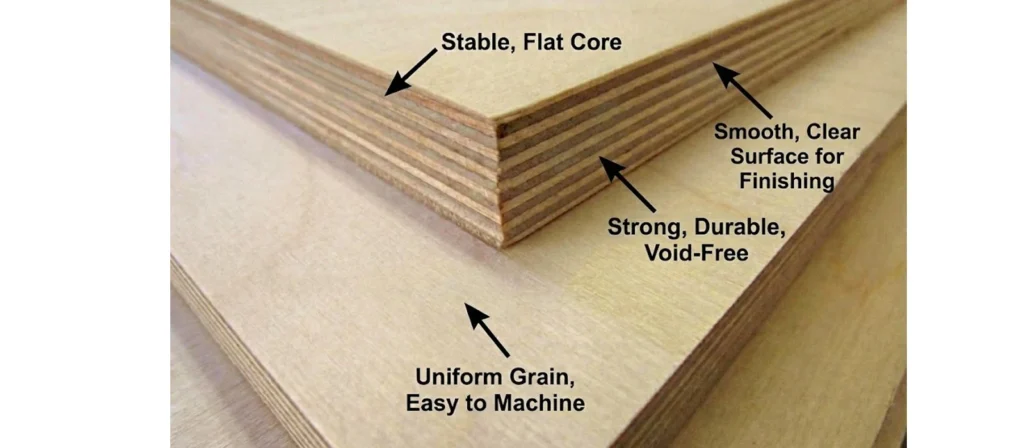
A birch plywood sheet is a high-grade engineered wood panel made from multiple thin layers of birch veneer, bonded together with strong adhesive and arranged with the grain of each layer crossing the next. This cross-laminated structure gives birch plywood excellent strength, dimensional stability, and a smooth, fine-grained surface that looks and feels more premium than many standard plywood options.
Because of its durability, refined appearance, and reliable performance, birch plywood is widely chosen for demanding interior applications such as kindergarten furniture, Montessori classroom shelving and learning materials, and modern home furniture for families. In these environments, designers and manufacturers value birch plywood for its combination of safety, stability, and high-quality finish.
Birch Plywood vs MDF, Particleboard and Solid Wood
| Material | Screw holding (edge) | Flatness / stability | Water at the edge | US formaldehyde cap (TSCA Title VI) | Best classroom use |
|---|---|---|---|---|---|
| Birch plywood | Good | High (cross-laminated) | Depends on glue class; seal the edges | 0.05 ppm (hardwood plywood) | Shelves, cubbies, carcasses, table bases |
| MDF | Weak at edges | High | Swells if the edge gets wet | 0.11 ppm (thin MDF 0.13) | Painted panels, low-load parts |
| Particleboard | Weak | Sags under long-term load | Poor | 0.09 ppm | Short-span, low-cost parts only |
| Solid hardwood | Excellent | Moves with the seasons across wide panels | Good if finished | Not a composite panel | Chair frames, legs, small parts |
The formaldehyde limits come from 40 CFR 770.10 (US EPA, TSCA Title VI). The other columns are general material behaviour, not test results. For a side-by-side on preschool orders, see Solid Wood vs Plywood vs MDF Preschool Furniture.
Grades and Thickness: What the Labels Mean
Face grades. Birch plywood is usually sold as two letters: front face / back face. B/BB has a near-clear front, with small repairs allowed, and a patched back. Use it for visible shelving and exposed sides. BB/BB allows colour variation and patches on both faces and suits internal parts or painted work. Mills also map their grades to the European standard EN 635-2. Latvijas Finieris (Riga Wood), for example, lists its BB grade as EN 635-2 class III and its WG grade as class IV.
Typical ply count by thickness (all-birch plywood)
| Nominal thickness | Plies | Typical furniture use |
|---|---|---|
| 6.5 mm | 5 | Backs, drawer bottoms |
| 9 mm | 7 | Drawer sides, light dividers |
| 12 mm | 9 | Short shelves, panels |
| 15 mm | 11 | Cabinet sides, shelves |
| 18 mm | 13 | Load-bearing sides, tops, long shelves |
| 21 mm | 15 | Heavy tops, benches |
Source: Riga Wood Plywood Handbook (Latvijas Finieris, 2025), which also gives a density of 670–760 kg/m³ for its birch plywood. Ply counts and density vary by mill, so ask your supplier for the panel spec.
Benefits of Using Birch Plywood for Furniture
1. High Strength and Long-Term Stability
Birch plywood is built from multiple cross-laminated birch veneers, which creates a dense and well-balanced core. This structure helps furniture resist bending, sagging, and twisting under everyday loads. Compared with many lower-grade sheet materials, quality birch plywood keeps its shape more reliably, which is important for items such as cabinets, shelves, and tables that are expected to stay flat and stable for many years.
2. Smooth, Refined and High-End Appearance
Birch plywood has a naturally light color and fine, even grain, which gives furniture a clean and high-end look. The surface sands very smooth and works well with a variety of finishing systems: clear coats to highlight the natural birch grain, light stains for warmer tones, or solid colors for minimalist interiors. On well-manufactured panels, the edges can also be left visible after proper sanding and finishing, becoming a simple, modern design feature instead of something that must be covered or hidden.
3. Reliable Screw Holding and Clean Joinery
Because the core of birch plywood is made from multiple layers of hardwood birch with very few voids, screws and fasteners can grip with almost all of their threads. This leads to strong hinges, drawer slides, and shelf supports that stay tight over time instead of working loose. The uniform core also allows clean dadoes, rabbets, grooves, dovetails, and other joints without unexpected gaps or weak spots. This predictable joinery performance is a major advantage in precise furniture construction and assembly.
4. Safe, Smooth Surfaces
One reason birch plywood is widely used in interior furniture is its naturally smooth and splinter-resistant surface. After proper sanding and finishing, birch plywood panels have no rough fibers or sharp edges, and they do not easily develop jagged areas or loose knots over time. This makes the material comfortable to touch and suitable for furniture that people come into contact with every day, such as tabletops, handrails, and seating surfaces.
5. Easy to Machine and Customize
Birch plywood is predictable and forgiving to work with using both standard woodworking tools and CNC equipment. Its consistent density means cutting, drilling, and routing produce clean edges with minimal tear-out, which is essential for precise joints and tight-fitting parts. High-quality birch plywood can also be used for more detailed work such as small components, cut-outs, or decorative panels, because the panel is dense and uniform through its thickness. This makes it a flexible material for both structural elements and finer design details.
6. Durable Faces with Thicker Veneers
Compared with many cabinet-grade plywoods that use very thin face veneers, birch plywood typically offers noticeably thicker outer layers. Thicker veneers are less likely to be sanded through during surface preparation and can better withstand day-to-day wear and cleaning. As a result, doors, tabletops, and visible side panels maintain their appearance longer, even in areas that are cleaned frequently or see regular contact. For manufacturers and installers, this also reduces the risk of damaging the face veneer during sanding and finishing.
7. Good Value Compared to Solid Wood
While birch plywood is usually more expensive than basic sheet materials, it remains more affordable than solid birch lumber for larger surfaces and complete furniture systems. At the same time, it delivers much of the look and performance that people expect from solid hardwood, including strength, a refined grain, and a reliable finish. For projects that require many cabinets, shelves, panels, or built-in units, birch plywood offers an attractive balance of quality and cost per square meter.
8. Environmentally Responsible Choice
Birch plywood can be a responsible material choice when the veneer comes from documented, legally harvested forests, and when the adhesive system is specified for the destination market. Ask for chain-of-custody documents if this matters to your procurement. We do not treat “birch” as an automatic environmental claim for every panel.
Glue Bond: Interior or Exterior?
Plywood is classified by how well its glue bond survives moisture. Under EN 314-2, bond class 1 is for dry interior use, class 2 for humid interior or covered exterior conditions, and class 3 for exterior exposure. In a classroom, that means:
- Dry rooms (shelving, cubbies, reading corners): an interior bond is normally enough.
- Wet zones (next to sinks, nappy-change areas, sensory or water tables): specify an exterior-grade bond and sealed or banded edges. Most damage starts at the edge, not the face.
- Outdoor play furniture: use an exterior bond plus an exterior coating system, and expect regular maintenance.
Formaldehyde Rules by Market (2026)
All wood gives off a small amount of formaldehyde. Glued panels are regulated because the glue can add more. Each market uses its own test method, so the numbers can’t be compared directly. Ask for the test report that matches the country you are importing into.
| Market | Rule | Limit for plywood / furniture | Source |
|---|---|---|---|
| United States | TSCA Title VI (40 CFR 770) | Hardwood plywood 0.05 ppm | eCFR |
| Canada | Formaldehyde Emissions from Composite Wood Products Regulations (SOR/2021-148) | Hardwood plywood 0.05 ppm, in force since 7 January 2023 (laminated-product requirements from 7 January 2028) | Canada Gazette |
| European Union | REACH Annex XVII entry 77 (Regulation (EU) 2023/1464) | Furniture and wood-based articles: 0.062 mg/m³ from 6 August 2026 (chamber test) | EUR-Lex |
| Australia / New Zealand | AS/NZS 2269 emission classes | E0 ≤ 0.5 mg/L, E1 ≤ 1.0 mg/L (desiccator method) | EWPAA-certified mill summary |
| China | GB/T 39600-2021 grading | E1 ≤ 0.124, E0 ≤ 0.050, ENF ≤ 0.025 mg/m³ | Intertek summary |
Rules checked in November 2026. For each order, a supplier should name the panel, the glue type, the test method, the lab and the test date. A generic brand-wide certificate isn’t enough.
Kindergarten and Montessori Furniture Applications
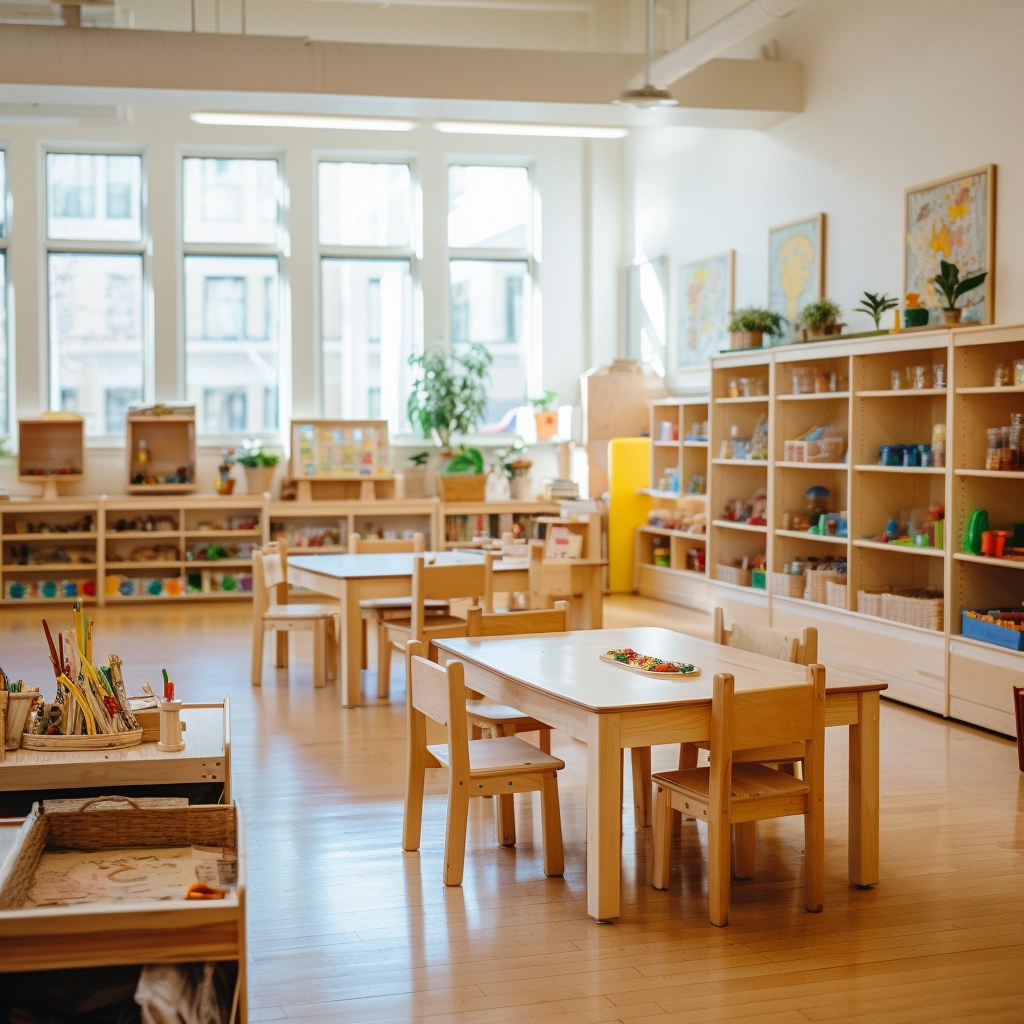
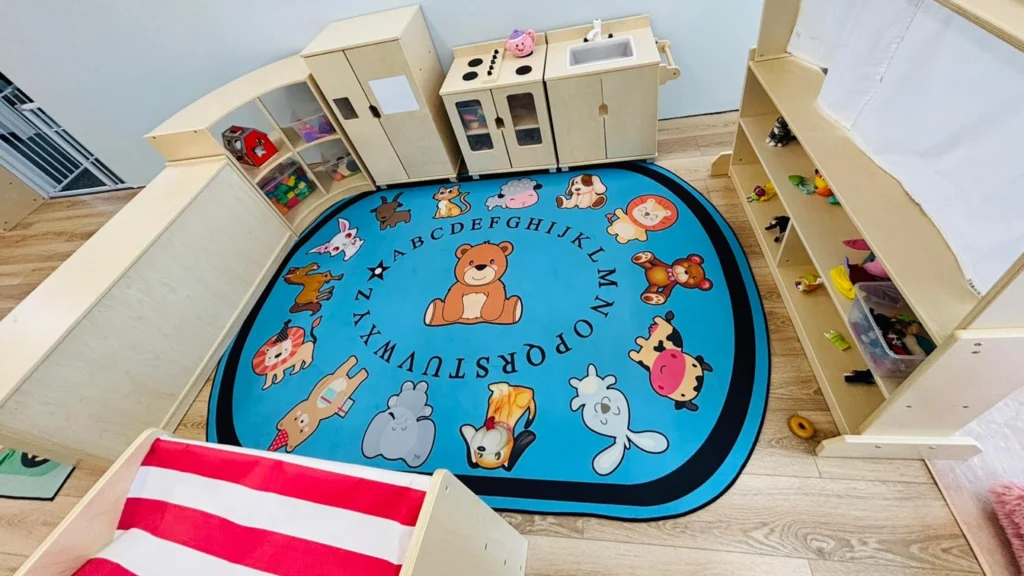
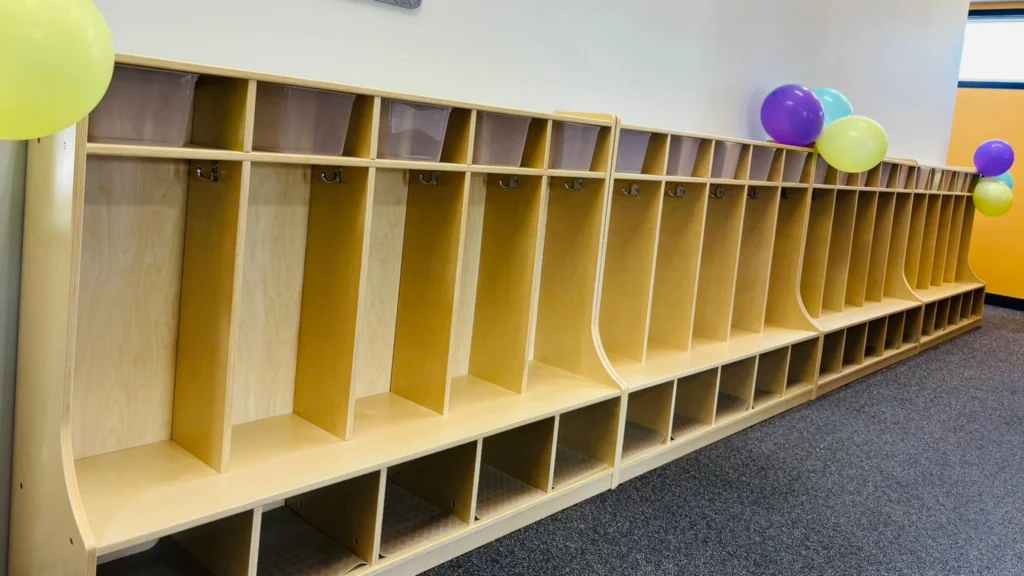
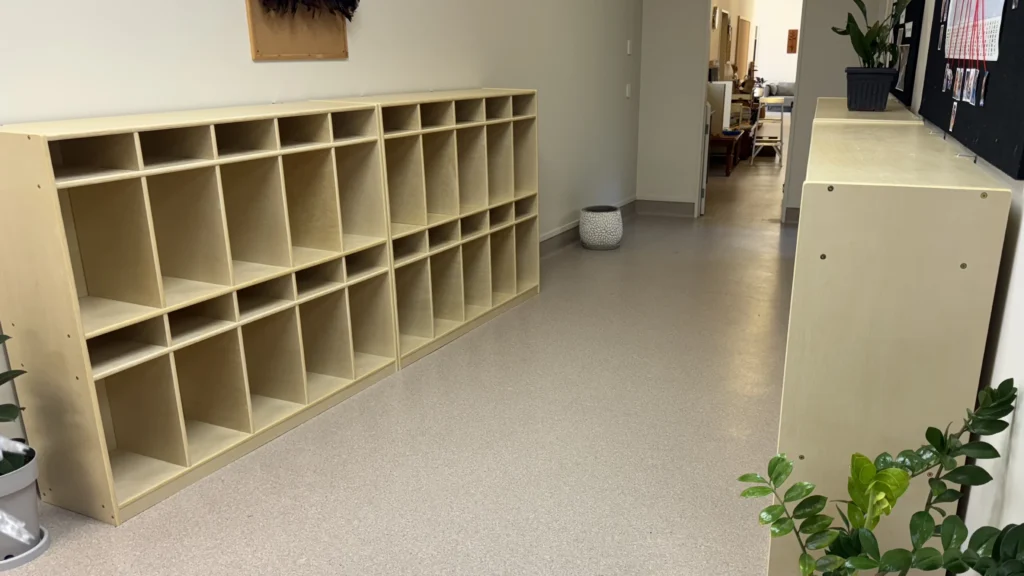
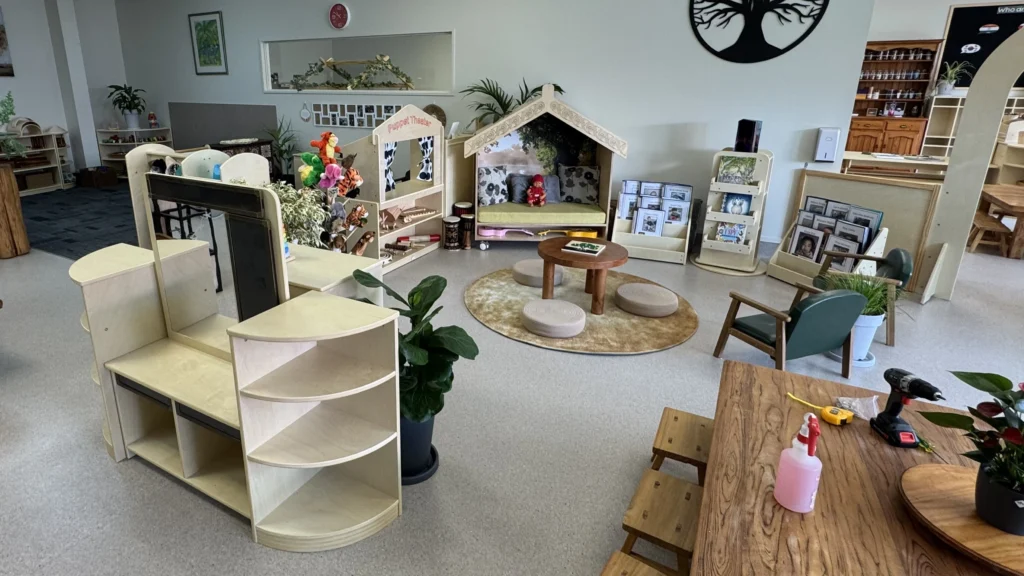
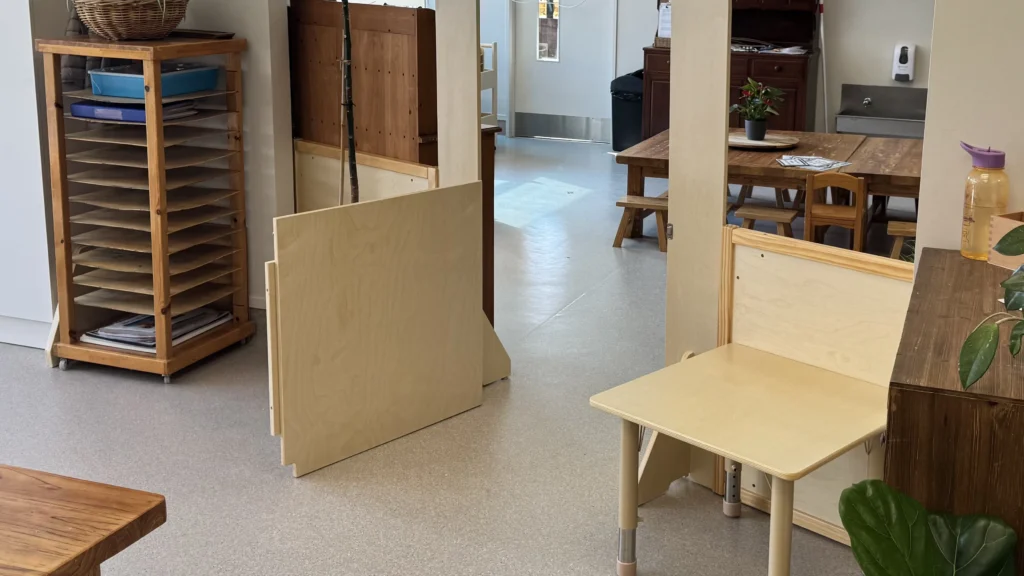
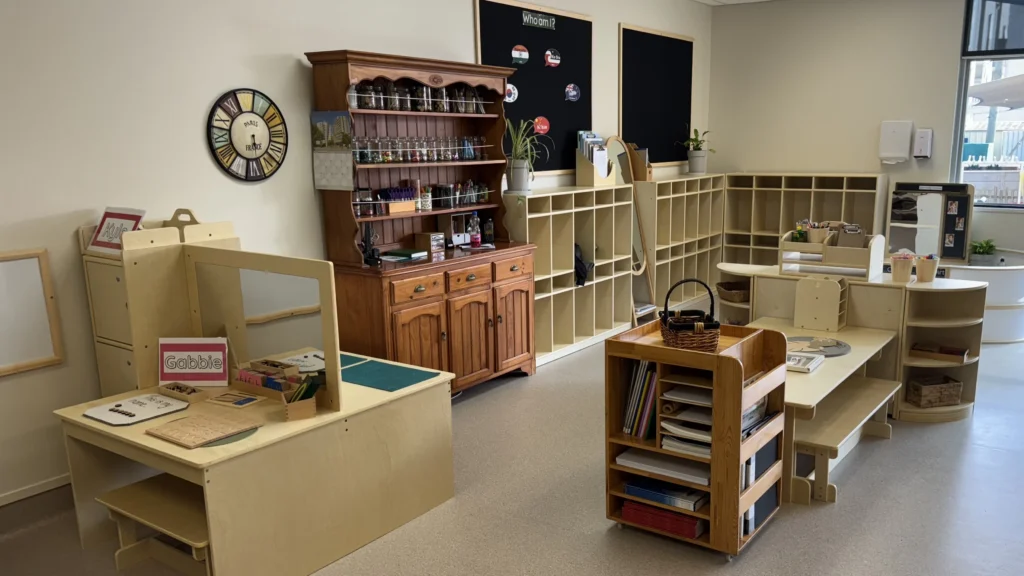
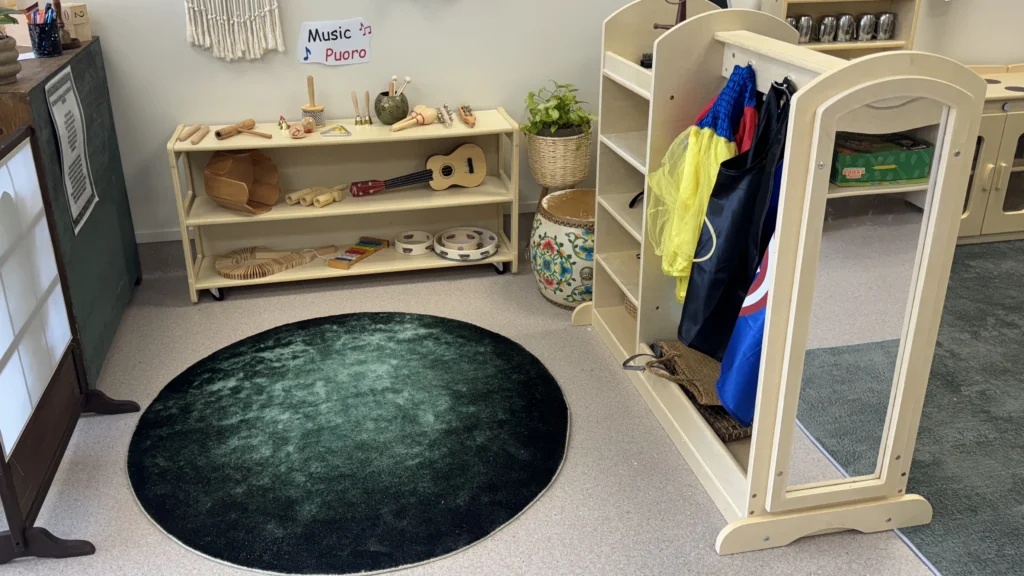
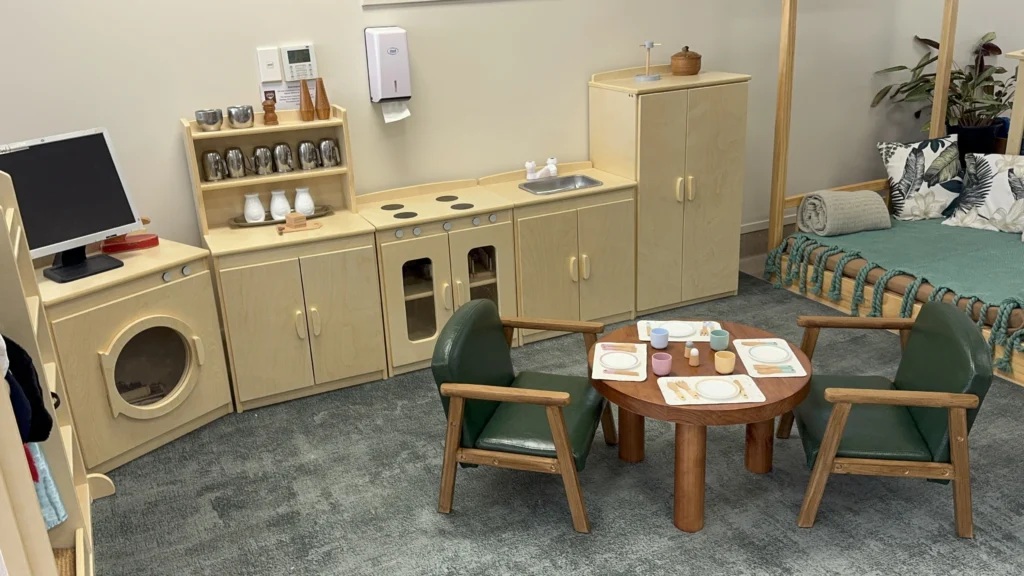
In our kindergarten and Montessori furniture projects, birch plywood is used to create calm, child-friendly spaces with soft lines and warm, natural tones. Open shelves, reading corners, storage units, and child-sized tables are all designed to look visually clean and simple, so the focus stays on the children and their activities. The light birch grain helps the whole classroom feel bright and organized, which you can clearly see from the project photos in this section.
Seven Questions to Ask Before You Order Birch Plywood Furniture
- Is it all-birch plywood, or birch faces on a mixed or combi core?
- What are the face grade (for example B/BB) and the thickness and ply count for sides, shelves and tops?
- What is the glue bond class, and which parts sit in wet zones?
- Which formaldehyde test report covers this panel for my country, and from which lab and year?
- How are the edges finished (rounded, sanded, sealed or banded) on child-height parts?
- What is the coating, and is there a lead test for children’s products? Canada’s limit is 90 mg/kg under the Surface Coating Materials Regulations.
- What does the warranty cover, and how are replacement parts sent?
How to check the paperwork: How to Verify EN71 and ASTM Certificates from a Furniture Supplier.
How to Care for Birch Plywood Furniture?
Birch plywood furniture is easy to maintain with simple, regular care. For daily cleaning, use a soft cloth with a little mild cleaner or just a slightly damp cloth, then wipe dry, and avoid harsh chemicals or very wet cleaning. Try to keep the furniture away from standing water, strong direct sunlight, and high heat, and wipe spills quickly to prevent stains or swelling at the edges.
Conclusion
Birch plywood combines strength, stability, and a calm, high-quality look, which makes it very suitable for furniture in homes, kindergartens, and Montessori classrooms. Its smooth surface and light grain help create warm, organized spaces, while the material remains reliable under daily use.
At West Shore Furniture, we focus on using birch plywood in a careful way for cabinets, shelves, and children’s furniture, so every piece looks clean and modern and also feels safe and solid in real life. If you are planning a Montessori classroom, a kindergarten space, or custom furniture for your home and would like to use birch plywood, you are welcome to contact West Shore Furniture for material suggestions and project support that match your design, budget, and installation needs.
Frequently Asked Questions
Can birch plywood be used safely in children’s spaces?
Yes, birch plywood is a popular choice for children’s furniture and classroom interiors thanks to its smooth, splinter-resistant surface and stable structure. As long as the edges are well sanded and finished with safe coatings, it works very well in kindergartens, Montessori classrooms, and kids’ rooms at home.
Does birch plywood need special maintenance?
Birch plywood does not require any complicated care. A soft cloth with mild cleaner or slightly damp water, followed by drying, is usually enough, and avoiding standing water, harsh chemicals, and strong direct sunlight will help the furniture keep its color and shape for a long time.
What is the main difference between birch plywood and cheaper plywood?
Compared with many low-end plywoods, birch plywood usually has a denser, more uniform core with fewer voids and thicker face veneers. This gives it better screw holding, cleaner joinery, and a more refined appearance, which is why it is often chosen for higher quality furniture projects.
Is birch plywood an environmentally friendly choice?
It can be, when the panel is legally sourced and the glue and formaldehyde test match your market (see the table above). Ask for chain-of-custody documents and a named test report if your procurement requires them. “Birch” on its own is not an environmental certificate.
Why choose West Shore Furniture for birch plywood school and home furniture?
We build birch plywood shelves, cubbies, storage and tables in our own factory in Dalian, where we have manufactured since 2003. Panel grade, thickness and test documentation are matched to each order and destination market. We do not issue a blanket certificate for every product. Delivery is door to door, assembled or flat-packed, with no minimum order and a 1-year warranty. For a whole centre, we can customise every room and source everything in one shipment. Typical lead time is about 11–14 weeks door to door. Our catalog has no prices because every quote is built from your room list; send it and we will reply within 24 hours.
How can I start a birch plywood furniture project with West Shore Furniture?
You can start by requesting our catalog (it has no prices) and sharing the number of rooms, the furniture you need, and your opening date. We reply within 24 hours with a custom quote.
Still Choosing Birch Plywood Furniture?
Book a quick 1:1 consultation and tell us your space, age group, and rough budget. Our team will suggest practical birch plywood furniture combinations you can use right away in your next classroom or home project.
About this guide: Written by Briar Lee, who has 23 years of experience in early childhood furniture and classroom space planning at West Shore Furniture. We checked the standards and limits against the official texts linked above in November 2026. Regulations change, so confirm current requirements for your market before you order.