
How long does daycare furniture last? As a planning rule, you should expect quality furniture to handle at least five years of daily use, while core pieces such as tables, chairs, cubbies, shelves, and changing tables are often purchased with a 10- to 15-year service expectation. That is a budget window, not a safety deadline. You still decide whether each item stays in service by checking its structure, cleanability, fit, maintenance history, and current use.
Typical Daycare Furniture Lifespan
For budget planning, you can use five years or more of daily use as a baseline for quality furniture. Higher-cost pieces such as cubbies, shelving, changing tables, tables, and chairs can be planned around a 10- to 15-year service period.
Use those numbers to forecast capital spending. Do not turn them into automatic replacement dates. A two-year-old chair with a cracked frame should leave service now. A 12-year-old shelf that remains stable, correctly anchored, cleanable, age-appropriate, and free from damaged parts may still be usable if your local rules and the manufacturer’s instructions allow it.
| Furniture Group | Useful Planning Reference | What Actually Ends Its Service Life |
|---|---|---|
| Tables, Chairs, Cubbies, Shelves, And Changing Tables | Often planned around 10–15 years | Instability, structural damage, unsuitable size, sanitation problems, or unavailable critical parts |
| Other Quality Hard Furniture | Aim for at least 5 years of daily use | Condition, construction, room intensity, cleaning exposure, and repair history |
| Mobile Cabinets And Carts | No universal fixed period | Caster mounts, brakes, handles, fasteners, and frame stability |
| Cots, Mats, Rugs, And Soft Seating | Follow the product instructions and condition | Torn covers, exposed filling, damaged seams, retained moisture, odors, or loss of support |
| Outdoor Furniture | Depends on material, finish, climate, and storage | UV damage, corrosion, rot, cracks, drainage problems, anchoring, and exposed hardware |
Why Material Alone Does Not Predict Lifespan
When you compare daycare furniture, a material name or board thickness can look like a simple quality score. It is not. Birch plywood, solid wood, laminate, plastic, and metal can all perform well or fail early depending on how the complete product is built and used.
In our project work, we start a durability review by confirming your room, age group, product dimensions, quantities, material and finish, daily activities, cleaning routine, installation conditions, and movement frequency. Those details determine the stress the furniture will actually receive.
For example, two cabinets made from the same panel can age differently. One stays fixed in a dry reading area. The other is rolled between a sink and an art area several times a day. The mobile unit adds stress at the caster plates, fasteners, base panel, edges, and brake system. If you compare only the panel description, you miss the parts most likely to control service life.
What Shortens Daycare Furniture Life?
Age Group And Daily Use
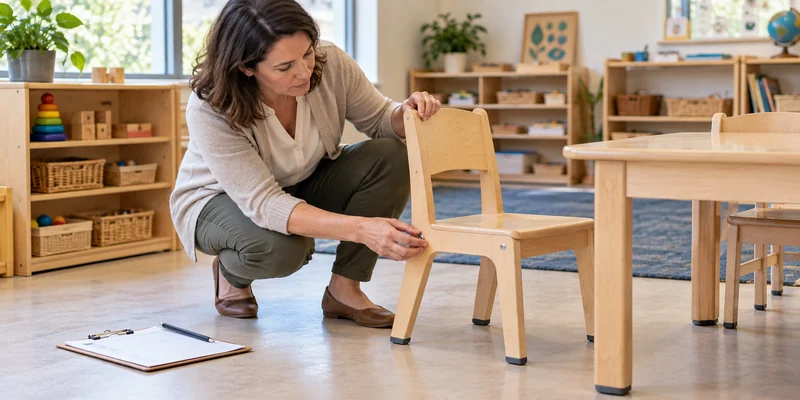
A full-day toddler room can put more movement, climbing pressure, spills, and repeated cleaning on a piece than a part-time preschool room. You should also count how often teachers reconfigure the space. A table used for meals, art, sensory work, and small groups receives a different wear pattern from a table used once a day.
Construction And Hardware
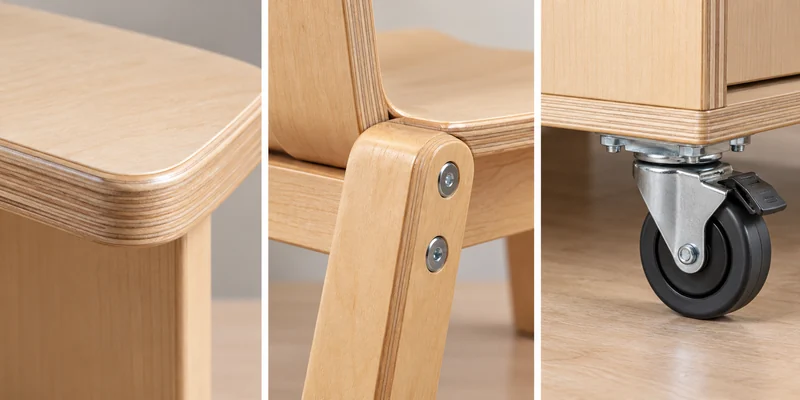
Check the joint design, fastener locations, panel support, welds, edge treatment, leg connection, and hardware mounting. A thicker panel does not correct a weak joint. A durable top does not protect a cabinet if water can reach an exposed core at the base. A strong frame does not make a mobile cart reliable if its caster plate flexes or the replacement wheel is unavailable.
Cleaning Products And Moisture
Daycare furniture is cleaned more often than household furniture. Use a cleaning product that is suitable for the surface and follow its label. An incompatible chemical can dull a finish, weaken an adhesive, embrittle some plastics, or open a path for moisture at a seam.
You should wipe spills promptly and dry edges, seams, hardware openings, and furniture near sinks or changing stations. Once a composite panel has swollen or delaminated, drying the surface does not restore its original structure.
Installation And Moving
An uneven floor can make a sound table rock. Dragging a loaded shelf can loosen joints or damage the base. A tall storage unit can become a hazard if required anchoring is missing, incorrectly installed, or disturbed during a room change. Your inspection should separate a product defect from a setup problem, then correct the setup before returning the item to use.
Spare Parts And Product Records
A replaceable glide, caster, handle, hinge, or lock can keep a sound unit in service. The same minor failure can retire a product when you cannot identify the model or obtain a compatible part. Save the invoice, model, batch information, assembly instructions, cleaning guidance, warranty, and approved parts list when the furniture arrives.
How To Inspect Daycare Furniture
You will find problems sooner when your checklist follows the load path and the contact points. Use the table below as a starting point, then add the manufacturer’s instructions and your local licensing requirements.
| Item | Where You Should Look | Questions To Ask |
|---|---|---|
| Chairs | Leg-to-seat joints, back connection, glides, seat edge, and frame | Does it rock, flex, crack, or expose a sharp area under normal use? |
| Tables | Leg mounts, braces, underside hardware, top edge, and surface | Can you stabilize it correctly, and can you still clean the complete top and edge? |
| Cubbies And Shelves | Base, shelf supports, back panel, wall anchors, hooks, and exposed corners | Is the unit stable, correctly secured, and free from swelling or loose fittings? |
| Mobile Storage | Caster plates, wheels, brakes, handles, base panel, and fasteners | Do all wheels roll and lock as designed without distorting the cabinet? |
| Cots And Soft Items | Frame, fabric tension, seams, covers, filling, and stack contact points | Is the surface intact, supportive, dry, and cleanable according to instructions? |
| Changing Furniture | Steps, gates, latches, hinges, guard areas, surface seams, and anchoring | Does every safety feature work as intended, with no improvised repair? |
Repair, Relocate, Or Replace?
Your decision has three paths. “Keep using it” should never be the default when the condition is uncertain.
| Decision | Use It When | Do Not Use It When |
|---|---|---|
| Repair | The failed part was designed to be replaced, the correct component is available, surrounding material is sound, and you can inspect the completed repair | The frame, structural joint, weld, anchoring point, or load-bearing panel is damaged |
| Relocate | The item is safe and cleanable but fits another age group, room function, or movement pattern better | The move would create the same size, stability, supervision, or installation problem in another room |
| Replace | Safety, cleanability, fit, recall status, or repeated failure makes continued service unreasonable | You are replacing only for appearance while the item remains suitable and your program has a safe refurbishment option |
Take the item out of use while you evaluate any fault that could affect stability, create a sharp edge or pinch point, expose absorbent material, or prevent proper cleaning. Do not use improvised fasteners, unapproved wheels, tape, or surface covers as a permanent repair.
7 Signs Furniture Should Be Removed
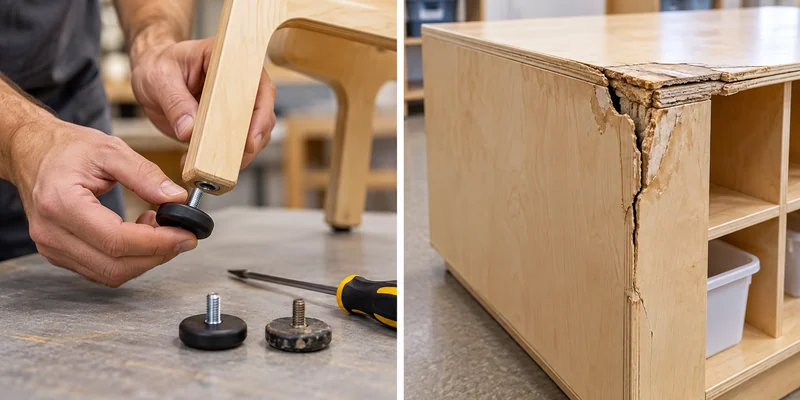
- It moves when it should stay stable. The chair rocks, the table leans, the shelf shifts, or the cabinet can tip during normal use.
- A structural part is cracked, bent, split, or separated. This includes frames, legs, welds, load-bearing panels, joints, and caster mounting points.
- A sharp or exposed area has developed. Look for splinters, protruding hardware, chipped edges, exposed cores, and damaged metal.
- You can no longer clean the surface properly. Deep cracks, open seams, torn covers, peeling laminate, and absorbent exposed material can retain soil and moisture.
- The same repair keeps failing. Repeated looseness, failed brakes, recurring wheel damage, or hardware pulling out can point to a larger construction or use problem.
- The furniture no longer fits the children or activity. Seat height, table height, access, visibility, and intended use still matter even when the item looks new.
- The product is recalled or a critical part is missing. Identify the model and follow the remedy in any current recall notice.
These signs also match the condition-based approach used in licensing guidance: furniture should remain safe, clean, operable, and in good repair. Your state or local authority may add inspection frequencies, documentation rules, or product-specific requirements, so verify the rules that apply to your program.
How Often Should You Inspect Daycare Furniture?
You should combine quick daily observation with scheduled, documented checks. A practical system includes:
- A visual scan during room opening, setup, or cleaning
- An immediate check after a fall, collision, room move, water leak, or unusual load
- A documented inspection interval based on risk, use intensity, manufacturer instructions, and licensing rules
- An annual room-by-room review for your replacement and repair budget
For U.S. Head Start programs, facilities and equipment must be kept safe through an ongoing preventive-maintenance system. Covered equipment must also be clean, safe, appropriately disinfected, and age-appropriate. This federal requirement does not replace the licensing rules that apply to your location.
Create A Furniture Replacement Plan
A single “furniture replacement” line in your budget hides the rooms that need action first. Build your plan around a room schedule: one record of what each room contains, who uses it, and what happens next.
In our planning work, room and age-group information guides product selection and layout. You can use the same logic for maintenance. Record each item or matching set with:
- Asset number, product name, model, and batch information
- Purchase or installation date
- Current room, age group, quantity, and use pattern
- Material, finish, cleaning instructions, and installation requirements
- Condition of the frame, joints, edges, surfaces, hardware, glides, casters, and anchors
- Repair history, recall check, and parts availability
- Decision: keep, monitor, repair, relocate, or replace
- Responsible person and next review date
You can add a simple condition grade: A for sound, B for cosmetic wear, C for repair or close monitoring, and D for removal from service. The grade does not override a safety defect. One serious structural or sanitation problem is enough to remove an item even if every other line looks good.

Questions To Ask Before You Buy
You will get a more useful answer when you ask for evidence tied to the exact product configuration. Use these questions before you approve a purchase order:
- Which age group, room type, and daily activities is this item designed for?
- What are the exact panel, frame, joint, edge, finish, and hardware specifications?
- Which cleaning, sanitizing, or disinfecting products are compatible with the surface?
- Does the product require anchoring, levelling, or professional installation?
- Which glides, casters, locks, hinges, covers, or other wear parts can you replace?
- How will you identify and order a compatible part later?
- Which test standard, edition, product sample, and test conditions support a performance claim?
- What does the warranty cover, and which wear, misuse, cleaning, or installation conditions are excluded?
- What documentation will arrive with the order?
Be careful with the phrase “BIFMA grade.” Different standards apply to different furniture types, including educational seating and desk or table products. Ask for the exact standard and edition. A test measures performance under defined loads, cycles, and test conditions; it does not guarantee a fixed service life in every daycare setting.
Before you order, confirm your room list, age heights, layout, custom dimensions, quality checks, packing, and delivery scope with a preschool furniture checklist. Compare tables and chairs by size and construction. For fixed and mobile storage, compare anchoring, base condition, hardware, and caster requirements for cubbies and lockers.
How To Compare Lifecycle Cost
You can compare two options with the same room list and the same delivery scope:
Annualized Lifecycle Cost = Purchase + Freight + Installation + Maintenance + Parts + Downtime + Disposal, Divided By Years Of Safe Service
Do not enter an optimistic service life just to make one quote look cheaper. Use a conservative planning period, track actual repairs, and update the calculation after each annual review. You should also value reuse: a sound shelf that can move from a low-intensity room to a suitable new location may reduce the replacement need without lowering safety.
FAQ
Does A Warranty Show Furniture Lifespan?
No. A warranty defines covered defects, exclusions, remedies, and a time period. Your furniture may remain serviceable after the warranty ends, or it may need removal earlier because of damage, use, cleaning, installation, or a recall.
Should You Replace Tables And Chairs After 10 Years?
No. Ten to 15 years is a purchasing expectation for certain higher-cost core items, not a universal expiration rule. Inspect each piece and follow current licensing requirements, manufacturer instructions, and recall remedies.
Which Daycare Furniture Material Lasts Longest?
No material wins in every room. You need to compare the complete structure, finish, edge treatment, hardware, moisture exposure, cleaning routine, use intensity, and repair support. A well-designed product in the right environment can outlast a poorly specified product made from a more impressive-sounding material.
Can You Reuse Furniture In Another Classroom?
Yes, if the item remains safe, cleanable, complete, and suitable for the new children and activity. Recheck its dimensions, supervision impact, floor condition, anchoring, assembly, and movement path before the room opens.
What Should You Check First On Used Furniture?
Start with identity and structure. Find the manufacturer, model, label, and recall status, then inspect stability, frames, joints, edges, hardware, cleanability, and missing parts. If you cannot identify a safety-critical product or verify a suitable repair, do not put it into service.
Plan Replacements By Room
You can use five years and 10–15 years to build a realistic budget, but the calendar never replaces an inspection. Your best plan connects every item to its room, age group, construction, cleaning routine, repair history, parts support, and next review date.
If you are planning a classroom refresh, send West Shore Furniture your floor plan, age groups, existing furniture list, and the items you are repairing or replacing. We can help you turn that information into a room-by-room product schedule, compare suitable materials and dimensions, and identify which specifications need written confirmation before you request a quote.