When it comes to educating young children, there are countless philosophies and early childhood curriculum models available for programs to adopt. The goal when selecting a preschool curriculum is often not to find a single “best” method, but rather to identify the approach that best aligns with the needs of the children, the capabilities of the teachers, the expectations of families, and the classroom environment.
This guide compares 10 preschool curricula, explains how each operates, and analyzes which children, families, and early education settings are best suited to each approach.
What Is a Preschool Curriculum?
A preschool curriculum is a structured framework for guiding children’s early learning and development. It defines the goals of the program, the role of the teacher, the learning environment, and the way children’s progress is observed.
Most preschool curricula sit on a spectrum between child-led, play-based learning and more structured, teacher-led instruction. Many early learning centers combine both approaches, balancing intentional teaching with hands-on exploration, social interaction, creativity, and problem-solving.
Montessori Curriculum
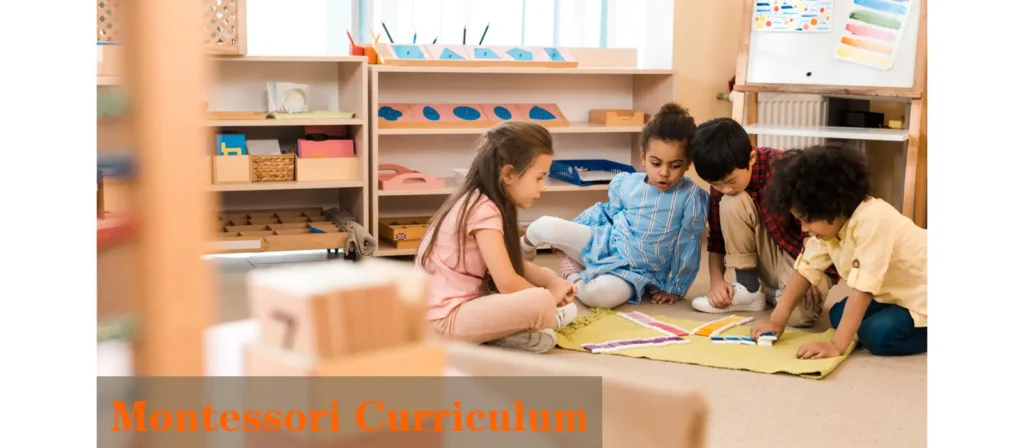
The Montessori Curriculum is a globally respected educational approach developed by Dr. Maria Montessori. Rooted in developmental science, it emphasizes independence, freedom within limits, and a deep respect for the child. The classroom is a thoughtfully prepared environment where children engage in hands-on, purposeful work, guiding their own learning under the observation of trained Montessori educators.
Key Features of Montessori Curriculum
- Prepared classroom environment
- Child-led activity choices
- Hands-on Montessori materials
- Freedom within clear limits
- Mixed-age grouping
- Teacher as guide
- Strong focus on independence and concentration
Strengths
Montessori works well for building independence, focus, practical life skills, and hands-on problem-solving. It gives children time to repeat activities and develop confidence through self-directed learning.
Limitations
A true Montessori program requires trained teachers, specific materials, and a well-prepared classroom. Some children may need time to adjust to the level of independence expected in the environment.
Best Fit
Montessori can work well for children who benefit from independence, hands-on learning, and a calm classroom. It is also suitable for schools that can provide trained teachers, carefully prepared materials, and enough time for children to work at their own pace.
Classroom Setup Notes
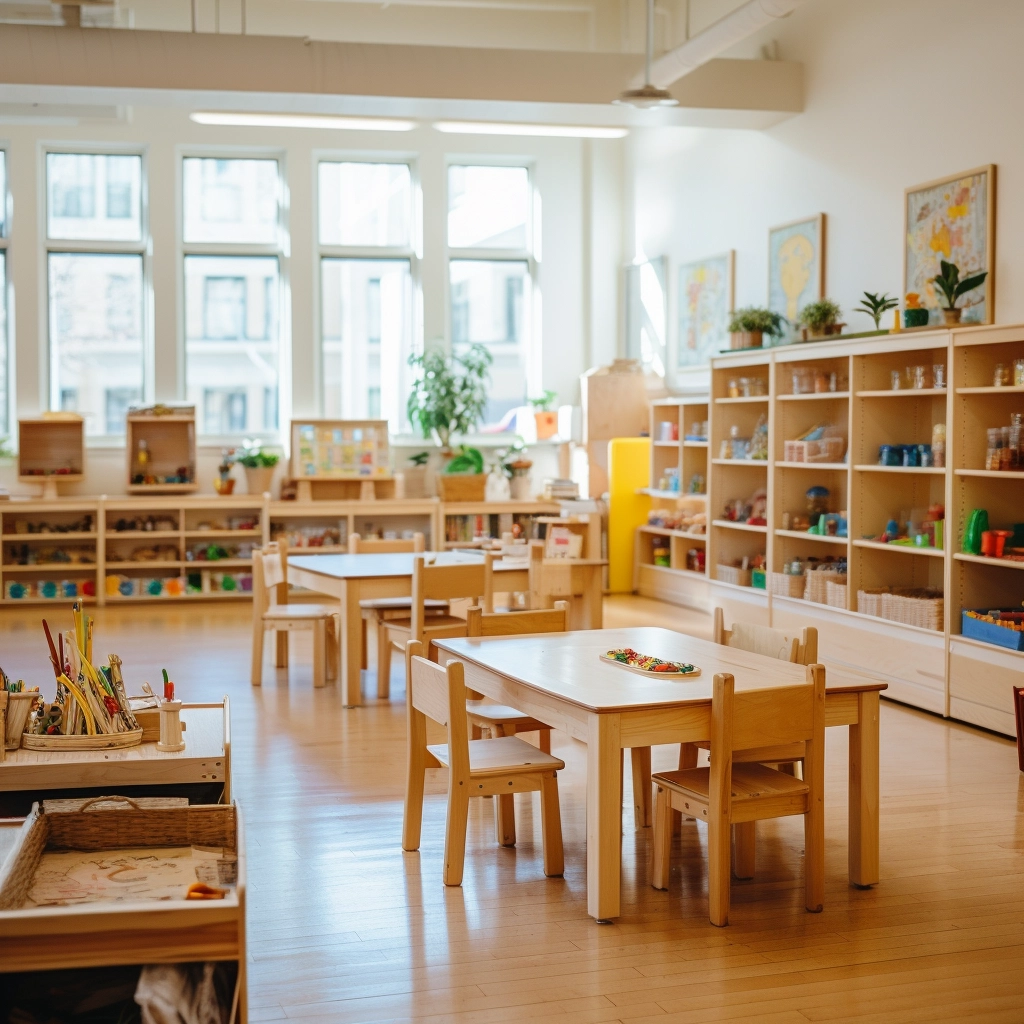
A Montessori classroom needs low open shelves, child-sized tables and chairs, accessible materials, individual work areas, and clear classroom zones. Furniture should help children choose, use, and return materials independently.
Reggio Emilia Curriculum
The Reggio Emilia Curriculum is a progressive, child-centered educational philosophy that began in post-war Italy. It views children as capable, curious, and full of potential, with learning driven by their questions, relationships, and creativity. Rather than following a fixed syllabus, the preschool curriculum evolves based on children’s interests and shared explorations.

Key Features of Reggio Emilia Curriculum
- Child-led inquiry
- Project-based learning
- Environment as the third teacher
- Documentation of children’s thinking
- Strong family involvement
- Open-ended materials
- Creative expression through many forms
Strengths
Reggio Emilia supports creativity, collaboration, communication, and deeper investigation. It helps children see their ideas as valuable and encourages teachers to listen closely to children’s thinking.
Limitations
This approach requires flexible planning, skilled observation, and strong teacher documentation. It can be difficult for schools that need a fixed lesson sequence or standardized daily curriculum.
Best Fit
Reggio Emilia is well suited for schools that value project work, family involvement, teacher observation, and a flexible classroom environment where children can express ideas in many different ways.
Classroom Setup Notes
A Reggio-inspired classroom often uses open-ended materials, display areas, project tables, natural light, mirrors, loose parts, art materials, and flexible furniture. The classroom should feel beautiful, organized, and easy for children to interact with.
HighScope Curriculum
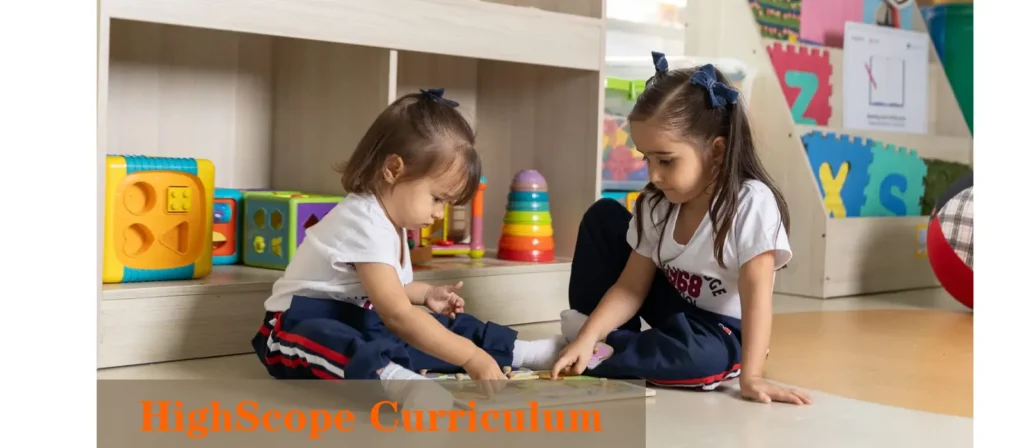
The HighScope Curriculum is a research-based early childhood education model developed in the United States. It emphasizes active learning, consistent daily routines, and intentional adult-child interactions. Children are viewed as active participants in their own development, with teachers serving as facilitators who plan, observe, and support learning through structured experiences.
Key Features of HighScope Curriculum
- Active participatory learning
- Plan-Do-Review process
- Consistent daily routine
- Organized classroom interest areas
- Intentional teacher-child interaction
- Observation-based assessment
- Focus on key developmental indicators
Strengths
HighScope gives children freedom within a clear structure. It supports decision-making, language, memory, social skills, and problem-solving. The predictable routine also helps children feel secure.
Limitations
Teachers need training to use the model well. Some programs may find the observation and assessment requirements demanding at first.
Best Fit
HighScope is a strong choice for early learning centers that want a balance between child choice and classroom structure. It works especially well in programs that value routines, observation, and intentional teaching.
Classroom Setup Notes
A HighScope classroom needs clearly defined learning areas, labeled shelves, accessible materials, planning spaces, group meeting areas, and a layout that allows teachers to observe children easily.
Waldorf Curriculum
The Waldorf Curriculum, founded by Rudolf Steiner in the early 20th century, centers on educating the whole child—head, heart, and hands. It promotes imagination, rhythm, and experiential learning while delaying formal academics in favor of storytelling, nature play, and creative expression. The curriculum follows a consistent daily and yearly rhythm, supporting children’s emotional security and developmental readiness.

Key Features of Waldorf Curriculum
- Imaginative play
- Storytelling and oral language
- Nature-based activities
- Rhythm and routine
- วัสดุธรรมชาติ
- Practical life activities
- Creative arts and movement
Strengths
Waldorf supports imagination, emotional security, creativity, and a strong connection to nature. It can create a calm and nurturing environment for young children.
Limitations
Families looking for early formal reading, writing, or academic instruction may feel the approach is too slow. Some schools may also need support in explaining Waldorf philosophy clearly to parents.
Best Fit
Waldorf is suitable for programs that value a calm environment, natural materials, creative play, and a slower approach to early academics.
Classroom Setup Notes
A Waldorf classroom often uses wood furniture, soft fabrics, warm colors, natural baskets, simple toys, seasonal displays, and open play space. The room should feel gentle and home-like.
Faith-based Curriculum
The Faith-Based Curriculum integrates religious values, stories, and spiritual practices into early childhood education. These programs aim to nurture the whole child by focusing on spiritual, emotional, social, and academic development. Learning takes place within the context of a specific faith tradition, which may vary in doctrine, culture, and instructional style.

Key Features of Faith-Based Curriculum
- Religious values and traditions
- Character education
- Faith-based stories and songs
- Community and family connection
- General early learning activities
- Moral and social development
Strengths
Faith-based programs can create a strong sense of identity, routine, and community. They are often a good fit for families who want school life to reflect their beliefs and values.
Limitations
A faith-based curriculum may appeal to a specific group of families. Schools need to communicate clearly how faith activities connect with general early childhood learning.
Best Fit
Faith-based preschool is usually a good fit for families who want school routines, character education, and community life to reflect their religious beliefs while supporting children’s general development.
Classroom Setup Notes
The classroom may include group meeting areas, storytelling corners, music areas, art spaces, display boards, and quiet areas for reflection. Furniture should still follow early childhood safety and accessibility standards.
Play-Based Curriculum
The Play-Based Curriculum is built on the understanding that young children learn best through play. Rooted in child development theory and supported by decades of research, this approach views play as the primary context for learning. Children are given time, space, and materials to explore freely, make choices, solve problems, and build social connections through self-initiated activity.

Key Features of Play-Based Curriculum
- Learning through meaningful play
- Child choice
- Hands-on exploration
- Social interaction
- Teacher observation and support
- Flexible classroom centers
- Open-ended materials
Strengths
Play-based learning supports creativity, language, cooperation, problem-solving, emotional regulation, and confidence. It is especially suitable for young children because it matches the way they naturally learn.
Limitations
The quality of a play-based curriculum depends on teacher skill and classroom planning. Without intentional support, play can become random activity instead of meaningful learning.
Best Fit
Play-based curriculum works well for young children, mixed-ability classrooms, and programs that value hands-on exploration, social learning, and flexible classroom activities.
Classroom Setup Notes
A play-based classroom needs clear activity areas such as blocks, dramatic play, art, sensory play, reading, music, construction, and small group work. Storage should make materials easy to rotate and clean up.
Creative Curriculum
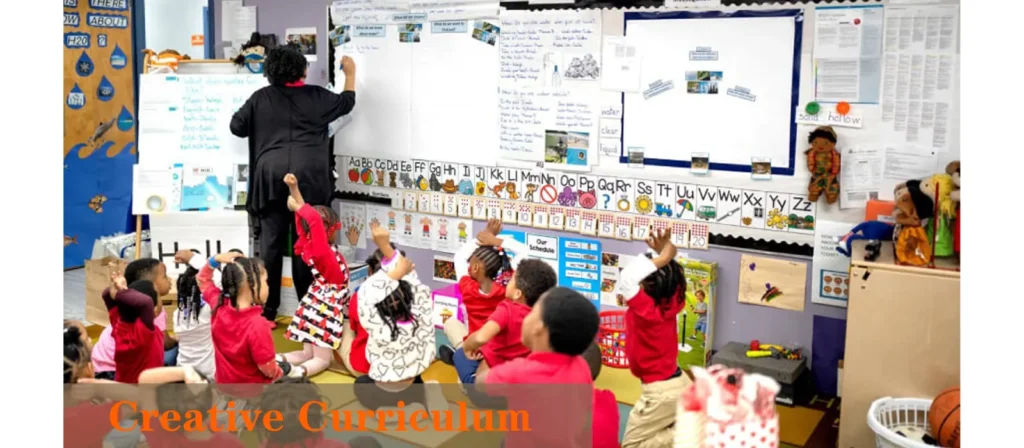
The Creative Curriculum is a widely used early childhood education program that blends teacher-directed instruction with child-initiated learning. Developed by Teaching Strategies, it focuses on whole-child development through exploration, play, and intentional teaching. It offers a comprehensive framework supported by research and aligned with early learning standards across the United States.
Key Features of The Creative Curriculum
- Whole-child development
- Intentional teaching
- Interest areas
- Child-initiated exploration
- Observation-based assessment
- Family communication
- Support for school readiness
Strengths
The Creative Curriculum provides clear guidance for teachers and is easier to implement than some philosophy-based approaches. It supports planning, assessment, family communication, and a balanced classroom routine.
Limitations
Some programs may find the planning and assessment tools time-consuming. The curriculum also depends on teacher quality and how well the classroom environment is prepared.
Best Fit
The Creative Curriculum is a practical option for centers that need a complete early childhood curriculum with planning guidance, assessment tools, and flexibility for different classroom settings.
Classroom Setup Notes
A Creative Curriculum classroom usually includes defined interest areas, such as blocks, dramatic play, art, library, discovery, toys and games, music, sand and water, and outdoor play. Furniture should help children move between areas safely and independently.
Emergent Curriculum
การ Emergent Curriculum is a flexible and responsive approach to early childhood education that evolves based on the interests, questions, and experiences of the children. Rather than following a fixed scope and sequence, teachers observe the classroom community and design learning experiences that emerge from children’s natural curiosity. This method values creativity, inquiry, and meaningful connections over predetermined academic outcomes.
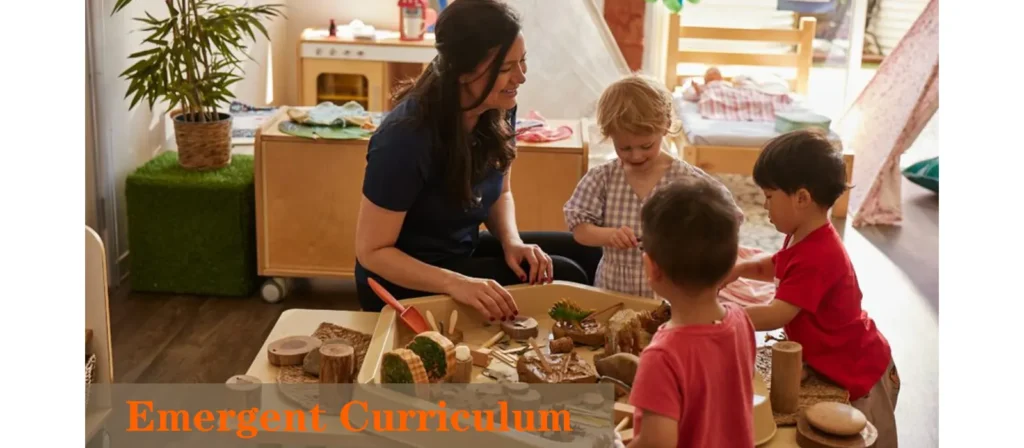
An emergent curriculum develops from children’s interests, questions, and everyday experiences. Teachers observe what children are curious about, then design activities, discussions, and projects that extend those interests into deeper learning.
For example, if children become interested in insects after finding a caterpillar outside, the teacher may add books, magnifying glasses, drawing materials, science discussions, outdoor observations, and art activities related to insects. The curriculum grows from real classroom moments.
Key Features of Emergent Curriculum
- Built from children’s interests
- Flexible planning
- Teacher observation
- Inquiry-based learning
- Project development
- Meaningful classroom discussions
- Open-ended materials
Strengths
Emergent curriculum makes learning feel meaningful because it starts from children’s real interests. It supports curiosity, language, problem-solving, and deeper engagement.
Limitations
Teachers need strong observation and planning skills. It can also be challenging for schools that need a fixed weekly curriculum or detailed long-term lesson plans.
Best Fit
Emergent curriculum works well for teachers who are comfortable adapting plans and for schools that value children’s questions, curiosity, and real-time classroom experiences.
Classroom Setup Notes
An emergent classroom needs flexible furniture, open shelves, documentation space, project tables, art materials, science tools, books, loose parts, and display areas that can change as children’s interests develop.
Project-based Curriculum
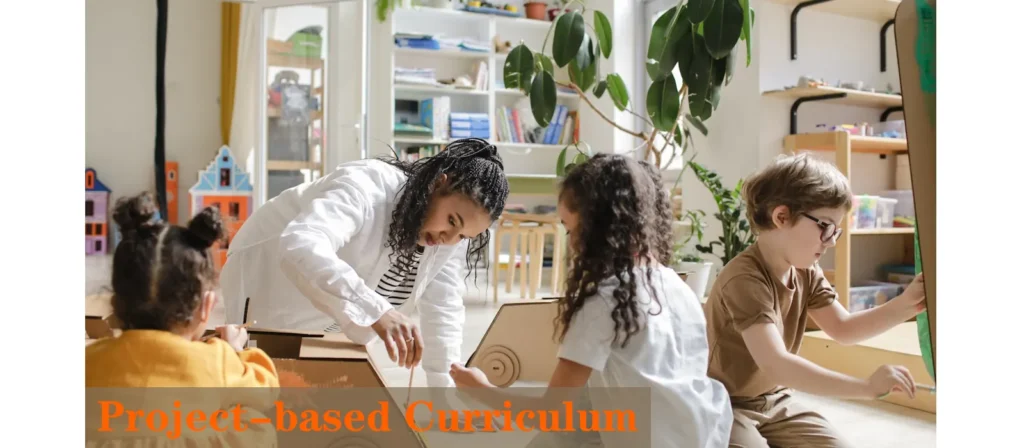
The Project-Based Curriculum is an inquiry-driven approach that centers learning around in-depth investigations of meaningful, real-world topics. Children work collaboratively over extended periods to explore questions, solve problems, and construct knowledge. Rather than isolated lessons, learning is woven through long-term projects that connect across subject areas and developmental domains.
Key Features of Project-Based Curriculum
- Extended investigation
- Child questions
- Hands-on research
- การทำงานร่วมกัน
- Creative representation
- Cross-area learning
- Reflection and sharing
Strengths
Project-based learning supports deeper thinking, communication, cooperation, creativity, and problem-solving. It helps children stay with a topic long enough to build stronger understanding.
Limitations
Projects require time, space, teacher flexibility, and enough materials. Younger children may need strong teacher support to stay engaged across multiple days or weeks.
Best Fit
Project-based curriculum works well for older preschoolers and early learning centers that can provide flexible schedules, project space, and teachers skilled in guiding inquiry.
Classroom Setup Notes
Project-based classrooms need large work surfaces, display walls, storage for ongoing work, building materials, art supplies, books, photos, and flexible group areas.
Theme-based Curriculum
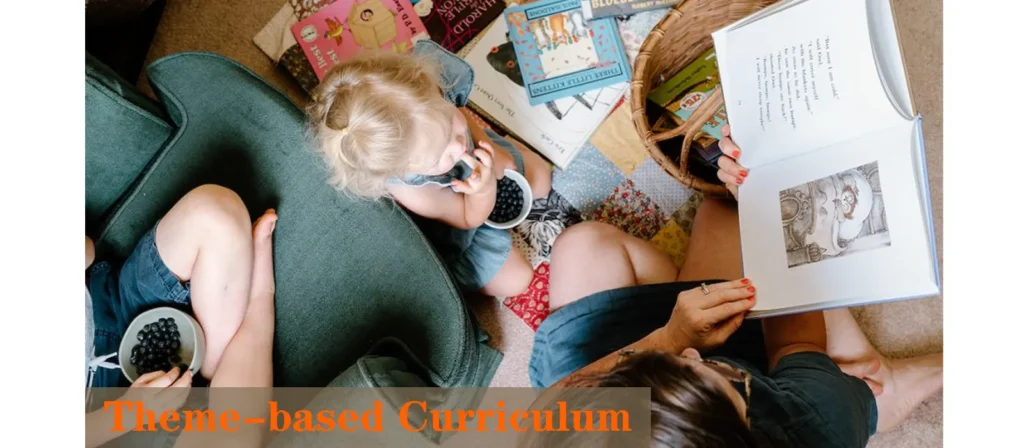
The Theme-Based Curriculum organizes early learning around central topics such as seasons, animals, families, or transportation. These themes provide a cohesive structure for integrating various subject areas like literacy, math, art, and science into daily classroom activities. This approach helps children make connections between concepts and explore the world through familiar, engaging topics.
Key Features of Theme-Based Curriculum
- Learning organized around topics
- Teacher-planned activities
- Simple weekly or monthly structure
- Cross-curricular connections
- Seasonal and familiar themes
- Easy family communication
- Predictable planning format
Strengths
Theme-based curriculum is easy to understand and simple to plan. It gives teachers a clear structure and can make classroom activities feel connected.
Limitations
Themes can become shallow if they only focus on crafts, decorations, or vocabulary words. Teachers need to create real learning experiences around each topic.
Best Fit
Theme-based curriculum is a practical option for programs that need a clear planning framework, especially for younger children or classrooms with changing weekly activities.
Classroom Setup Notes
A theme-based classroom benefits from flexible displays, book baskets, dramatic play props, art materials, sensory bins, storage containers, and activity tables that can change with each theme.
How to Choose the Right Types of Preschool Curriculum?
Choosing a preschool curriculum is a strategic decision that impacts not only what children learn but also how they grow socially, emotionally, and cognitively. An effective match depends on the context of the school, the philosophy of the family, and the developmental needs of the child. Below are key considerations from three different but interconnected perspectives.

1. For Schools and Educators
Preschools must first consider their mission, resources, staff capacity, and teaching culture. A successful preschool curriculum should align with the school’s educational philosophy, classroom design, and the skill level of its teaching team.
- Staff Qualifications: Programs such as Montessori and Tools of the Mind require certified or specially trained educators. Other models, like Theme-Based or Play-Based, allow for more flexible teacher backgrounds.
- Classroom Structure and Materials: Each curriculum demands a different physical setup. Montessori needs specific learning materials and order, while Reggio Emilia emphasizes open-ended, aesthetic environments.
- Scalability and Consistency: Structured programs are easier to scale across multiple classrooms with standardized routines and planning tools.
- Assessment Philosophy: Schools should consider whether their teachers are equipped to implement observation-based tools, portfolios, or developmental checklists as required by the curriculum.
- Alignment with School Values: The chosen curriculum should reflect the school’s educational philosophy, whether it prioritizes child-led inquiry, academic milestones, or emotional development.
2. For Families
Parents and caregivers bring their own expectations, cultural values, and priorities to the preschool experience. Choosing a curriculum involves understanding how well it reflects the family’s vision for early learning.
- Educational Philosophy Match: Parents should select a preschool curriculum that aligns with their values. For example, faith-focused families may prefer a Faith-Based Curriculum, while others may be drawn to Reggio Emilia or Montessori.
- Level of Parent Involvement: Some programs, like Parent Co-ops, require regular participation. Others are more teacher-led and may suit working families who prefer less direct involvement.
- Transparency and Communication: Families should understand how the school tracks progress and communicates growth. Some curricula include detailed assessment tools, while others rely on narrative feedback.
- Structure vs Flexibility: Parents should assess whether their child thrives in highly structured environments or more emergent, exploratory settings. This may help determine the fit between curriculum and child temperament.
- Cultural and Language Sensitivity: Families from diverse backgrounds may seek curricula that are adaptable to different cultural values and support bilingual or multilingual learning.
3. For Children
Ultimately, the preschool curriculum should support the individual growth, temperament, and developmental stage of the child. No model fits every learner, and educators must observe and respond to what helps each child thrive.
- Learning Preferences: Children who love imaginative play may thrive in Reggio Emilia or Project-Based environments. Those who prefer calm and focus may respond better to Montessori or HighScope.
- Social and Emotional Needs: Children developing emotional regulation or social skills may benefit from programs that emphasize peer interaction, such as Tools of the Mind or Play-Based Curriculum.
- Cognitive Readiness and Executive Function: For children who need support in goal-setting, memory, and focus, executive-function-centered curricula like Tools of the Mind may be ideal.
- Sensory and Movement Needs: Programs that allow movement, exploration, and sensory engagement—such as Waldorf or Play-Based—can support children who learn through doing and physical interaction.
- Adaptability for Special Needs: Some children require individualized pacing, additional visual supports, or scaffolded instruction. Curricula like Creative Curriculum or HighScope offer built-in strategies for inclusion.
Frequently Asked Questions About Preschool Curriculum
Which preschool curriculum is best?
There is no one best preschool curriculum for every school or child. A good fit depends on the children’s age, learning needs, teacher experience, family expectations, classroom space, and the program’s overall goals.
What is the difference between Montessori and Reggio Emilia?
Montessori usually has a more prepared and orderly classroom, with specific materials children use independently. Reggio Emilia is more flexible and project-based, with stronger focus on children’s questions, creative expression, collaboration, and documentation.
Is play-based curriculum good for preschool?
Yes. When it is well planned, play-based learning can support language, social skills, emotional growth, early math, creativity, and problem-solving. The key is that teachers still observe, guide, and extend children’s play.
Can a preschool use more than one curriculum?
Yes. Many preschools combine different approaches in daily practice. For example, a center may use Montessori-inspired shelves, Reggio-style project work, play-based learning centers, and theme-based weekly planning.
บทสรุป
There is no single preschool curriculum that fits every child, teacher, or early learning center. Montessori, Reggio Emilia, Waldorf, HighScope, play-based, project-based, theme-based, and other approaches all have their own strengths. The right choice depends on how children learn, how teachers guide the day, what families expect, and what kind of classroom environment the program wants to create.
ที่ เวสท์ชอร์เฟอร์นิเจอร์, we support early learning centers by helping turn curriculum goals into practical classroom spaces. Whether you need low open shelves for a Montessori classroom, flexible project tables for a Reggio-inspired space, natural wooden furniture for a Waldorf-style room, or complete classroom setups for play-based and theme-based learning, our team can provide furniture planning, custom layouts, material options, and one-stop classroom solutions for preschool projects.
A strong curriculum needs a classroom that supports it every day. With the right furniture, storage, activity areas, and child-sized learning environment, teachers can work more smoothly and children can learn, play, explore, and grow with confidence.