
Choosing a daycare cot is a room-planning and operations decision, not just a product choice. The right cot must fit the children you serve, your local licensing rules, the available nap and storage space, and the way staff set up, clean, inspect, and store sleep equipment every day. This daycare cot buying guide shows you what to verify before requesting a quote or placing a bulk order.

Need the cot count for this room?
Send the floor plan, the ages and the opening date. The cot line is checked against the rest wall and the stack height before the drawing is frozen.
Send the floor planWhat Are the Main Types of Daycare Sleep Equipment?
Start by matching the sleep equipment to the children, the room, and the rules that apply to your program. Compare daycare cots, cribs, nap mats, and bedding as separate product groups because they solve different problems and should not be treated as interchangeable.
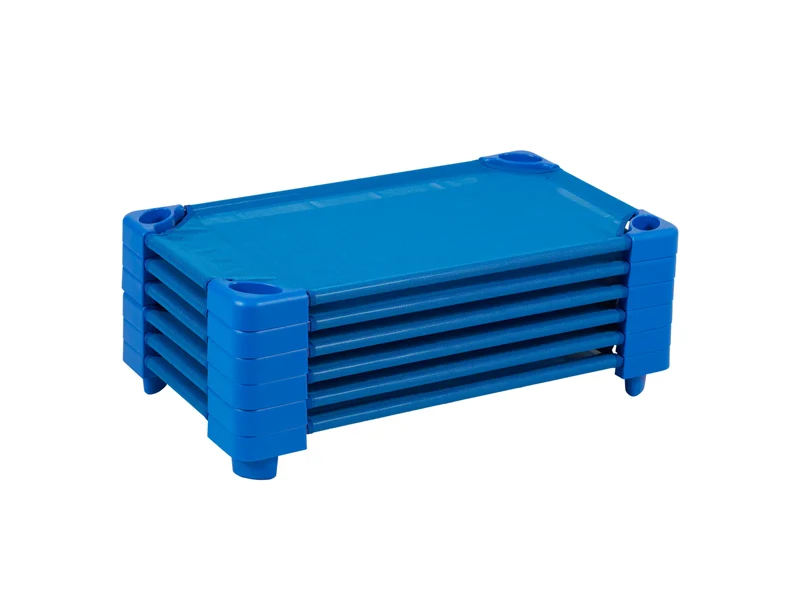
Daycare Cots
Daycare cots are low, open sleep surfaces commonly used for toddler and preschool rest time when local rules permit. Stackable models work well in multi-use classrooms, but you still need to verify the product’s usable dimensions, height, weight limit, and recommended age group.
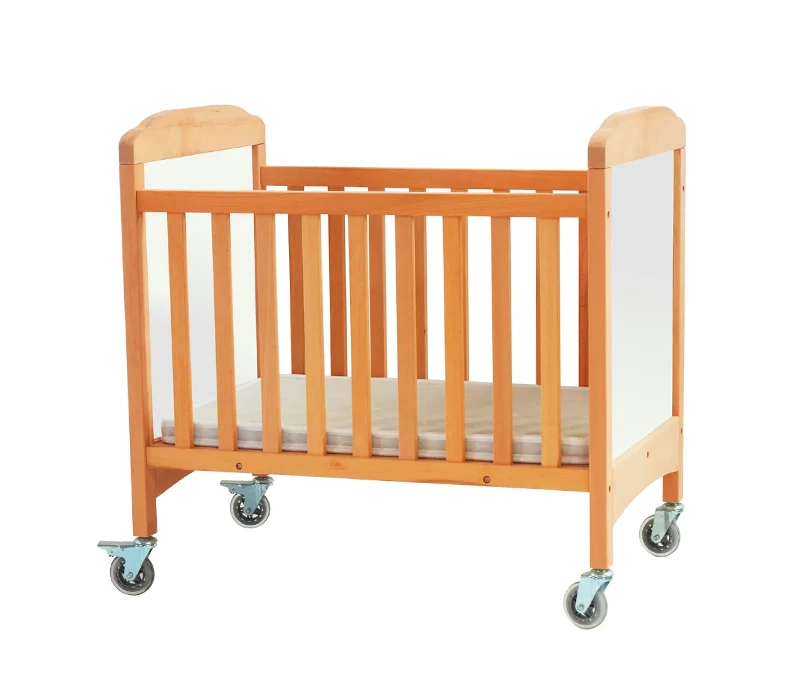
Daycare Cribs
Daycare cribs provide an enclosed sleep space for infants and children who have not transitioned to an approved cot or mat. In the United States, cribs used in child care facilities are covered by federal crib requirements, while your state or territory may add licensing rules for use, placement, and safe-sleep practice.
Rest Mats (Nap Mats)
Rest mats sit directly on the floor and can be quick to place, fold, and store. Compare their thickness, folded size, seam construction, cleanability, and local rules for floor contact, spacing, bedding, and individual assignment.

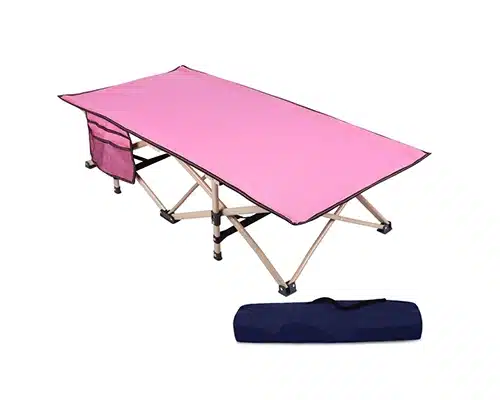
Folding Cots
Folding cots can reduce storage volume or support rooms where equipment moves between locations. Check the locking mechanism, pinch points, folded dimensions, carrying method, setup steps, and whether staff can inspect and operate the cot consistently.
Convertible Cribs or Multi-Use Sleep Systems
Convertible sleep systems change configuration as a program’s needs change. Use only the configurations, hardware, mattresses, and conversion parts approved by the manufacturer, and confirm that each intended setup is allowed by your local licensing authority.

For most toddler and preschool rooms, the practical choice is usually between a stackable cot and a rest mat. Infant rooms require a separate decision because cribs and infant safe-sleep rules apply. Make that age-and-rule decision first, then compare construction, cleaning, storage, and cost.
Compare Cots, Cribs, And Rest Mats
Use this table as a starting point, not as a substitute for local licensing rules or an exact product specification sheet.
| Decision Point | Daycare Cots | Daycare Cribs | Rest Mats |
|---|---|---|---|
| Typical Program Use | Toddler and preschool group rest | Infant sleep and children who still require an enclosed sleep space | Toddler or preschool rest where approved |
| Room Impact | Raised surface; stackable models need storage height and a clear transport route | Dedicated floor area and supervision access | Low storage volume; uses floor space during rest time |
| Daily Handling | Lift, place, inspect, clean, and stack | Inspect hardware, mattress fit, and sleep setup | Place, clean both sides as required, dry, fold or stack |
| What To Verify | Usable size, height, weight limit, frame, sleep surface, stack limit, and carrier compatibility | Applicable crib standard, documentation, mattress, hardware, and manufacturer instructions | Thickness, seam construction, folded size, cleaning method, and storage system |
Check Local Rules Before You Choose A Cot
Start with the licensing rules for every location where the cots will be used. In the United States, states and territories set and enforce child care health and safety requirements for sanitation, rest, supervision, and building safety.
Ask your licensing contact which children may use a cot, whether each child needs an individually assigned sleep surface, how equipment must be spaced during rest time, what bedding is allowed, and how cots must be cleaned and stored. If your purchase includes cribs, confirm the federal crib requirements for child care facilities and request documentation for the exact crib model. Do not assume a cot claim also covers a crib, or that one market’s documentation applies in another country.
Measure The Children, Cots, And Room
Labels such as toddler, standard, and preschool are useful for browsing, but they are not complete specifications. Compare the cot’s usable sleeping length and width, overall footprint, height from the floor, product weight, user weight limit, and manufacturer age guidance. Choose from the actual measurements and limits, not the label alone.
Then mark the nap area on your daycare floor plan at scale. Include the number of occupied cots, the spacing required by your local rules, staff circulation, supervision sightlines, doors, exits, fixed furniture, and the route to storage. Measure the storage area too: floor footprint, clear height, door width, corners, thresholds, and lift access can determine whether a stack works in daily practice.

Check Construction And Daily Durability
A commercial cot should remain stable after repeated setup, movement, cleaning, and stacking. Review a sample or detailed specification sheet before a large order. Check the frame and joints for movement, the corners for cracks or sharp edges, the sleeping surface for sagging or exposed stitching, and every fastener for secure installation. Ask how the fabric or mesh is attached and whether it can be repaired or replaced without discarding the whole cot.
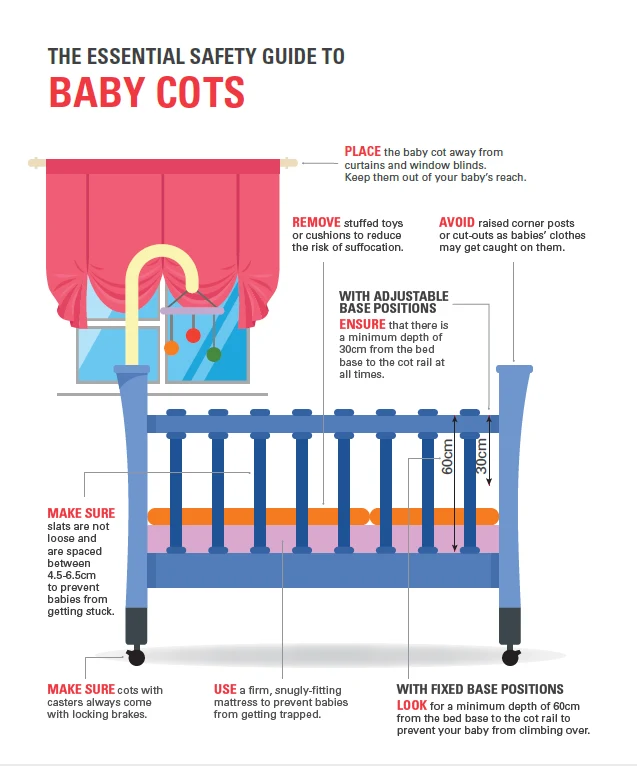
Request the assembly instructions, inspection points, recommended replacement criteria, warranty terms, and model-specific test reports. If the supplier provides compliance documents, verify the EN71 or ASTM certificates against the exact model and destination market. A broad statement on a catalogue page is not a substitute for model-specific documentation.
Plan Cleaning, Bedding, And Individual Storage
Cleaning claims need to match your center’s real products and schedule. Ask the supplier which cleaners and disinfectants are compatible with the frame, corners, coating, fabric, mesh, seams, and labels. Confirm the required contact time, rinsing instructions, and drying method with the cleaner manufacturer and your center’s health policy. Cots should be dry before they are stacked if trapped moisture could remain between surfaces.
Plan how staff will keep each child’s bedding and assigned equipment separate when required. Check that fitted sheets match the exact cot dimensions and do not interfere with stacking or create loose material. Labels should stay readable after repeated cleaning without creating a rough edge or a place where dirt collects.

Test Stacking And Staff Workflow
Ask for the approved maximum stack quantity and the dimensions of a full stack. Confirm whether bedding must be removed, whether spacers keep sleep surfaces apart, and whether the stack needs a compatible carrier. A carrier must fit through the narrowest door and turn in the actual route between the classroom and storage area.
Before a bulk order, have staff test a sample if possible. Time the full routine: move the equipment, place the cots, inspect them, add bedding, remove bedding, clean, dry, stack, and return the stack to storage. Note lifting height, awkward grips, rolling resistance, pinch points, and any step that requires two people. A small handling problem becomes an operating problem when it is repeated across several classrooms every day.
Compare Total Cost, Not Unit Price
For an imported order, compare the complete landed cost on the same basis. Include the cot, sheets or bedding, carriers, spare parts, packaging, freight, duties, assembly, storage equipment, and replacement lead time. Review the warranty scope and the process for documenting transit damage or a manufacturing defect.
For an imported or customized order, confirm the final specification, quantity, colors, labels, carton marks, packing method, shipping terms, delivery address, unloading conditions, and required arrival date before production. West Shore Furniture can review your room list, floor plan, age groups, and procurement schedule before confirming a daycare cot package.
Daycare Cot Buying Checklist
- Confirm the local rules for age, sleep surface, spacing, bedding, cleaning, supervision, and storage.
- Record the required quantity by classroom and the approved plan for spares or replacements.
- Verify usable sleeping dimensions, overall footprint, cot height, product weight, user limit, and age guidance.
- Check the frame, joints, corners, fasteners, sleep surface, seams, and replaceable parts.
- Test approved cleaners on every material and confirm the drying and stacking process.
- Measure the nap layout, full stack, storage area, doorways, and transport route.
- Confirm the maximum stack quantity and carrier compatibility in writing.
- Check fitted-sheet dimensions, labeling, bedding storage, and laundry capacity.
- Request assembly and care instructions, model-specific documentation, warranty terms, and spare-parts availability.
- Compare the complete delivered cost and replacement plan, not only the unit price.
Questions To Ask Before Ordering Daycare Cots In Bulk
Use these questions to close the gaps that a product photo or price list cannot answer.
How Many Daycare Cots Should I Order?
Start with the number of children who are approved to use cots in each classroom and the way your program schedules rest time. Then confirm whether licensing or center policy requires an individually assigned cot. Add spare units only from a documented replacement and enrollment plan; do not use an arbitrary percentage that may overfill storage or leave the center short.
How Do I Choose Between Toddler And Standard Cot Sizes?
Use the exact product dimensions, user limits, and manufacturer guidance. Compare them with the children you serve and the available nap and storage space. Size labels vary between suppliers, so ask for usable sleeping length and width, overall footprint, height, product weight, and weight limit before ordering sheets or cots.
What Documents Should I Request From A Daycare Cot Supplier?
Request the model specification, assembly and care instructions, inspection and replacement guidance, warranty, packing details, and any test reports or certificates required for the exact product and destination market. For cribs, request crib-specific compliance documentation rather than relying on a general furniture claim.
What Should I Confirm Before International Shipping?
Confirm the final model, dimensions, quantity, colors, accessories, replacement parts, carton marks, packing method, shipping terms, delivery address, unloading conditions, and required arrival date. Ask the supplier to identify what is included in the quotation and what your center or importer must arrange separately.
Choose A Cot That Works Every Day
The right daycare cot fits your licensed age group, room plan, cleaning process, storage route, and staff workload. Verify those conditions with a sample or complete specification before you compare delivered cost. Cots are one line inside the room budget: a toddler room is commonly $6,500–$12,500 and a preschool room is commonly $4,800–$9,500.
Cots sit inside the room budget. A toddler room is commonly $6,500–$12,500 and a preschool room is commonly $4,800–$9,500. Production is commonly 30–45 days after the drawing is frozen, and a classroom package is commonly 10–14 weeks door to door. Send the floor plan, the ages and the opening date.
Not ready to send a floor plan? Request the preschool furniture catalog.