There is no single standard for the cost of a kindergarten playground. A small kindergarten might only require a few standalone play units, whereas a large-scale project could involve fixed structures, safety surfacing, and extensive site preparation. The final cost depends on factors such as the number and age of the children, available space, site conditions, and the quality of the equipment selected.
Is a budget of $50,000 sufficient? What expenses should be included? If funds are limited, which elements should be prioritized? This guide will help you estimate reasonable project costs, compare quotes effectively, and plan the playground construction wisely.
A preschool playground typically costs $10,000 to $100,000 or more. The final budget depends on the size of the play area, the number of children, the equipment selected, and the amount of site work required.
What Is Included in the Cost of a Preschool Playground?
A complete preschool playground budget usually covers several core areas:
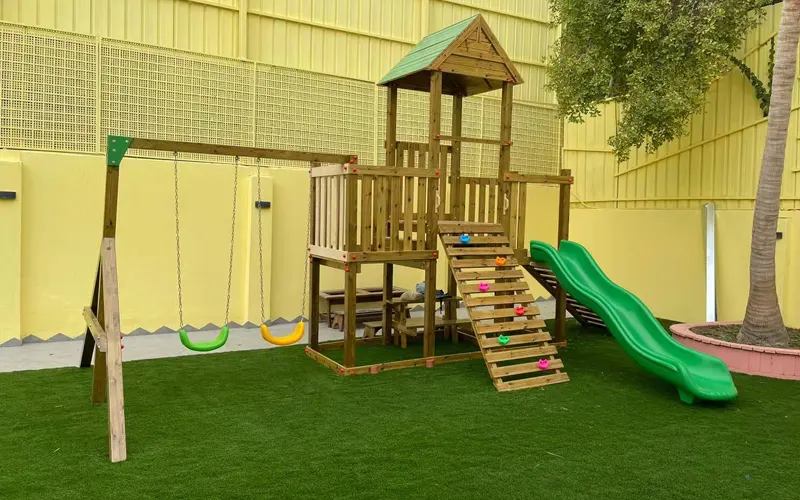
- Playground equipment: The main play structure and freestanding activities, such as climbers, slides, balance equipment, sensory panels, and pretend-play units.
- Safety surfacing: The impact-absorbing surface installed within the equipment use zones to reduce injury from falls.
- Site preparation: Clearing, leveling, drainage, concrete removal, and other work needed before installation can begin.
- インストール: Assembly, foundations, anchors, concrete work, and final adjustments required to make the equipment secure and ready for use.
- Shipping and delivery: Freight, inland transport, unloading, and other delivery costs needed to bring the equipment to the site.
Looking at these costs separately gives you a clearer view of the full project. It also makes it easier to compare supplier quotes and identify any work that has been left out.
The share of the budget assigned to each area will depend on the equipment selected, the surfacing system, and the condition of the site. The next section explains how much each part may cost and what can push it toward the higher end.
How Is a Preschool Playground Budget Typically Divided?
For a $40,000 preschool playground, a practical early budget may be divided as follows:
| Cost Item | Typical Share | Example Budget | What It May Include |
|---|---|---|---|
| Playground equipment | 35%–50% | $18,000 | Main climbing and sliding structure, sensory panels, balance equipment, and freestanding activities |
| Safety surfacing | 15%–30% | $8,000 | Impact-absorbing surface, borders, base preparation, and surfacing installation |
| Site preparation | 5%–15% | $4,000 | Site clearing, minor grading, drainage work, and foundation preparation |
| インストール | 15%–25% | $8,000 | Equipment assembly, concrete footings, anchors, fixing, and final adjustments |
| Shipping and delivery | 5%–10% | $2,000 | Freight, local delivery, unloading, and delivery coordination |
| Total | — | $40,000 | A complete standard preschool playground project |
As the table shows, playground equipment usually accounts for less than half of the total project budget. The remaining funds are needed to prepare the site, install the equipment, provide safe surfacing, and deliver everything to the center. Planning these costs from the beginning helps prevent budget gaps once construction starts.
A Detailed Breakdown of Preschool Playground Costs
A preschool playground budget is shaped by several connected costs. Equipment usually takes the largest share, but surfacing, site preparation, installation, and delivery can significantly change the final amount. The sections below explain what each cost covers, how much of the budget it may require, and what can push it higher.
遊具
Playground equipment usually accounts for around 35%–50% of the total project budget. In a $40,000 project, this may leave approximately $14,000–$20,000 for the equipment itself.
The main factors affecting equipment cost are:
Higher capacity: Equipment designed for more children needs more access points, platforms, and activity stations, which increases the amount of material and production work required.
More play functions: A basic climbing and sliding structure costs less than one that also includes balancing, sensory play, and pretend-play features. However, a multi-use structure may reduce the need for several separate units.
Materials and customization: Commercial-grade materials, custom sizes, themed elements, roof designs, colors, and special activity panels can push the price higher.
When the budget is limited, prioritize one durable main structure with good capacity and several useful play functions. Smaller independent units can be added later.
Safety Surfacing
Safety surfacing commonly takes 15%–30% of the total budget. In a $40,000 project, this may require approximately $6,000–$12,000.
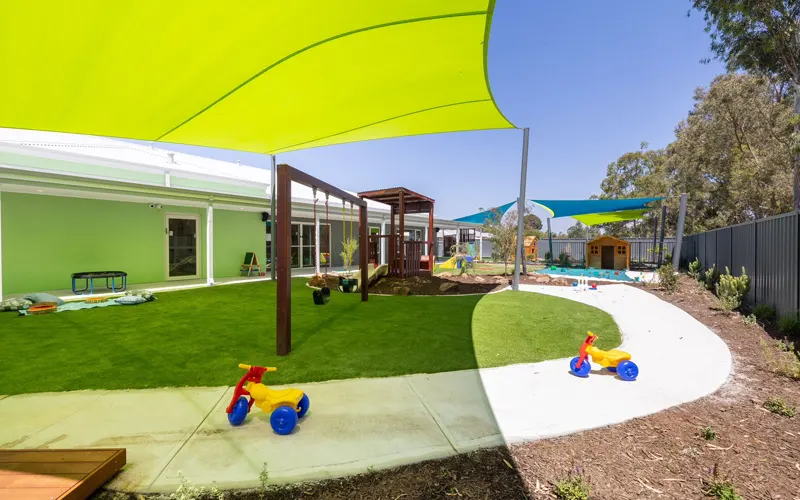
The cost may include the sub-base, drainage, edging, surface material, and installation. Common choices include engineered wood fiber, poured rubber, rubber tiles, and artificial turf. Engineered wood fiber usually has the lowest starting cost but needs regular replenishment. Rubber surfaces cost more upfront but offer better accessibility and lower routine maintenance. Artificial turf provides a clean appearance but may still require an impact-absorbing layer underneath.
The main factors affecting surfacing cost are:
Larger coverage area: Surfacing must cover the full safety zone around the equipment, not only the equipment footprint.
Higher fall height: Taller equipment may require a thicker or higher-rated impact-absorbing system.
More complex ground preparation: Uneven ground, poor drainage, or an unsuitable base can increase the work required before the surface is installed.
Before comparing prices, confirm whether the quotation includes the base, edging, drainage, materials, and labor.
Site Preparation
Site preparation usually accounts for around 5%–15% of the project budget. For a $40,000 project, this could mean approximately $2,000–$6,000, although difficult sites may cost more.
This work may include clearing the area, removing old equipment or concrete, leveling the ground, improving drainage, and preparing foundations.
The main factors affecting site preparation cost are:
Existing site condition: A clear, level site may need only minor work. Concrete, tree roots, unstable soil, or old playground equipment will increase demolition and disposal costs.
Drainage requirements: Standing water may require regrading, drainage channels, or a new base beneath the safety surface.
Two centers can purchase the same equipment and still have very different final costs because one site is ready for installation while the other needs extensive groundwork. Share site dimensions, photos, access details, existing surface information, and drainage concerns before requesting a complete estimate.
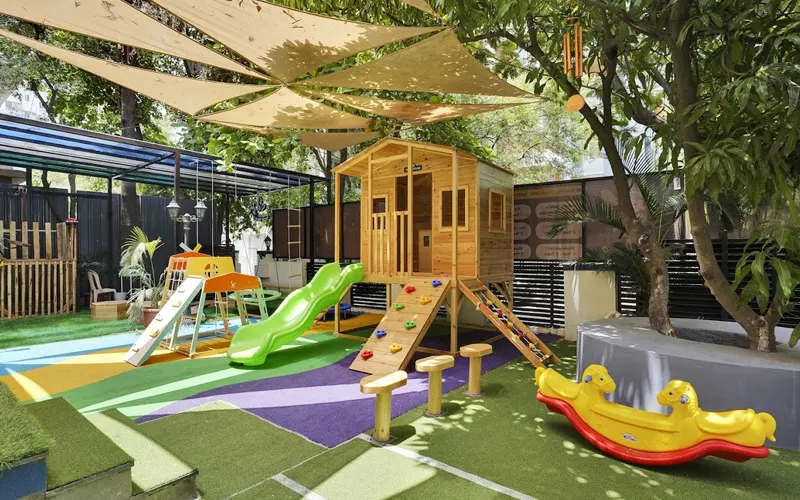
プロフェッショナル・インストレーション
Professional installation commonly takes 15%–25% of the total budget. On a $40,000 playground, this may equal approximately $6,000–$10,000.
Installation may include unloading, equipment assembly, excavation, concrete footings, anchoring, final adjustments, cleanup, and preparation for inspection. The exact scope can vary greatly between quotations.
Equipment type: Freestanding outdoor activities are generally easier to install. A fixed climbing structure may require excavation, concrete foundations, anchors, and lifting equipment.
Installation scope: Some quotations cover assembly only. A complete installation may also include unloading, foundations, concrete work, fixing, cleanup, and repairs to the surrounding surface.
This difference explains why two installation prices can appear far apart. The lower quotation may simply leave more work for the center or a local contractor to arrange.
Ask for a written installation scope before approving the project. It should clearly state whether unloading, excavation, concrete, anchoring, final adjustments, and site cleanup are included.
Shipping and Delivery
Shipping and delivery commonly account for around 5%–10% of the total project budget. International projects, remote locations, and bulky equipment may require a larger allowance.
Packed volume: Large slides, long posts, and preassembled units use more container or truck space. Flat packing can help reduce freight costs.
Delivery point: A quote may cover delivery only to the port or warehouse. Customs clearance, inland transport, unloading, and final site delivery may still need to be arranged separately.
Before ordering, confirm the packed volume, delivery terms, final delivery point, and unloading requirements.
What Should You Do When Your Budget Is Limited?
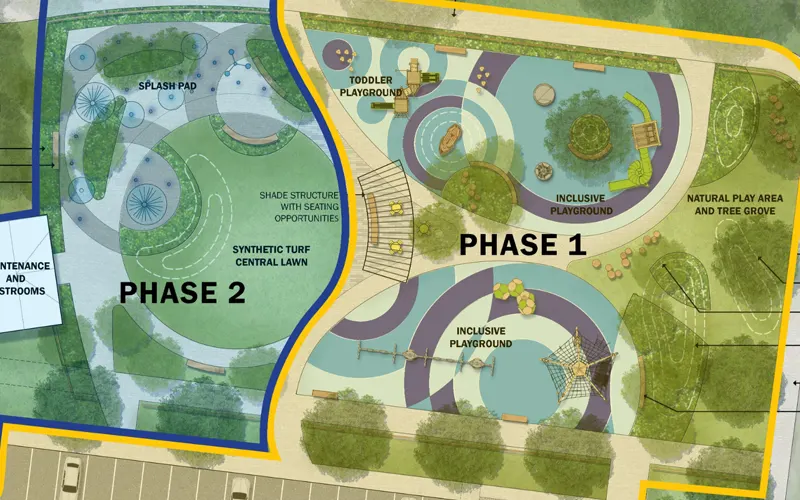
A limited budget does not mean you should remove important play functions from the plan. It is usually better to design the full playground first, then complete it in stages.
Start with the work that will be expensive to change later. This usually includes site preparation, drainage, safety surfacing, and the main play structure. For a $40,000 long-term plan, you might spend $25,000–$30,000 in the first phase and add the remaining equipment later.
A practical phased plan could look like this:
Phase 1: Complete the site work, safety surfacing, and main climbing and sliding structure.
Phase 2: Add sensory play, balancing equipment, pretend-play units, or a separate toddler area.
Phase 3: Add shade, storage, seating, planting areas, and other supporting features.
The full layout should still be planned before the first phase begins. You need to reserve enough space for future equipment, safety zones, foundations, and installation access. Otherwise, later expansion may require removing surfacing, moving fencing, or changing drainage.
Do not reduce the budget by choosing unsuitable surfacing, weaker structures, or equipment that cannot meet local requirements. When funding is limited, reduce the number of items purchased first—not the safety or quality of the items you keep.
How to Reduce the Cost of a Preschool Playground
You can reduce the project cost without lowering safety or equipment quality. Focus on work you can simplify, complete locally, or postpone until a later phase.
- Prepare the site before installation: Remove old equipment, clear debris, level the ground, and check drainage early. Completing this work locally may reduce contractor labor and prevent changes during installation.
- Confirm underground utilities: Mark water, gas, and electrical lines before foundations are planned. Moving equipment or changing the layout after installation begins can add unnecessary costs.
- Use a standard equipment design: Standard sizes, colors, and structures usually cost less than custom themes or decorative features. Prioritize useful play activities over visual details.
- Choose multi-use equipment: One well-designed structure can provide climbing, sliding, balancing, sensory play, and pretend play, reducing the need for several separate units.
- Build in phases: Complete the site work, safety surfacing, and main play structure first. Shade, storage, seating, and smaller activities can be added later.
- Use local or community support: Parents, local contractors, and community groups may help with site clearing, fundraising, landscaping, or non-specialist work. Professional installers should still handle equipment foundations and safety-critical assembly.
- Seek sponsorship or donated services: Local businesses may contribute materials, machinery, transport, or funding in exchange for recognition during the project.
- Reduce shipping volume: Flat-packed equipment and consolidated shipments can lower freight costs, especially for international orders.
The largest savings usually come from early site preparation, standard equipment, community support, and phased construction. Safety surfacing, structural quality, and professional installation should not be reduced simply to lower the first quotation.
West Shore can combine climbing, sliding, balancing, sensory play, and pretend play within fewer multi-use structures. We also optimize flat-pack design and container loading to help reduce shipping costs for international projects.
結論
A preschool playground budget should cover equipment, surfacing, site work, installation, and delivery. If funds are limited, plan the full layout and build in phases. ウェストショア家具 can help with the layout, equipment list, and phased purchasing plan.
よくある質問
Is $10,000 Enough for a Preschool Playground?
It may cover a small outdoor play area, several freestanding activities, or the first phase of a larger project. It is usually not enough for equipment, surfacing, site work, delivery, and professional installation together.
How Much Should I Budget per Child?
A rough starting point is about $1,000 per child using the playground at one time. The final amount still depends on age group, surfacing, site conditions, and installation.
Does Playground Equipment Pricing Include Installation?
Not always. Some quotes cover equipment only, while others include assembly, foundations, concrete, anchoring, and unloading. Ask for a written installation scope.
What Is the Most Affordable Playground Surface?
Engineered wood fiber usually has one of the lowest initial costs. However, it needs regular raking, replenishment, and depth checks.
Is Poured Rubber Worth the Higher Cost?
It can be worthwhile for busy centers that need a firm, accessible, and lower-maintenance surface. It may be less suitable for a limited budget or a playground likely to change soon.
Can a Daycare Operate Without an On-Site Playground?
This depends on local licensing rules. Some authorities may accept an approved nearby outdoor space, while others require a secure area on the property.
Are Grants Available for Preschool Playgrounds?
Yes, but eligibility varies. Check government programs, local foundations, community organizations, and businesses that support children’s projects.
How Long Does Commercial Playground Equipment Last?
There is no fixed lifespan. Durability depends on materials, climate, usage, installation, drainage, and maintenance. Regular inspections are more important than age alone.